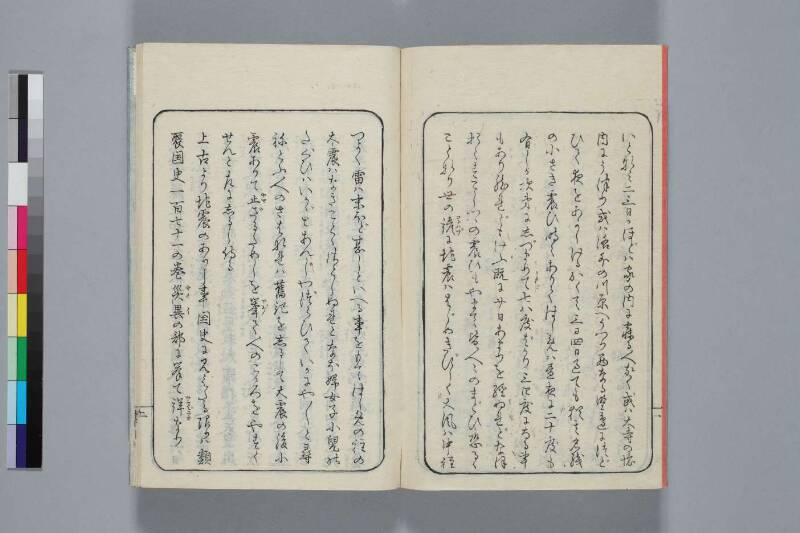
翻刻
いとなみ二三日かほどは家の内に寝る人なく或は大寺の境
内にうつり或は洛外の川原へうつり西なる野辺につど
ひて夜をあかしけるかくて三日四日過ても猶其名残
の小さき震ひ時々ありてはしめは昼夜に二十度も
有しか次第にしづまりて七八度ばかり三四度になる事
もあり然れどもけふ既に廿日あまりを経ぬれどなほ
折々すこしつゝの震ひもやまて皆人々のまどひ恐るゝ
ことなり世の諺(ことはざ)に地震ははじめきびしく大風は中程
つよく雷は末ほど甚しといへる事をもてはしめの程の
大-震はなきことゝさとしぬれとなほ婦女子小児の
たぐひはいかゞとあんじわづらひていかにや〳〵と尋
ねとふ人のさはなれは旧記をしるして大震の後小
震ありて止(やま)ざるためしを挙(あげ)て人のこゝろをやすく
せんと左にしるし侍る
上古より地震のありし事国史に見えたる限りは類
聚国史【(注)】一百七十一の巻 災異(さいい)の部に挙て詳(つまびらか)なり
【(注)菅原道真の編纂により、寛平四(八九二)年に成立した(ウィキペディア)】
現代語訳
営み二三日ほどは家の内に寝る人がなく、ある者は大寺の境内に移り、ある者は洛外の河原へ移り、西の野辺に集まって夜を明かした。このようにして三日四日過ぎてもなお、その名残の小さな震えが時々あって、初めは昼夜に二十度もあったが、次第に静まって七八度ばかり、三四度になることもあった。しかしながら今日すでに二十日余りを経たけれども、なお折々少しずつの震えも止まず、皆人々が困惑し恐れることである。世の諺に「地震は初めが厳しく、大風は中ほどが強く、雷は終わり頃が激しい」と言われることをもって、初めの頃の大震はないことと理解したが、なお婦女子や小児の類はいかがなものかと心配し悩んで、どうなのかと尋ね問う人が多いので、旧記を記して大震の後に小震があって止まない例を挙げて人の心を安らかにしようと、左に記すのである。
上古より地震のあったことは国史に見える限りでは、類聚国史一百七十一巻の災異の部に挙げて詳細である。
英語訳
For about two or three days of this activity, no one slept inside their houses. Some moved to the precincts of large temples, others moved to riverbanks outside Rakuchū, and they gathered in the western fields to pass the nights. Even after three or four days had passed in this manner, there were still occasional small aftershocks remaining. At first there were as many as twenty tremors day and night, but they gradually subsided to about seven or eight times, sometimes becoming three or four times. However, even now that more than twenty days have already passed, the occasional small tremors still do not cease, and all the people remain confused and frightened.
There is a popular saying that "earthquakes are severe at the beginning, great winds are strong in the middle, and thunder is most violent at the end." Based on this, people understood that there would be no more great quakes like those at the beginning, but since women, children and such people still worry and are troubled, asking "how will it be?", and there are many who inquire about this, I record old accounts and cite examples of small quakes continuing after great quakes in order to put people's minds at ease, writing them below.
Regarding earthquakes that have occurred since ancient times, as far as can be seen in the national histories, they are listed in detail in the section on disasters and anomalies in volume 171 of the Ruijū Kokushi.