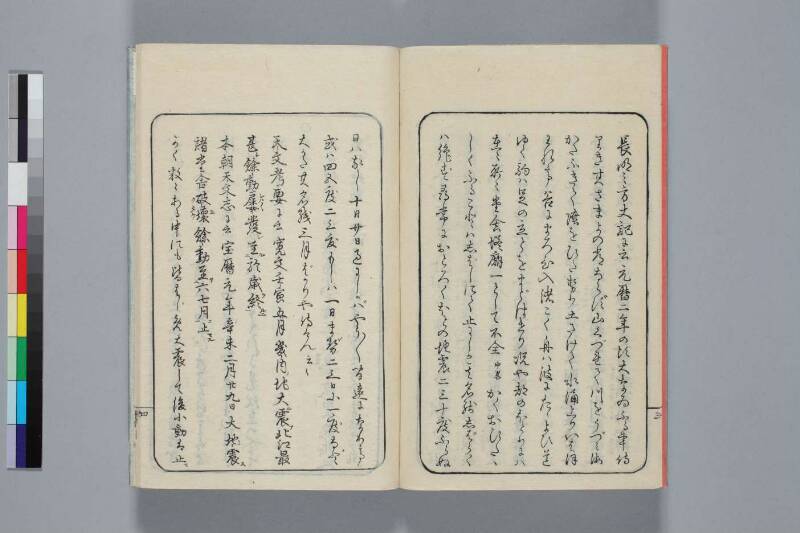
翻刻
長明之方丈記に云元暦二年の頃大なゐふる事侍
りき其さまよの常ならず山くづれて川をうづみ海
かたふきて陸をひたせり土さけて水湧上りいはほ
われて谷にまろひ入諸こく舟は波にたゝよひ道
ゆく駒は足の立とをまどはせり況や都のほとりには
在々所々堂舎塔廟一として不全《割書:中略|》かくおひたゝ
しくふることはしばしにて止にしか其名残しばらく
は絶ず尋常におとろくほとの地震二三十度ふらぬ
日はなし十日廿日過にしかばやう〳〵間遠になりて
或は四五度二三度もしは一日まぜ二三日に一度など
大かた其名残三月ばかりや侍けん云々
天-文-考-要に云寛文壬-寅五-月幾-内 ̄ノ地大 ̄ニ震 ̄フ北江最
甚 ̄シ余-動 屢(シハ〳〵)#1-発 ̄シ至 ̄ル_二於歳 ̄ヲ終 ̄ルニ_一
本-朝天-文-志に云宝暦元年辛未二月廿九日大地-震 ̄ス
諸堂舎《振り仮名:破- 壊| ヱ|クタケ 》余-動至 ̄テ_二 六七月 ̄ニ_一止 ̄マル
かく数々ある中にも皆はじめ大震して後小動は止 ̄マ
現代語訳
長明の方丈記に云く、元暦二年(1185年)の頃、大地震が起こった。その様子は尋常ではなく、山は崩れて川を埋め、海は傾いて陸地を浸した。土は裂けて水が湧き上がり、岩は割れて谷に転がり入った。沖の船は波に漂い、道を行く馬は足の踏み場に迷った。まして都の辺りでは、あちこちの堂舎・塔廟で一つとして無事なものはなかった。(中略)このように激しく揺れることはしばらくして止んだが、その余震はしばらく絶えることなく続いた。普通でも驚くほどの地震が二、三十度も揺れない日はなかった。十日、二十日と過ぎていくうちに、だんだんと間遠になっていき、あるいは四、五度、二、三度、もしくは一日おき、二、三日に一度などとなっていった。だいたいその余震は三ヶ月ほど続いたであろうか。云々。
天文考要に云く、寛文壬寅(寛文二年、1662年)五月、畿内の地が大いに震えた。北江(近江国北部)が最も甚だしかった。余動はしばしば発生し、年の終わりに至るまで続いた。
本朝天文志に云く、宝暦元年辛未(1751年)二月二十九日に大地震があった。諸堂舎は破壊し(くだけ)、余動は六、七月に至って止んだ。
このように数々の例がある中でも、皆はじめに大震があり、その後の小さな余動はやがて止む
英語訳
According to Chomei's Hojoki: Around the 2nd year of Genpeki (1185), there was a great earthquake. Its nature was unlike anything ordinary — mountains crumbled and filled rivers, the sea tilted and flooded the land. The earth split and water gushed up, rocks broke apart and tumbled into valleys. Ships offshore were tossed about by waves, and horses traveling the roads were bewildered as to where to step. Still more so in the surroundings of the capital, where in every direction not a single hall, pagoda, or temple remained undamaged. (omitted) Though the violently shaking ceased after a time, the aftershocks continued for a while without stopping. There was not a day without twenty or thirty earthquakes of a scale that would ordinarily cause alarm. As ten days and then twenty days passed, they gradually became more infrequent — sometimes four or five times, two or three times, or perhaps every other day, or once every two or three days. In general, those aftershocks continued for about three months, it seems.
According to the Tenmon Koryo: In the 5th month of the year Kanmon-Jintora (the 2nd year of Kanbun, 1662), the Kinai region was greatly shaken. Northern Omi (Hokukou) was the most severely affected. Aftershocks occurred repeatedly and continued until the end of the year.
According to the Honcho Tenmon Shi: On the 29th day of the 2nd month of the 1st year of Horeki, Kanoto-Hitsuji (1751), there was a great earthquake. Various halls and buildings were destroyed, and the aftershocks continued until the 6th and 7th months before finally ceasing.
Thus, among these many examples, in all cases there was first a great earthquake, after which the smaller aftershocks gradually ceased—