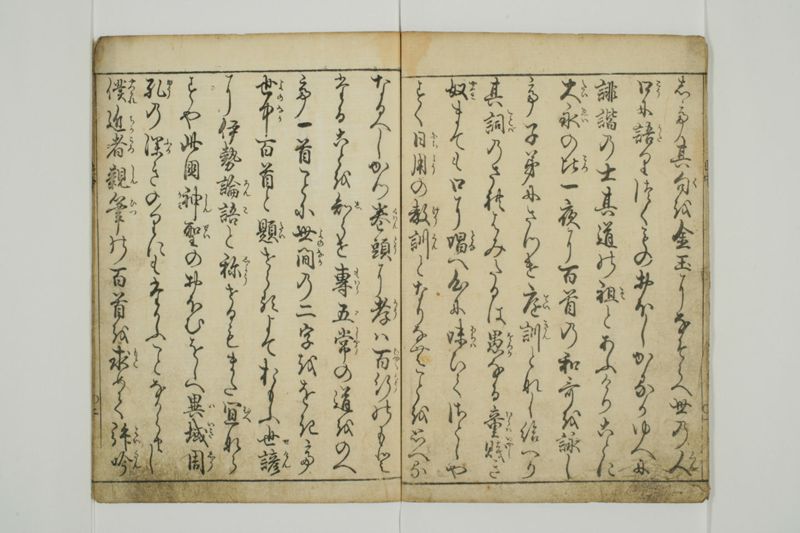
翻刻
【右丁】
しては其 句(く)を金玉になそらへ世の人(しん)
口(こう)に語(かた)りつくものおほしかるかゆへに
誹諧の士其道の祖(そ)とあふけりことに
大永(たいゑい)の比(ころ)一夜に百首の和哥を詠し
て子弟にさつけ庭訓(ていきん)となし給へり
其 詞(ことば)のされはみたるは愚(をろか)なる童(わらは)賤(いやし)き
奴(やつこ)まても口に唱(とな)へ心に味(あちは)ひてさとしや
すく日用(にちよう)の教訓(けうくん)となりなむことを思へる
【左丁】
なるへしかつ巻頭(くはんとう)に孝(かう)は百行(ひやくかう)のもと
たることを知(し)らせ専(もはら)五常(こしやう)の道をのへ
て一首ことに世間(よのなか)の二字をおきて
世中(よのなか)百首と題(たい)せらるよておもふ世諺(せけん)
に伊勢 論語(ろんこ)と称(しやう)せるもまた宜(むへ)なら
すや此国《振り仮名:神聖|しんせい|かみ 》のおほむをしへ異域(いいき)周(しう)
孔(かう)の深(ふか)きのりにもたかふことなからまし
僕(やつかれ)近者(ちかころ)親筆(しんひつ)の百首を求(もと)めて拝吟(はいきん)
現代語訳
【右丁】
その句を金玉(きんぎょく)に例え、世の人々の口に語り伝えられるものが多くあった。それゆえに、俳諧の士(たち)はその道の祖(そ)として仰いだのである。とりわけ、大永(たいえい)の頃に、一夜のうちに百首の和歌を詠んで弟子たちに授け、庭訓(ていきん)となさったのであった。その言葉のわかりやすく平易なことは、愚かな童(わらべ)や身分の低い者でも口に唱え、心に味わって理解しやすく、日常の教訓となるであろうことを念頭に置かれたからであろう。
【左丁】
さらに巻頭に孝(こう)が百行の根本であることを示し、もっぱら五常(ごじょう)の道を述べて、一首ごとに「世の中」の二字を置いて、『世中百首』と題されたのであった。思うに、世間で「伊勢論語」と称されるのもまた、もっともなことではないか。この国(神聖なる神の国)の大いなる教えは、異域(中国)の周・孔の深い教えにも劣ることはないであろう。私(やつがれ)はこのほど、自筆の百首を求めて拝し吟じ、(以下次頁に続く)
英語訳
[Right folio]
His verses were likened to gold and jade, and there were many that were passed down and spoken on the lips of people throughout the world. For this reason, those who practiced *haikai* revered him as the founder of their way. In particular, during the Daiei era, he composed one hundred *waka* verses in a single night, bestowed them upon his disciples, and made them a guide for moral instruction (*teikin*). The clarity and accessibility of his words must have been born of his intention that even foolish children and those of low station might recite them aloud, savor them in their hearts, readily understand them, and take them as lessons for daily life.
[Left folio]
Furthermore, at the very beginning of the collection he makes known that filial piety (*kō*) is the foundation of all virtuous conduct (*hyakkō*), and he expounds above all on the way of the Five Constant Virtues (*gojō*). Placing the two characters for "the world" (*yononaka*) at the head of each verse, he titled the work *Yononaka Hyakushu* ("One Hundred Verses on the World"). When one reflects on this, is it not entirely fitting that it has come to be called "the *Analects* of Ise" (*Ise Rongo*) among people of the world? The great teachings of this land — this sacred land of the gods — surely need not yield even to the profound precepts of the Duke of Zhou and Confucius from those distant foreign shores. I myself, in recent days, sought out a manuscript copy of these hundred verses written in the master's own hand, and reverently read and recited them... (continues on the next page)