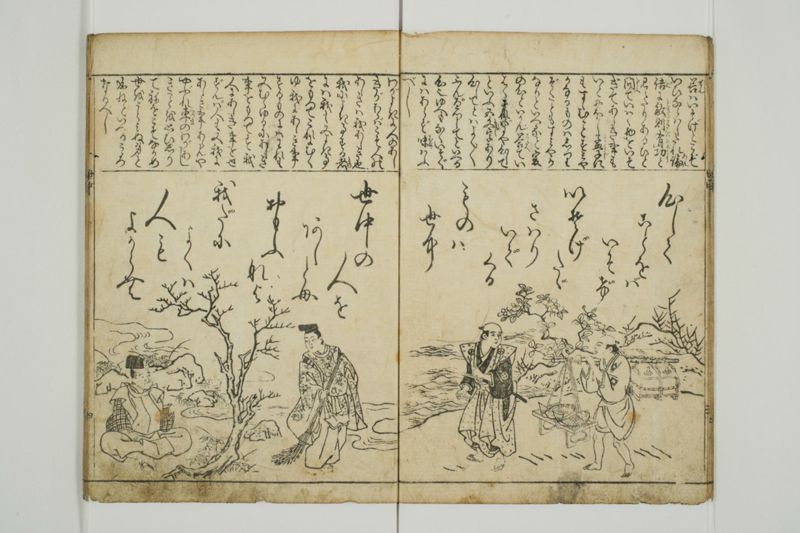
翻刻
【右丁】
【上段】
善(ぜん)はいそげとこぞ
いひならはしたれ論(ろん)
語(ご)に《振り仮名:敏則有_レ功|ときときんはありこう》#1と
見えたりあるひと
問(とふ)ていはく物をいそ
ぎてあしき事も
いとおほし孟子(まうじ)に
もすゝむことすみや
かなるものはしり
ぞくこともすみやか
なりといへると爰
の心といかん答(こたへ)てい
はくさればにや心して
といふ五 文字(もじ)あり
心してとはよく〳〵
ふんべつしてといへる
心也ゆへもなくいそぐ
にはあらず味(あぢ)はふ
べし
【下段】
心して
ことをば
いそげ
いそげ
たゞ
さはり
いで
くる
ものは
世中
【左丁】
【上段】
わがよきに人のあし
きがあらばこそ人の
あしきは我あしき也
我によき事する者(もの)
には我も又よき事
をもつてこれにむく
ゆ我にあしき事
するものにはわれも
又むくゆるにあしき
事をもつてす我
人にあしき事をせ
ずんば人も又我に
あしき事あらんや
やぶれ車(くるま)のわがあし
きことを思ひしり
てねをこそなかめ
世をうらみぬ身と
成ねといへりこゝろ
なるべし
【下段】
世中の
人を
あしとも
おもふなよ
我だに
よくは
人も
よからむ
現代語訳
【右丁】
【上段】
「善はいそげ」とは昔からよく言い習わされていることだが、『論語』にも「敏ならば則ち功あり(素早く動けば功績が生まれる)」#1 とある。あるとき、ある人がこう問うた――「物事を急いでうまくいかないことも大変多い。『孟子』にも、『進むことが速い者は、退くことも速い』とあるが、この(論語の)言葉の心とどう折り合いをつければよいのか」と。答えていわく――「だからこそ、『心して』という五文字があるのだ。『心して』とは、よくよく分別して(から行動せよ)、という意味である。わけもなく闇雲に急ぐということではない。よく味わうべきである。」
【下段】
心して
ことをば
いそげ
いそげ
ただ
さはり
いで
くる
ものは
世の中
(心して(よく分別してから)、物事を急げ。ひたすら急げば、障り(妨げ・障害)が出てくるものだ、この世の中とは。)
---
【左丁】
【上段】
自分が善くある(良い行いをする)からこそ、他人の悪しき(良くない)ところが目につくのだ。(考えてみれば、)他人の悪しきは我が悪しきでもある。自分に良い事をしてくれる者には、自分もまた良い事をもってこれに報いる。自分に悪い事をする者には、自分もまたそれに悪い事をもって報いる——ということになってしまう。(しかし)自分が人に悪い事をしなければ、人もまた自分に悪い事をするであろうか(いや、するはずがない)。「やぶれ車(壊れた車)」(の歌)は、自分自身の悪さをわきまえ、(不満を)泣いて嘆きはするが、世を恨まぬ身となれ、と言っているのであり、その心持ちがここに通じるものであろう。
【下段】
世の中の
人を
悪し(あし)とも
思うなよ
我だに
よくは
人も
よからむ
(世の中の人を、悪い者だと思ってはいけない。自分さえ善くあれば、人もまた善くあるだろうから。)
英語訳
[Right folio]
[Upper section]
"Haste in good deeds" has long been a well-known saying, and the *Analects of Confucius* also states, "To be swift is to have achievement" (*toki nareba sunawachi ko ari*).#1 At one time, someone posed a question: "There are also very many cases where hasting at things leads to poor outcomes. The *Mencius* likewise says, 'One who advances swiftly will also retreat swiftly.' How are we to reconcile these with the spirit of this passage from the *Analects*?" The answer was given: "That is precisely why the five characters *kokoro shite* ('with mindful care') are there. *Kokoro shite* means 'after thoroughly deliberating and using good judgment.' It does not mean rushing ahead recklessly without reason. One would do well to ponder this carefully."
[Lower section]
With mindful care,
hasten
your affairs —
yet haste alone
brings forth
obstacles:
such is
the way
of this world.
(*Hasten your affairs — but do so with careful deliberation. For those who simply rush headlong will find that obstacles arise. Such is the nature of this world.*)
---
[Left folio]
[Upper section]
It is precisely because one is oneself good that one notices the faults of others. When one reflects on it, the faults of others are in fact one's own faults as well. To one who does good by you, you in turn repay them with good; to one who does ill by you, you in turn repay them with ill — so things tend to go. But if you yourself do no ill to others, would others truly do ill to you? (Surely they would not.) The poem of the "broken cart" (*yabureguruma*) says: know your own shortcomings, weep and lament if you must, but become one who does not resent the world. This is the spirit that underlies the present verse as well.
[Lower section]
Do not think
the people
of this world
to be wicked —
if only *I* am good,
then others too
shall be good.
(*Do not condemn the people of this world as bad. If you yourself live rightly, then others around you will be righteous too.*)