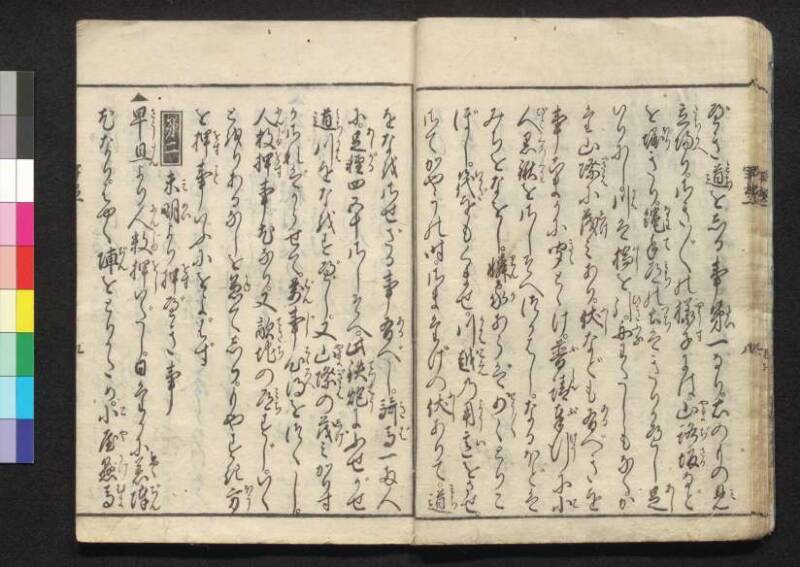
翻刻
【右丁】
べき道(みち)をしる事 第(たい)一なり。右のもの見(み)
立帰(たちかへ)り。さき〴〵の様子(やうす)には。山路(やまぢ)坂(さか)など
を堀(ほり)きり。繩手道(なわてみち)の土(つち)はきりかへし足(あし)
いりにし。川(かは)は橋(はし)を引(ひき)。舟(ふな)わたしもなく。か
た山 際(ぎは)に茂(しけ)みあり。伏(ふし)なども有(ある)べきを
事こまかに聞(きゝ)とゝけ。普請奉行(ふしんぶけう)に小(こ)
人(びと)黒鍬(くろくわ)をさしそへつかはし。なるほどは
みちをなをし。隣家(りんか)あらば少々(せう〳〵)とりこ
ぼし。筏(いかだ)をもくませ。川越(かはこえ)の用意(ようい)をさせ。
さてかやうの時。さまたげの伏(ふし)ありて。道(みち)
【左丁】
をなをさせざる事 有(ある)べし。騎馬(きば)一両人
に。足軽(あしがる)四五十さしそへ。此 鉄炮(てつはう)にふせがせ
道(みち)川(かは)をなをすべし。又 山際(やまぎは)の茂(しげ)みかりす
かさればからせて。万事(ばんじ)心得(こゝろへ)をつくし。
人数押(にんじゆをす)事尤なり。又 敵地(てきち)の道(みち)すじ。いく
とをりあるなしを兼(かね)てしり。もやすき方(ほう)
を押事(をすこと)いふにをよばず
《箱:第二》未明(みめい)より押(をす)べき事
▲早旦(さうたん)より人数押(にんじゆをし)いだし。日たかに着陣(ちやくぢん)
尤なり。はやく陣(ぢん)をとりかため。小屋懸(こやかけ)馬(むま)
現代語訳
【右丁】
進むべき道を知ることが第一である。右の物見が立ち帰り、先々の様子として、山路・坂などを堀り切り、縄手道の土は切り返して足入りにし、川は橋を引き、舟渡しもなく、山の際(きわ)に茂みがあり、伏兵なども潜んでいることが予想されることを、事細かに聞き届け、普請奉行に小人(こびと)・黒鍬(くろくわ)を差し添えて遣わし、なるほど道を直し、隣家があれば少々取り崩し、筏も組ませ、川越えの用意をさせる。さて、このような時に、妨害のための伏兵があって、道を直させない事態もあり得る。
【左丁】
騎馬一両人に、足軽四・五十人を差し添え、この鉄砲で敵を防がせつつ、道・川を直すべきである。また、山際の茂みを刈り透かさなければ刈り払わせて、万事心得を尽くし、人数を押し進めることが最も肝要である。また、敵地の道筋がいくとおりあるかないかをあらかじめ知り、進めやすい方向を選んで押し進めることは言うまでもない。
《第二》未明より押すべきこと
▲早朝より軍勢を押し出し、日が高くなる頃に着陣することが最善である。早く陣を取り固め、小屋掛け・馬……
英語訳
【Right Page】
The most important thing of all is to know the route along which the forces should advance. When the aforementioned scouts return and report on conditions ahead—that mountain paths and slopes have been cut away, that the soil of the raised roads (nawatemichi) has been dug up and turned over to impede footing, that bridges over rivers have been destroyed and no ferry crossings remain, that there are thickets at the foot of the mountains, and that ambushes may be concealed there—all of this must be heard and confirmed in detail. A Construction Magistrate (fushin bugyō) should be dispatched, accompanied by laborers (kobito) and black-mattock workers (kurokwa), and they should duly repair the roads, demolish any nearby structures that obstruct the way if necessary, lash together rafts, and make preparations for crossing the rivers. Now, in such situations, there may well be harassing ambushes that prevent the repair of roads.
【Left Page】
In such a case, one or two mounted warriors should be assigned forty or fifty foot soldiers (ashigaru), and these should hold off the enemy with firearms (teppō) while the road and river are repaired. Furthermore, if the thickets along the mountain's edge cannot be thinned out, they should be cleared entirely. By attending to all such matters with thorough understanding and preparation, it is supremely important to advance the troops. Moreover, it goes without saying that one should know in advance how many routes run through enemy territory, and advance along whichever direction is easiest.
---
《Section Two》 On Advancing Before Dawn (mimei)
▲ It is best to set the troops in motion from early morning (sōtan) and arrive at the encampment while the sun is still high. Secure the camp quickly, erect quarters, tend to the horses…