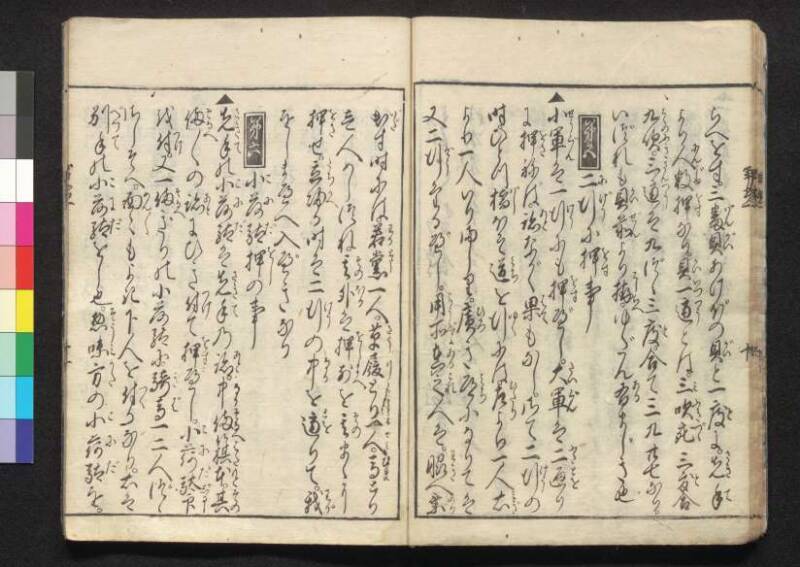
翻刻
【右丁】
らへをす。三 番貝(ばんがい)あけぼの貝(がい)と一 度(と)に。先手(さきて)
より人数押(にんじゆをす)なり。貝一通(かいいつつう)とは。三吹宛(みふきづゝ)三 度(と)合
九吹(こゝのふき)。三通(さんつう)は九づゝ三 度(と)。合て三九廿七なり。
いづれも貝前(かいぜん)より拵(こしらへ)。ゆだん有(ある)まじき也
《箱:第五》二行(にげう)に押(をす)事
▲小軍(せうぐん)は一 行(けう)にも押(をす)べし。大軍(たいぐん)は二通(ふたとを)り
に押(をさ)ねば。跡(あと)ながく果(はて)もなし。さて二 行(けう)の
時。ひとつ橋(ばし)ほそ道(みち)を行(ゆく)には。左(ひたり)より一人 右(みぎ)
より一人いりましり。広(ひろ)き道(みち)になりては
又二 行(げう)たるべし。用所(ようじよ)《振り仮名:在_レ之|ある これ》人は。脇(わき)へ乗(のり)
【左丁】
出(いだ)す時には。若党(わかとう)一人。草履(さうり)とり一人。馬(むま)とり
壱人めしつれ。其外(そのほか)は押前(をしまへ)を其(その)まゝに
押(をさ)せ。立帰(たちかへ)る時は二 行(けう)の中(なか)を通(とを)りて。我(わが)
をしまへへ入べきなり
《箱:第六》小荷駄押(こにだをし)の事
▲先手(さきて)の小荷駄(こにだ)は先手(さきて)の跡(あと)。中備(なかそなへ)籏本(はたもと)。其(その)
備(そなへ)〳〵の跡(あと)にひき付(つけ)て押(をす)べし。小荷駄印(こにだじるし)
を付(つけ)。又一 備(そなへ)ぎりの小荷駄に。騎馬(きば)一二人づゝ
さしそへ。面々(めん〳〵)もよき下人を付(つく)るなり。右は
別手(べつて)の小荷駄(こにだ)をし也。惣味方(そうみかた)の小荷駄(こにだ)を。
現代語訳
【右丁】
…らえをする。三番貝は暁の貝(あけぼの貝)と同時に、先手から人数を押し進める。貝一通りとは、三吹きずつ三度で、合わせて九吹きである。三通りは九吹きずつ三度で、合わせて三九・二十七吹きとなる。いずれも貝(法螺貝)の前より用意し、油断があってはならない。
《第五》二行に押すこと
▲小軍(少人数の軍)は一行で押し進めてもよい。大軍は二列に押し進めなければ、後尾が長くなり果てしなくなる。さて、二行の時に、一つ橋(一本橋)や細い道を行く際には、左から一人・右から一人と交互に入り混じって進み、広い道になったならば、また二行に戻るべきである。用事のある者(用所在之)は、脇へ乗り
【左丁】
出す時には、若党一人・草履取り一人・馬取り一人を連れて行き、その他の者はそのまま前の列を押し進めさせ、立ち帰る時は二行の中を通って、自分の元の位置へ入るべきである。
《第六》小荷駄を押すこと
▲先手の小荷駄は先手の後ろ、中備・旗本はその備えの後ろにそれぞれ引き付けて押し進めるべきである。小荷駄印(目印)を付け、また一備ごとの小荷駄には騎馬一・二人ずつを差し添え、各々よい下人(下僕)を付けるものである。右は別手(別働隊)の小荷駄の押し方である。味方全体の小荷駄を…
英語訳
【Right Page】
…prepare oneself. At the third conch signal—sounded together with the dawn signal (akebono-gai)—the vanguard advances with all its troops. One round of the conch consists of three blows repeated three times, totaling nine blows. Three rounds consist of nine blows repeated three times, totaling three times nine, or twenty-seven blows. In all cases, the conch must be made ready before it is needed, and there must be no negligence.
《Section Five》 On Advancing in Two Columns
▲ A small force may advance in a single column. A large army must advance in two columns; otherwise, the rear will stretch out endlessly with no end in sight. Now, when marching in two columns and encountering a single-plank bridge or a narrow road, one person from the left and one from the right should alternate and merge together; and when the road widens again, they should return to two columns. Anyone who has business to attend to and must ride out to the side
【Left Page】
should take with them one young attendant (wakatō), one sandal-bearer (zōri-tori), and one horse-handler (uma-tori). All others are to continue advancing in their place in the column as before. When returning, one should pass through the middle of the two columns and rejoin one's original position.
《Section Six》 On the Advance of the Supply Train (Konida)
▲ The supply train of the vanguard is to advance closely behind the vanguard; that of the central formation (nakasonae) and the bannermen (hatamoto) is to follow closely behind their respective formations. Identifying markers (konida-jirushi) are to be attached to the supply trains, and one or two mounted warriors are to be assigned to accompany the supply train of each formation, with suitable servants also assigned by each retainer. The above pertains to the movement of a detached force's supply train. As for the supply train of the entire allied force…