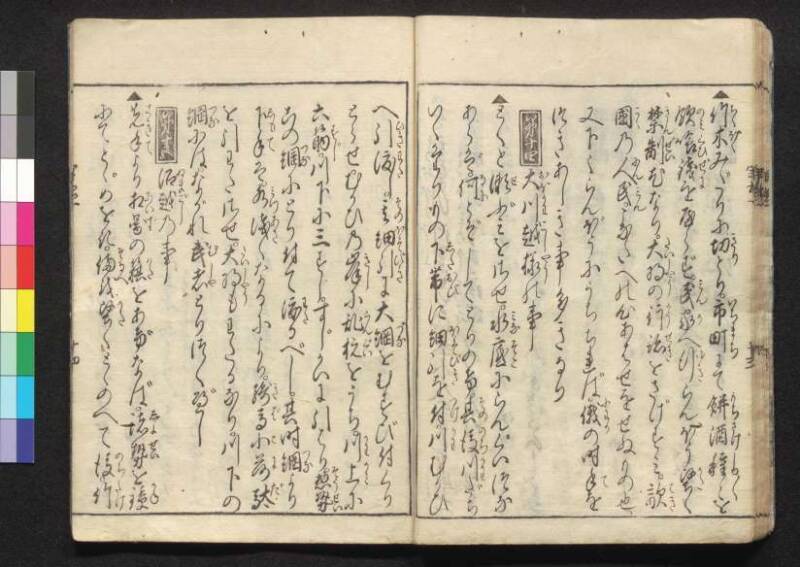
翻刻
【右丁】
▲竹木(ちくぼく)みだりに切(きり)とり。市町(いちまち)にて餅(もち)酒(さけ)種々(しゆ〳〵)を
飲喰(のみくひ)銭(ぜに)をやらず。民家(みんか)へ行(ゆき)らんぼう堅(かた)く
禁制(きんぜい)尤なり。大将(たいしやう)の行跡(かうせき)をさげすみ。敵(てき)
国(こく)の人民(にんみん)。こなたへの心あはせをせぬもの也。
又下々らんぼうにうちちれば。俄(にわか)の時 手(て)を
つきあしき事多きなり
《箱:第十四》大川(おほかわ)越様(こしやう)の事
▲とくと瀬(せ)ぶみをさせ。水底(みなそこ)にらんぐいつな
あらば。何(なに)とぞしてとりのけ。其後(そののち)川(かわ)だち
いくたりもの下帯(したおび)に細引(ほそびき)を付(つけ)。川むかひ
【左丁】
へ引渡(ひきわた)し。其(その)細引(ほそびき)に大 綱(づな)をむすび付くり
とらせ。むかひの岸(きし)に乱杭(らんぐい)をうち。川上(かわかみ)に
六 筋(すじ)。川下に三すじ。すじかいに引はり。惣勢(そうせい)
この綱(つな)にとり付て渡(わた)るべし。其時 綱(つな)より
下手(しもて)は。水(みつ)浅(あさ)くなるにより。騎馬(きば)小荷駄(こにだ)
を引わたさせ。大将(たいしやう)もわたるなり。川下の
綱(つな)には。ながれ武者(むしや)とりつくべし
《箱:第十五》沼越(ぬまごし)の事
▲先手(さきて)より相図(あいず)の籏(はた)をあげなば。諸勢(しよせい)を鐘(かね)
にてとゞめをき。備(そなへ)を堅(かた)くとゝのへて後(のち)。竹(たけ)
現代語訳
【右丁】
▲竹や木をみだりに切り取り、市町にて餅・酒など種々のものを代金も払わずに飲み食いし、民家へ行って乱暴することを、厳しく禁制することはもっともなことである。大将の行いをさげすみ、敵国の人民がこちらへ心を合わせない(味方しない)ものとなってしまう。また、下々の者が乱暴して散り散りになれば、いざという時に手がつけられず、悪いことが多い。
《第十四》大川の越え方のこと
▲十分に瀬踏みをさせ、水底に乱杭や綱があれば、何とかして取り除き、その後、川立ち(泳ぎの達者な者)を何人も、下帯に細引を付けて川の向こう岸へ引き渡し、その細引に大綱を結び付けて引き取らせる。向こう岸に乱杭を打ち、川上に
【左丁】
六筋、川下に三筋、斜めに張り渡す。全軍はこの綱を掴んで渡るべきである。その時、綱より下手は水が浅くなるので、騎馬・小荷駄を引き渡させ、大将も渡るのである。川下の綱には、流れた武者が掴まるべきである。
《第十五》沼越しのこと
▲先手より合図の旗を上げたならば、諸勢を鐘の音で止め置き、備えをしっかりと整えた後に、竹(以下次ページへ続く)
英語訳
【Right Page】
▲ It is entirely reasonable to strictly prohibit the following: the wanton cutting of bamboo and timber; eating and drinking rice cakes, sake, and various other goods in towns and markets without paying; and committing acts of violence against private homes. Such behavior causes the people of the enemy's territory to look down upon the commander's conduct and to refuse to side with one's own forces. Furthermore, if those of lower rank run amok and scatter, there will be many difficulties in getting them under control when the moment of crisis arrives.
《Section Fourteen》 On How to Cross a Large River
▲ Have the men thoroughly wade and probe the shallows. If there are spiked stakes (rangui) or ropes on the riverbed, find some means to remove them. Afterward, bind thin cords (hosobiki) to the loincloths of a number of strong swimmers (kawadachi) and have them swim to the far bank. Tie thick ropes (ōzuna) to those thin cords and have the men on the far side pull them across. Drive spiked stakes into the far bank, and stretch the ropes diagonally—
【Left Page】
six lines upstream and three lines downstream. The entire force is then to cross by holding onto these ropes. At that time, since the water becomes shallower below the ropes, cavalry and pack horses (konida) are to be led across there, and the commander crosses as well. Warriors who are swept off by the current should catch hold of the downstream ropes.
《Section Fifteen》 On Crossing a Swamp
▲ When the vanguard raises a signal flag, halt the assembled forces with a bell, carefully prepare the formation, and thereafter, bamboo— (continues on the next page)