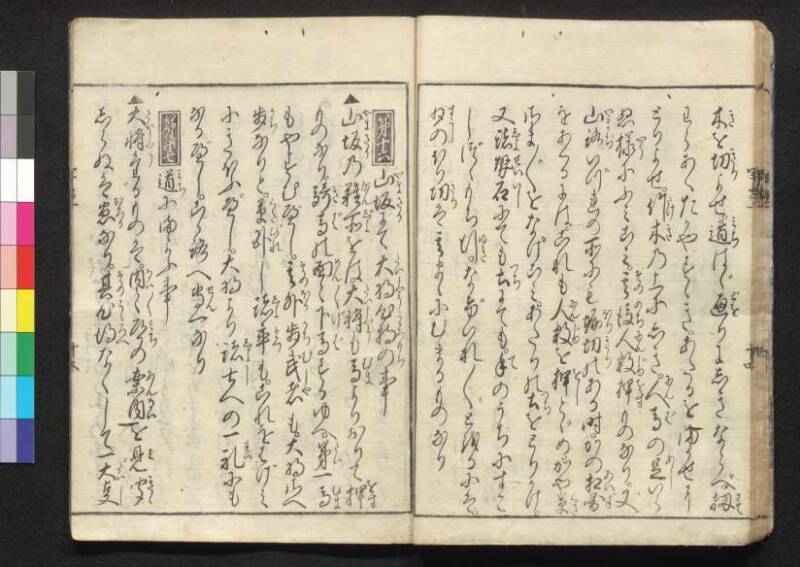
翻刻
【右丁】
木(き)を切(きり)よせ。道(みち)はゞ通(どを)りにしきならべ。扨(さて)
わらあくたかやすゝき。あたるをまかせに
とりよせ。竹木(たけき)の上にしき。人馬(にんば)の足(あし)いら
ぬ様(やう)にふみこみ。其後(そののち)人数(にんじゆ)押(をす)ものなり。又
山路(やまぢ)いづれの所にも堀切(ほりきり)のある時。かの相図(あいず)
をあくるには。これも人数(にんじゆ)を押(をし)とゞめ。かや草(くさ)
さま〴〵をなげこみ。あたりの土(つち)をとりかけ。
又 諸勢(しよせい)石(いし)にても土(つち)にても。手(て)のうちにすこ
しづゝもち行(ゆき)。なげいれ〳〵とをるには。
少(すこし)のほり切(きり)は其まゝにむまるものなり
【左丁】
《箱:第十六》山坂(やまさか)にて大将(たいしやう)心持(こゝろもち)の事
▲山坂(やまさか)の難所(なんじよ)をは。大将(たいしやう)も馬(むま)よりおりて押(をす)
ものなり。騎馬(きば)の面々(めん〳〵)下馬(げば)するゆへ。第(たい)一 馬(むま)
もやすむべし。其外(そのほか)歩武者(かちむしや)も。大将さへ
歩(かち)なりと。草臥(くたびれ)し諸卒(しよそつ)も。これをはげみ
にきほふべし。大将より諸士(しよし)への一 礼(れい)にも
なるべし。こゝろへ専(せん)一なり
《箱:第十七》道(みち)にまよふ事
▲大将(たいしやう)たるものは。内々(ない〳〵)道(みち)の案内(あんない)を見聞(みきゝ)
しらぬは愚(おろか)なり。其(その)心得(こゝろへ)なくして。一 大事(だいし)
現代語訳
【右丁】
(前ページより続き)竹や木を切り集め、道幅の分だけ敷き並べる。そして藁くず・萱・薄(すすき)など手当たり次第に取り集め、竹や木の上に敷いて、人馬の足が(沼に)沈まぬようにしっかりと踏み固め、その後に兵を進めるものである。また山道のいずれの箇所においても堀切がある時、その(沼越しと同じ)合図を開くには、これも兵を押し止め、萱や草などさまざまなものを投げ込み、周りの土を取りかけ(覆い被せ)る。また諸勢は石でも土でも、手のひらにほんの少しずつ持って行き、(堀切へ)投げ入れ投げ入れしながら通過すれば、小さな堀切はそのまま埋まるものである。
【左丁】
《第十六》山坂にて大将の心掛けのこと
▲山坂の難所では、大将も馬から下りて進むものである。騎馬の面々が下馬するので、第一に馬も休めることができる。その上、歩武者も、大将でさえ徒歩であるとなれば、疲れ果てた諸卒もこれを励みとして奮い立つであろう。また大将から諸士への一つの礼儀にもなるであろう。この心掛けが何よりも大切である。
《第十七》道に迷うこと
▲大将たるものが、内々に(あらかじめ)道の案内を見聞きして知らないのは愚かなことである。その心得なしに、一大事(の場面を)(以下次ページへ続く)
英語訳
【Right Page】
(Continuing from the previous page) Cut and gather bamboo and timber, and lay them side by side to the width of the road. Then collect straw scraps, miscanthus grass (kaya), and pampas grass (susuki) in whatever quantities are at hand, spread them over the bamboo and timber, and tread them down firmly so that the feet of men and horses do not sink in. Only after this should the troops advance. Likewise, when there is a trench-cut (horikiri) at any point along a mountain road, the same signal is used to open the passage: again halt the troops, throw in kaya grass and various other materials, and heap soil on top. Furthermore, if each soldier carries just a small amount of earth or stones in his hands and tosses it in as he passes, even a shallow trench-cut will be filled in and passable as-is.
【Left Page】
《Section Sixteen》 On the Commander's Conduct on Mountain Slopes
▲ At difficult mountain passes, the commander too should dismount and proceed on foot. Because all the mounted men will dismount as well, this provides the horses with a much-needed rest above all else. Moreover, if even the foot soldiers see that the commander himself is on foot, even the most exhausted among them will take heart and press forward with renewed vigor. It also serves as an act of respect on the part of the commander toward his men. This is the most important thing to bear in mind.
《Section Seventeen》 On Losing One's Way
▲ It is foolish for one who serves as commander not to have privately inquired about and learned the lay of the roads in advance. Without such preparation, in a moment of great crisis— (continues on the next page)