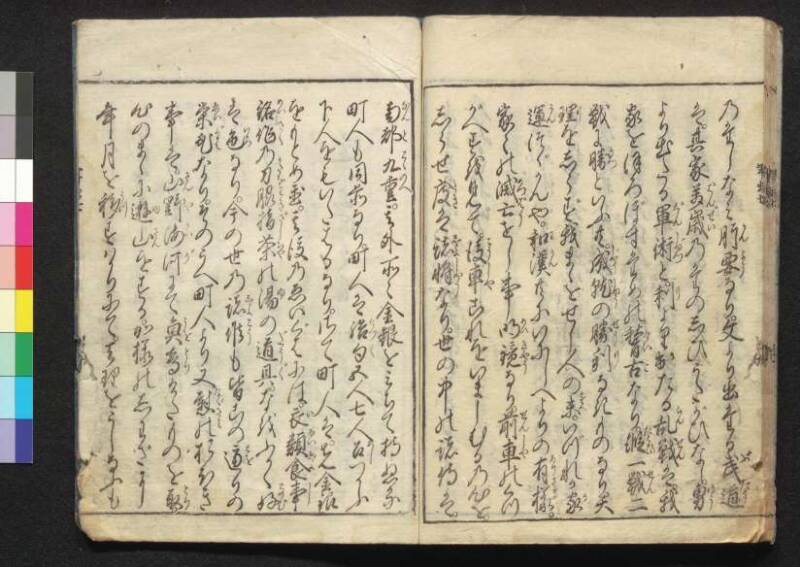
翻刻
【右丁】
のたしなみ肝要(かんよう)なり。文より出たる武道(ぶたう)
は。其家/萬歳(ばんぜい)のたのしひうたがひなし。勇(ゆう)
より出たる軍術(ぐんじゆつ)と。利(り)より出たる乱戦(らんせん)は。我
家をほろぼすための稽古(けいこ)なり。縦(たとひ)一/戦(せん)二
戦に勝(かつ)といふ共。成就(じやうじゆう)の勝利(せうり)なきものなり。天
理(り)を知らず我まゝをせし人の末(すへ)。いづれか家(か)
運(うん)つゞかんや。和漢(わかん)共にいにしへよりの有様(ありさま)。
家々の滅亡(めつばう)せし事/明鏡(めいきやう)なり。前車(せんしや)のくつ
がへすを見て。後車(こうしや)これをいましむるの心を。
しらせ度(たき)は諸将(しよしやう)なり。世の中の諸侍は。
【左丁】
南都(なんと)九重(こゝのへ)。其外所々金銀をみちて持ぬる
町人も同前なり。町人は結句(けつく)五人七人/召(めし)つかふ
下人をもいたはるなり。さて町人は。先金銀
をもとめ置。其後のゑいぐはには。衣類(いるい)食事(しよし)#1
銘作(めいさく)の刀(かたな)脇指(わきざし)茶(ちや)の湯(ゆ)の道具(だうぐ)。なをふかく好(このむ)
は色(いろ)なり。今の世の諸侯(しよこう)も皆この通(とを)りの
栄花(ゑいぐは)なり。そのうへ町人より又/慰(なぐさみ)のおほき
事は。山野(さんや)海河(かいが)にて魚(うを)鳥(とり)けたものを取(とり)。
心のまゝに遊山(ゆさん)をする。加様のしわざに
年月を移(うつ)すはかりにて。天理をうしなふも
現代語訳
【右丁】
(文学への)たしなみが肝要である。文(学問)から生まれた武道は、その家が万歳(末永く)栄えることは疑いない。しかし、勇気(勇猛心)のみから生まれた軍術と、利欲から生まれた乱戦(闘争)は、自らの家を滅ぼすための稽古に過ぎない。たとえ一戦二戦に勝ったとしても、最終的な勝利を得るものではない。天理(天の道理)を知らず、我がままを通した者の末路として、どうして家運が続くことがあろうか。日本・中国ともに、古くからの有様として、家々が滅亡してきたことは、明らかな事実(明鏡)である。前の車が覆るのを見て、後の車がこれを戒める(同じ轍を踏まないようにする)という心を、知らせたいのが(この書を著した)諸将への思いである。世の中の諸侍は、
【左丁】
奈良(南都)や京(九重)、その他各地において、金銀をたっぷりと持ち歩く町人と同じようなものである。町人は結局、五人・七人を召し使う下人(使用人)さえも労わるものである。さて、町人はまず金銀を蓄え、その後の栄華としては、衣類・食事・銘作の刀・脇差・茶の湯の道具などを好み、さらに深く好むのは色(色事・遊興)である。今の世の諸侯(大名・領主)も皆、このような栄華を追い求めている。その上、町人よりもさらに多くの慰みがあることは、山野・海川において魚・鳥・獣を獲り、心のままに遊山(物見遊山)をすることである。このような所業に年月を費やすばかりで、天理を失うことも…
英語訳
**[Right page]**
…the cultivation of learning is of vital importance. A martial way (budō) that springs from scholarship (learning) will, without doubt, bring lasting prosperity to one's house for generations. However, military arts that spring from mere valor, and battlefield engagements driven by the desire for gain, are nothing but practice in bringing ruin upon one's own house. Even if one wins a battle or two, such a person will never achieve ultimate and lasting victory. As for the fate of those who, ignorant of the Principle of Heaven (tenri), have acted as they pleased — how could their family fortunes ever endure? Looking at the history of both Japan and China since ancient times, it is as clear as a mirror that countless houses have fallen into ruin. The desire to make known the spirit of the proverb — "seeing the cart ahead overturn, the cart behind takes warning" — is what motivates the commanders (who transmit these teachings). As for the warriors of this world:
**[Left page]**
…whether in Nara (the Southern Capital), the capital Kyoto (the Nine-Fold Enclosure), or in various other places, they are no different from wealthy merchants who go about laden with gold and silver. Merchants, in the end, show kindness even to the five or seven servants they employ. Now, merchants first accumulate gold and silver, and thereafter, in their prosperity, they pursue fine clothing, good food, renowned swords and short swords, and implements for the tea ceremony — and what they most deeply pursue beyond these is erotic pleasure (iro). The lords (shokō) of the present age all pursue this same manner of flourishing. Moreover, what affords them even greater amusement than the merchants is the hunting of fish, birds, and beasts in mountains, fields, seas, and rivers, and going on excursions and outings at will. Spending years and months in nothing but such pursuits, losing the Principle of Heaven is also…