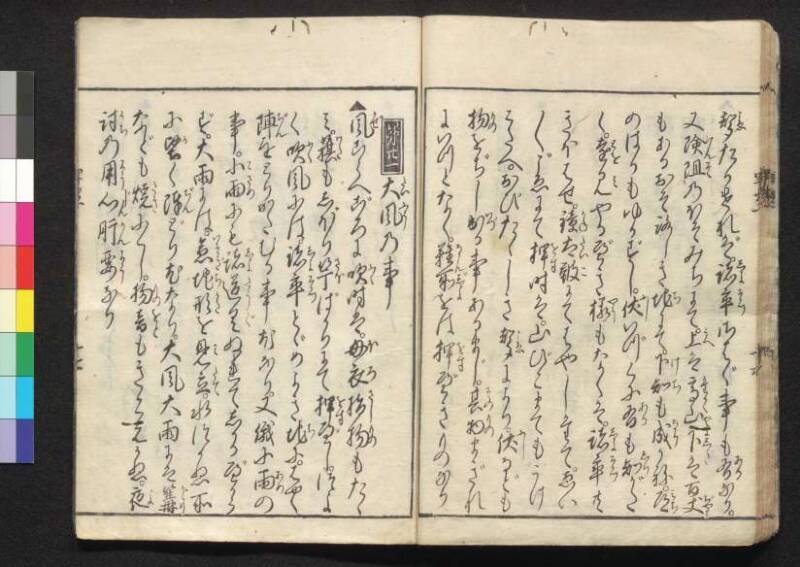
翻刻
【右丁】
声(こゑ)たかければ。諸卒(しよそつ)さはぐ事も有(ある)なり。
又 険阻(けんそ)のほそみちにて。上(うへ)は高(たかく)山下(やました)は百 丈(ぢやう)
もあるおそろしき地(ち)にて。下知(けち)も成(なり)かね。道(みち)
のはかもゆかずし。伏(ふし)いづくに有(ある)も知(しり)がた
く。遠見(とをみ)やるべき様(やう)もなくは。諸卒(しよそつ)共
きほはせ。鐘(かね)太鼓(たいこ)にてはやしたて。ゑい
〳〵ごゑにて押(をす)時は。山びこまてもうけ
こたへ。おびたゝしき声(こゑ)により。伏(ふし)なども
物(もの)をぢし出(いづ)る事あるまじ。其(その)物(もの)まぎれ
にいつとなく。難所(なんじよ)をは押(をす)べきものなり
【左丁】
《箱:第廿一》大風(たいふう)の事
▲風(かぜ)こらへごろに吹(ふく)時は。母衣(ほろ)指物(さしもの)もたゝ
み。籏(はた)もしぼり竿(さほ)ばかりにて押(をす)べし。つよ
く吹(ふく)風には。諸卒(しよそつ)とゞめよき地(ち)に。はやく
陣(ぢん)をとりかたむる事尤なり。又俄に雨(あめ)の
事。小雨(こさめ)にも諸道具(しよたうぐ)ぬれてしかるべから
ず。大雨には。急(いそぎ)地形(ちかた)を見立(みたて)。水つかぬ所
に《振り仮名:堅|か□#2》く陣(ぢん)どり尤なり。大風大雨には篝(かゝり)
なども焼(たき)にくし。物音(ものをと)もきこえかぬ。夜(よ)
討(うち)の用心(ようじん)肝要(かんよう)なり
現代語訳
【右丁】
(前ページより続き)声が高ければ、諸卒が騒ぎ立てることもある。また、険しい細道で、上は高い山、下は百丈(非常に深い谷)もあるような恐ろしい地形では、下知(命令)も行き届きにくく、道の進みもはかどらず、伏兵がどこにいるかも知りがたく、遠見(物見)を出す方法もない場合には、諸卒を皆で奮い立たせ、鐘や太鼓を打ち鳴らしてはやし立て、「えいえい」という掛け声とともに押し進めば、山彦まで響き返って、おびただしい声の勢いに、伏兵などもたじろいで出てくることはあるまい。その物音や騒がしさに紛れて、いつの間にか難所を通り抜けるべきものである。
【左丁】
《第二十一》大風のこと
▲風が堪えられる程度に吹いている時は、母衣(ほろ)や指物をたたみ、旗も絞って竿だけにして進むべきである。強く吹く風の時には、諸卒を留めやすい地に早く陣を構え固めることがもっともである。また、にわかに雨が降ることについて、小雨でも諸道具が濡れてはよくない。大雨の時には、急ぎ地形を見定めて、水につかない場所に堅く陣取ることがもっともである。大風・大雨の時には篝火なども焚きにくく、物音も聞こえにくい。夜討ちへの用心が肝要である。
英語訳
【Right Page】
(Continuing from the previous page) —if their voices are loud, the troops may fall into disorder. Furthermore, in a steep and narrow mountain pass where the mountains rise high above and the ravines plunge a hundred jō below, in such terrifying terrain where orders cannot be properly conveyed, where progress along the road is slow, where it is impossible to know where ambushers may be lurking, and where there is no means of sending out lookouts—in such cases, one should rouse all the troops together, beat the bells and drums to urge them on, and advance with great battle cries of "Ei! Ei!" The echoes resounding off the mountains will create a tremendous clamor, and with such an overwhelming roar, any hidden ambushers will be so frightened that they will not dare to emerge. Taking advantage of that commotion and noise, one should pass through the difficult terrain before anyone notices.
【Left Page】
《Section Twenty-One》 On Strong Winds
▲ When the wind is blowing at a tolerable level, the horo (cape-like ornamental gear worn on the back of mounted warriors) and personal battle standards (sashimono) should be folded up, and the flags should be furled so that only the poles remain, and the army should advance in this manner. When the wind is blowing strongly, it is most advisable to quickly find suitable ground to halt the troops and establish a firm encampment. Regarding sudden rainfall: even in a light rain, it is not good for equipment and weapons to become wet. In heavy rain, one should quickly assess the terrain and it is most advisable to set up a firm encampment in a place that will not be flooded. In great wind and heavy rain, signal fires (kagari) are difficult to keep burning, and sounds are hard to hear. Therefore, vigilance against night raids is of the utmost importance.