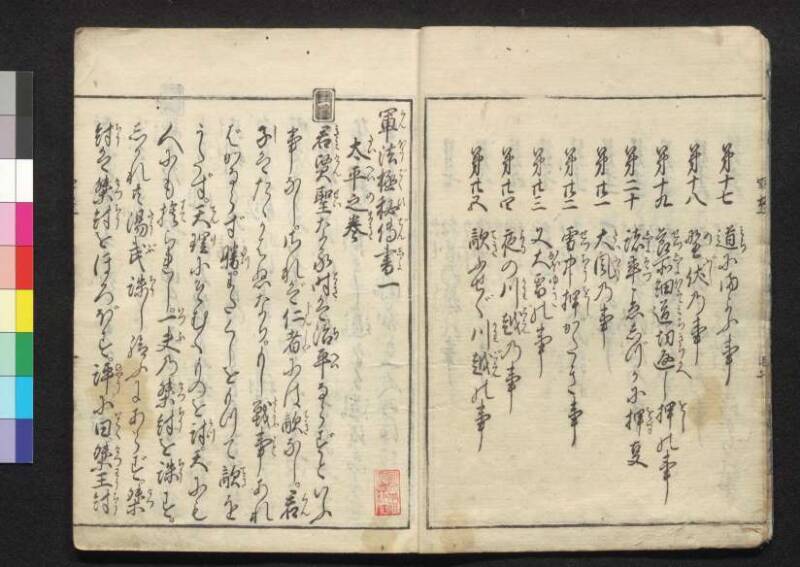
翻刻
【右丁】
第十七 道(みち)にまよふ事
第十八 野伏(のぶし)の事
第十九 節所(せつしよ)細道(ほそみち)切返(きりかへ)し押(をし)の事
第二十 諸卒(しよそつ)こゑしづかに押(をす)事
第廿一 大風(たいふう)の事
第廿二 雪中(せつちう)押(をし)がたき事
第廿三 又 大雪(おほゆき)の事
第廿四 夜(よる)の川越(かわごえ)の事
第廿五 敵(てき)ふせぐ川越(かわごえ)の事
【左丁】
軍法極秘伝書(くんほうごくひでんしよ)一 【蔵書印】#2
太平之巻(たいへいのまき)
#1
《箱:一》君(きみ)賢聖(けんせい)なる時(とき)は。治平(ちへい)ならずといふ
事なし。されば仁者(じんしや)には敵(てき)なし。君(くん)
子(し)はたゝかはぬなり。もし戦事(たゝかふこと)あれ
ばかならず勝(かつ)。わたくしをもつて敵(てき)を
うたず。天理(てんり)にそむくものを討(うつ)。天にも
人にも捨(すて)られし。一夫(いつふ)の桀紂(けつちう)を誅(ちう)す。
しかれ共/湯武(たうぶ)誅(ちう)し給ふにあらず。桀(けつ)
紂(ちう)は桀紂(けつちう)をほろぼす。評(ひやう)に曰(いはく)。桀王(けつわう)紂(ちう)
現代語訳
【右丁】
第十七条 道に迷うこと
第十八条 野伏せ(敵の伏兵・ゲリラ戦)のこと
第十九条 難所・細道での折り返し進軍のこと
第二十条 諸将兵が声を静かにして進軍すること
第二十一条 大風(暴風)のこと
第二十二条 雪中での進軍が困難なこと
第二十三条 また、大雪のこと
第二十四条 夜間の川越えのこと
第二十五条 敵の防衛する川の渡河のこと
【左丁】
軍法極秘伝書 第一巻
太平之巻
一、君主が賢明・聖徳である時は、世が治まり平和でないということはない。それゆえ、仁徳ある者には敵がいない。徳ある君子はそもそも戦わないものである。もし戦うことがあれば、必ず勝つ。私利私欲をもって敵を討つのではなく、天の理(ことわり)に背くものを討つのである。天にも人にも見捨てられた、ただ一人の暴君である桀・紂を誅する。しかしながら、湯王・武王が誅されたのではなく、桀・紂はその悪行によって自ら滅びたのである。評に曰く、桀王・紂王は……
英語訳
【Right Page】
Article 17: On losing one's way on the march
Article 18: On野伏せ (nobushi) — ambushes and guerrilla tactics by enemy stragglers
Article 19: On advancing through difficult passes and narrow roads with reversal maneuvers
Article 20: On all soldiers advancing in silence
Article 21: On great storms and strong winds
Article 22: On the difficulty of advancing through snow
Article 23: Also, on heavy snowfall
Article 24: On crossing rivers at night
Article 25: On crossing rivers defended by the enemy
【Left Page】
Secret Transmission of Military Law — Volume One
The Scroll of Great Peace (Taihei no Maki)
One: When a ruler is wise and virtuous, there is nothing that will prevent the realm from being governed in peace. Therefore, one who possesses benevolence has no enemies. A gentleman of virtue does not wage war in the first place. If it should come to battle, he will without fail be victorious. He does not strike the enemy out of personal interest or selfish desire, but rather strikes down those who defy the principles of Heaven. He punishes the solitary tyrant — Jie and Zhou — who have been abandoned by both Heaven and man. Yet it is not that Tang and Wu punished them; rather, Jie and Zhou brought ruin upon themselves through their own wickedness. The commentary states: King Jie and King Zhou…