翻刻
【右丁】
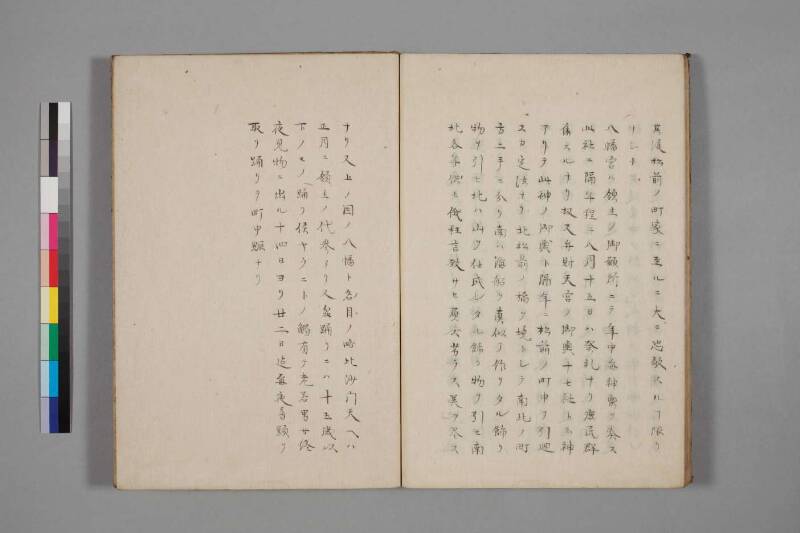
其後松前ノ町家ニ至ルニ大ニ恕敬スルヿ限リ
ナシト
八幡宮ハ領主ノ御願所ニテ年中毎神楽ヲ奏ス
此社ニ隔年程ニ八月十五日ハ祭礼ナリ庶民群
集スルナリ扨又弁財天宮ノ御輿十七社ト云神
アリテ此神ノ御輿ト隔年ニ松前ノ町中ヲ引廻
スカ定法ナリ北松前ノ橋ヲ境トシテ南北ノ町
方二手ニ分リ南ハ海船ヲ真似テ作リタル飾リ
物ヲ引ヒ北ハ山ヲ仕成レタル飾リ物ヲ引ヒ南
北各子供モ俄狂言致サセ負ズ劣ラス美ヲ尽ス
【左丁】
ナリ又上ノ国ノ八幡ト名目ノ略比沙門天ヘハ
正月ニ領主ノ代参アリ又盆踊リニハ十五歳以
下ノモノ踊リ侯ヤウニトノ触有テ老若男女終
夜見物ニ出ル十四日ヨリ廿二日迄毎夜音頭ヲ
取リ踊リテ町中賑ナリ
現代語訳
【右丁】
その後、松前の町家に至っては、大いに敬い尊崇することこの上ないとのことである。
八幡宮は領主の御願所であって、年中、毎度神楽を奏する。この社では隔年ほどに、八月十五日に祭礼が行われ、庶民が群集するのである。さて、また弁財天宮の御輿と「十七社」と呼ばれる神があって、この神の御輿と隔年に松前の町中を引き回すのが定法となっている。北松前の橋を境として南北の町方が二手に分かれ、南は海船を模して作った飾り物を引き、北は山を仕立てた飾り物を引く。南北それぞれに子供たちも即興の狂言を演じ、互いに負けず劣らず趣向を尽くすの
【左丁】
である。また、上ノ国の八幡と名のある毘沙門天へは、正月に領主の代参がある。また盆踊りには、十五歳以下の者が踊るようにとの触れがあって、老若男女が夜通し見物に出る。十四日から二十二日まで毎夜音頭を取って踊り、町中が賑わうのである。
英語訳
[Right page]
Afterward, at the townspeople's houses of Matsumae, the reverence and veneration shown is said to be beyond measure.
The Hachiman Shrine is the domain lord's place of prayer (*goganjo*), where *kagura* sacred performances are held throughout the year on multiple occasions. At this shrine, roughly every other year, a festival (*sairei*) is held on the fifteenth day of the eighth month, at which commoners gather in great numbers. Furthermore, there are the portable shrine (*omikoshi*) of the Benzaiten Shrine and the deity known as the "Jūshichisha" (Seventeen Shrines), and it is established custom that the portable shrine of this deity is paraded through the streets of Matsumae in alternate years. Using the bridge of North Matsumae as the boundary, the town is divided into northern and southern districts, with the south pulling a decorative float fashioned in the likeness of a sailing vessel, and the north pulling a float made to resemble a mountain. Children from both the southern and northern districts also perform impromptu comic plays (*kyōgen*), each side vying to outdo the other in splendor and ingenuity.
[Left page]
Additionally, for the Bishamonten enshrined at the Hachiman of Kaminokuni—or a deity of that name—the domain lord sends a proxy worshipper (*daisan*) in the New Year. For the Bon Festival dances (*Bon odori*), a public notice is issued directing those fifteen years of age and under to participate in the dancing, and people of all ages and both sexes come out to watch through the night. From the fourteenth to the twenty-second day, the *ondo* leading songs are sung and dancing continues every night, filling the whole town with festive cheer.