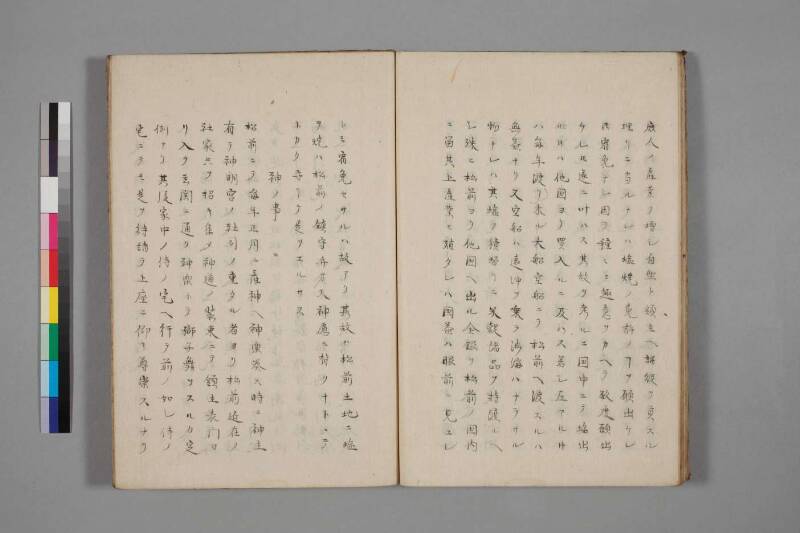
翻刻
【右丁】
庶人ノ産業ヲ増シ自然ト領主ヘ課役ヲ貢スル
理リニ当ルナレハ塩焼ノ免許ノヿヲ願出ケレ
𪜈宥免ナシ因テ種々ニ趣意ヲカヘテ数度願出
ケレ𪜈遂ニ叶ハス其故ヲ考ルニ国中ニテ塩出
ルトキハ他国ヨリ買入ルニ及ハス若シ左アルトキ
ハ毎年渡リ来ル大船空船ニテ松前ヘ渡スルハ
無益ナリ又空船ハ遠沖ヲ乗テ渉海ハナラサル
物ナレハ其塩ヲ積替リニ米穀諸品ヲ持渡ルヘ
シ殊ニ松前ヨリ他国ヘ出ル金銀ヲ松前ノ国内
ニ留其上産業モ殖タレハ国益ハ眼前ニ見エレ
【左丁】
トモ宥免セサルハ故アリ其故ハ松前土地ニ塩
ヲ焼ハ松前ノ鎮守弁才天神慮ニ背クナトヽテ
トカク守リテ是ヲユルサス
神ノ事
松前ニテ毎年正月ニ産神ヘ神楽奏ス時ニ神主
有テ神明宮ノ社司ノ重タル者ヨリ松前近在ノ
社家共ヲ招キ集メ神道ノ装束ニテ領主表門ヨ
リ入テ玄関ニ通リ神楽トテ獅子舞ヲスルカ定
例ナリ其後家中ノ侍ノ宅ヘ行テ前ノ如シ侍ノ
宅ニテモ是ヲ待請テ上座ニ仰キ尊崇スルナリ
現代語訳
【右丁】
庶民の産業を増やし、自然と領主へ課役を納めることの道理にかなうので、塩焼きの免許のことを願い出たところ、許可が下りなかった。そこで様々に趣旨を変えて数度にわたって願い出たが、ついに叶わなかった。その理由を考えてみると、国内で塩が産出されるときは、他国から買い入れる必要がなくなる。もしそのようになれば、毎年渡って来る大船が空船で松前へ渡るのは無益となる。また空船は遠沖を航行して渡海することができないものであるから、その塩を積む代わりに米穀・諸品を持ち渡るべきである。とりわけ松前から他国へ流出する金銀を松前の国内にとどめ、その上、産業も増えるのであれば、国益は目に見えて明らかであるが、
【左丁】
それでも許可しないのには訳がある。その訳は、松前の土地で塩を焼くと、松前の鎮守である弁才天の神慮に背くなどといって、何かと口実を設けてこれを許さないのである。
神のこと
松前では毎年正月に産土神へ神楽を奏する。その折に神主がいて、神明宮の社司の中の重立った者から松前近在の社家たちを招き集め、神道の装束にて領主の表門より入って玄関に通り、神楽として獅子舞を行うのが定例となっている。その後、家中の侍の宅へ行っても同様である。侍の宅でもこれを待ち受けて、上座に仰ぎ尊崇するのである。
英語訳
[Right page]
…as this was in accordance with the principle of increasing the livelihoods of commoners and naturally yielding tribute and corvée duties to the domain lord, a petition was submitted requesting permission to produce salt. However, no permission was granted. Various approaches and arguments were tried across numerous petitions, but in the end none succeeded. Thinking over the reasons why: if salt were produced domestically, there would be no need to purchase it from other provinces. Were that to happen, the large ships that make the crossing every year would be making the voyage to Matsumae in ballast, which would be pointless. Furthermore, since empty ships cannot navigate the open sea on long crossings, they ought to carry rice and various goods in place of the salt as return cargo. Moreover, by keeping within Matsumae the gold and silver that would otherwise flow out to other provinces, and with domestic industries also growing, the benefit to the domain would be plain to see—
[Left page]
and yet they would not grant permission, and there is a reason for this. The reason is that if salt were boiled on the soil of Matsumae, it would go against the divine will (*shinryo*) of Benzaiten, the tutelary deity (*chinjugami*) of Matsumae—or so the argument ran—and on such pretexts they persistently refused to allow it.
On the Gods
In Matsumae, every year at the New Year, *kagura* sacred music and dance is performed in offering to the local tutelary deity (*ubusunagami*). On this occasion, the Shinto priests gather: the senior officiants of the Shinmei Shrine, along with the shrine families (*shake*) from the surrounding area of Matsumae are called together, and dressed in Shinto ceremonial robes they enter through the front gate of the domain lord's residence and proceed to the entrance hall, where the performance of a lion dance (*shishimai*) as *kagura* is established custom. Afterward, they proceed in the same fashion to the residences of the domain's samurai retainers. At the samurai residences too, they are received with reverence, looked up to, and honored in the place of highest esteem.