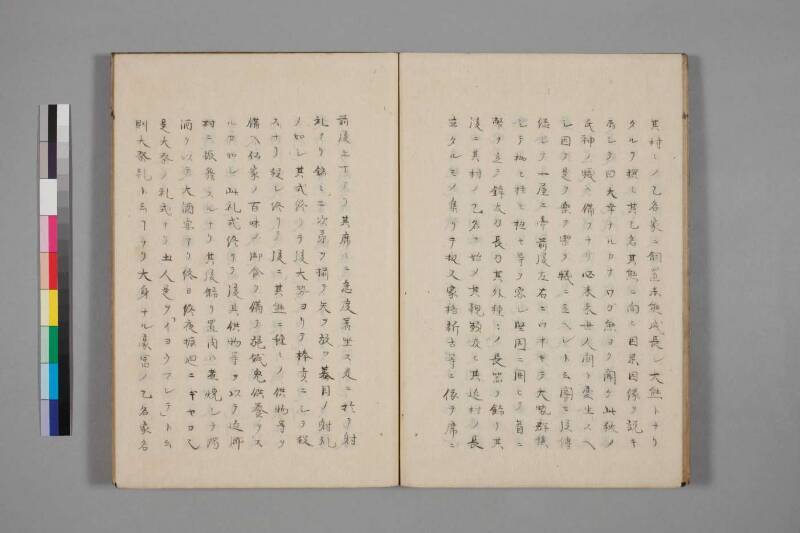
翻刻
【右丁】
其村々ノ乙名家ニ飼置赤熊成長シ大熊トナリ
タルヲ撰ミ其乙名其熊ニ向ヒ因果因縁ヲ説キ
示シテ曰大幸ナルカナワガ熊ヨク聞ケ此狄ノ
氏神ノ犠ニ備フナリ必未来世人間ト変生スヘ
シ因テ是ヲ楽テ潔ク犠ニ立ヘシト云聞セ後縛
縊シテ一屋ニ牽前後左右ニツナキテ大勢群集
シテ枷セ桎セ極セ等ヲ容レ堅固ニ囲ヒテ首ニ
幣ヲ立テ鉾太刀長刀其外種々ノ長器ヲ飾リ其
後ニ其村ノ乙名ヲ始メ其親類及ヒ其近村ノ長
立タルモノ集リテ扨又家格新古等ニ依テ席ニ
【左丁】
前後上下アリ其席々ニ急度着座ス是ニ於テ射
礼アリ銘々ニ次第ヲ揃テ矢ヲ放ツ蟇目ノ射礼
ノ如シ其式終リテ後大勢ヨリテ棒責ニシテ殺
スナリ殺シ終リテ後ニ其熊ニ種々ノ供物等ヲ
備ヘ仏家ノ百味ノ御食ヲ備テ施餓鬼供養ヲス
ルカ如シ此礼式終リテ後其供物等ヲ以テ近郷
村ニ振舞スルナリ其後飾リ置肉ハ煮焼シテ濁
酒ヲ以テ大酒宴アリ終日終夜振廻ニギヤカ也
是大祭ノ礼式ナリ土人是ヲ「イヨウマンテ」ト云
則大祭礼ト云ヿナリ大身ナル豪富ノ乙名家名
現代語訳
【右丁】
各村々の乙名(おとな)の家に飼い置いた赤熊が成長して大熊となったものを選び、その乙名はその熊に向かって因果因縁を説き示して言うには、「大いなる幸いであるぞ、我が熊よ、よく聞け。この(蝦夷の)氏神への生け贄(いけにえ)に備えるのである。必ずや来世には人間に生まれ変わるであろう。よってこれを喜び、潔く生け贄として立つべし」と言い聞かせた後、縛り絞めて一つの屋に引き入れ、前後左右に繋いで、大勢が群集して枷(かせ)・桎(あしかせ)・極(ごく)などをはめ込んで堅固に囲い、首に幣(ぬさ)を立て、鉾・太刀・長刀、その他種々の長い武器を飾り、その後にその村の乙名をはじめ、その親類及びその近隣村の有力者たちが集まって、さてまた家格の新旧などによって席に
【左丁】
前後・上下の順があり、それぞれの席に厳かに着座する。ここにおいて射礼(しゃれい)があり、銘々が順番を揃えて矢を放つ。蟇目(ひきめ)の射礼のようなものである。その式が終わった後、大勢が寄ってたかって棒責め(ぼうぜめ)にして殺すのである。殺し終わった後に、その熊に種々の供物などを備え、仏家の百味の御食(おんじき)を備えて施餓鬼供養(せがきくよう)をするかのようである。この礼式が終わった後、その供物などをもって近郷近村に振る舞いをするのである。その後、飾り置いた肉は煮たり焼いたりして、濁り酒をもって大酒宴があり、終日・終夜の振る舞いにて賑やかである。これが大祭の礼式である。土人はこれを「イヨウマンテ」と言う。すなわち大祭礼ということである。大身(たいしん)で豪富の乙名の家名
英語訳
【Right Folio】
From among the brown bears that had been raised in captivity at the homes of village elders (*otona*) in each village, one that had grown into a full-sized adult bear would be selected. The elder would then turn to the bear and expound upon the principles of karmic cause and effect (*inga-innen*), speaking as follows: "What great fortune is yours! Listen well, my bear. You are to be prepared as a sacrificial offering to the tutelary deity (*ujigami*) of these people (the Ainu). Surely in your next life you shall be reborn as a human being. Therefore, rejoice in this, and present yourself purely and willingly as a sacrifice." After thus addressing the bear, it would be bound and strangled and led into a building, where it was tethered at the front, back, left, and right, and a great number of people would gather around, fastening it with manacles (*kase*), fetters (*ashikase*), and restraints of various kinds, surrounding it firmly. A *nusa* (ritual paper or wooden wand offering) was placed at its neck, and spears, swords, halberds, and other various long weapons were arranged in adornment. After this, the elder of the village, along with his kinsmen and the leading figures of the neighboring villages, assembled, and according to the seniority and rank of each household, they took their seats in
【Left Folio】
a prescribed order of precedence, both fore and aft, high and low. Each duly took their assigned seat. A ceremony of ritual arrow-shooting (*sharei*) was then performed, with each participant taking their turn in sequence to release an arrow—resembling the *hikime* (blunt-headed arrow) ceremony of formal archery rites. After this ceremony concluded, a great number of people set upon the bear together and killed it by beating it with clubs. Once the bear had been killed, various offerings were laid out before it, and ritual foods of many kinds were presented—much like the Buddhist *segaki* ceremony of offerings and memorial rites for hungry spirits. When this ritual was complete, the offerings were then shared and distributed as a feast to the people of the nearby villages and hamlets. After this, the meat that had been set aside and decorated was boiled and roasted, and a great banquet was held with unrefined sake (*doburoku*), with feasting and revelry that continued throughout the day and throughout the night. This constitutes the ritual of the Grand Festival. The native people (*dojin*) call this *"Iyomante."* This is to say, it is what is meant by a Grand Ceremonial Festival (*daisairei*). The prestigious and wealthy households of leading elders...