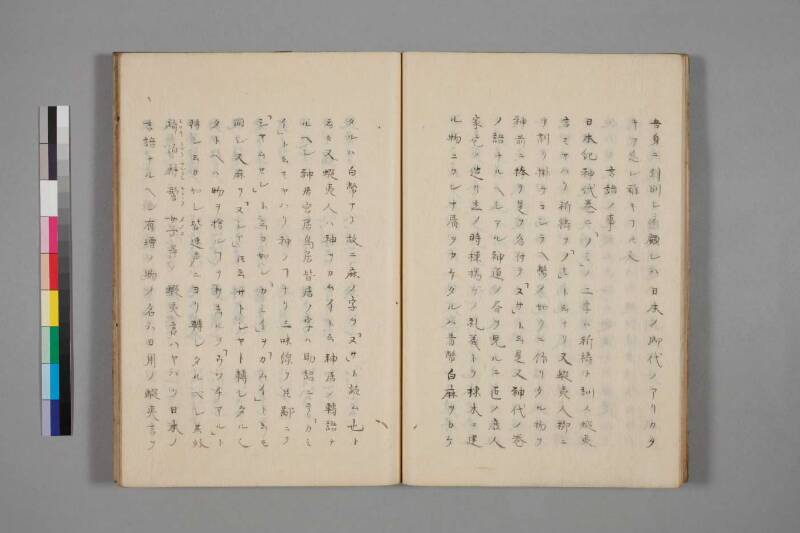
翻刻
【右丁】
吾身ニ引別レテ顧レハ日本ノ御代ノアリカタ
キヲ忘レ難キコトトモ也
言語ノ事
日本紀神代巻ニ「ノミ」ノ二字ハ祈祷ト訓ス蝦夷
言モヤアハリ祈祷ヲ「ノミ」ト云ナリ又蝦夷人柳ニ
テ削リ掛ケコシラヘ幣ノ如クニ作リタル物ヲ
神前ニ捧テ是ヲ名付テ「ヌサ」ト云是又神代ノ巻
ノ語ナルヘシアル神道ノ書ヲ見ルニ匠ノ庶人
家宅ヲ造リ立ノ時棟揚ゲノ礼義トテ棟木ニ建
ル物ニカンナ屑ヲカケタルハ青幣白麻ヲカケ
【左丁】
タルハ白幣ナリ故ニ麻ノ字ヲ「ヌサ」ト読ム也ト
云々又蝦夷人ハ神ヲカムイト云神居ノ転語ナ
ルヘシ神居宮居鳥居皆居ノ字ハ助語ニテ「カミ
イ」ト云モヤハリ神ノコトナリ三味線ヲ片鄙ニテ
「シヤムセン」ト云カ如シ「カミイ」ヲ「カムイ」ト云モ
同シ又麻ヲ「ヌシヤ」トモ云サトシヤト転シタル也
タトヘハ物ヲ捨ルコトヲ打去ルヲ「ウツチヤル」ト
転シ云カ如シ皆連声ニヨリ転シタルベシ其外
崎(ミサキ)泊(トマリ)拝(オンカミ)髻(モトヽリ)女子(メノコ)等ノ蝦夷言ハヤハリ日本ノ
言語ナルヘシ有増ノ物ノ名ハ日用ノ蝦夷言ヲ
現代語訳
【右丁】
自分の身に引き比べて振り返ってみると、日本の御代のありがたさを忘れ難いことである。
言語のこと
日本書紀神代巻に「ノミ」の二字は祈祷と訓読する。蝦夷の言葉もやはり祈祷を「ノミ」と言うのである。また蝦夷人は柳で削り掛けを作り、幣のようにしたものを神前に捧げ、これを名付けて「ヌサ」と言う。これもまた神代巻の語であろう。ある神道の書を見ると、大工などの庶民が家宅を建てる時、棟上げの礼儀として棟木に立てる物にかんな屑をかけたものは青幣、白麻をかけた
【左丁】
ものは白幣である。故に麻の字を「ヌサ」と読むのであると書かれている。また蝦夷人は神を「カムイ」と言う。これは神居の転訛であろう。神居、宮居、鳥居、皆「居」の字は助語で「カミイ」と言うのもやはり神のことである。三味線を片田舎で「シャムセン」と言うようなものである。「カミイ」を「カムイ」と言うのも同じである。また麻を「ヌシャ」とも言う。「サトシャ」と転じたものである。例えば物を捨てることを「打ち遣る」を「ウツチャル」と転じて言うようなものである。皆連声により転じたのであろう。その他、崎(ミサキ)、泊(トマリ)、拝(オンカミ)、髻(モトドリ)、女子(メノコ)等の蝦夷言葉はやはり日本の言語であろう。ありふれた物の名前は日用の蝦夷言葉を
英語訳
【Right Page】
When I reflect upon myself and look back, the gratefulness for Japan's imperial reign is something unforgettable.
On Language
In the Age of Gods volume of the Nihon Shoki, the two characters "nomi" are read as "prayer." The Ainu language also calls prayer "nomi." Furthermore, the Ainu people carve willow wood into hanging decorations, making them like ritual streamers, and offer them before the gods, naming them "nusa." This too must be language from the Age of Gods volume. Looking at a certain Shinto text, when craftsmen and commoners build houses, as part of the ridge-raising ceremony, wood shavings hung on the ridge beam represent blue streamers, and white hemp hung there
【Left Page】
represents white streamers. Therefore, the character for hemp is read as "nusa," it states. Also, the Ainu people call gods "kamui." This is likely a phonetic transformation of "kamii" (divine dwelling). In "kamii" (divine dwelling), "kyokyoi" (imperial dwelling), and "torii" (shrine gate), the character "i" (dwelling) is an auxiliary word, and "kamii" also refers to the divine. It's like how people in remote areas pronounce "shamisen" as "shamisen." Saying "kamii" as "kamui" is the same phenomenon. Hemp is also called "nusha," which is a transformation of "satosha." For example, it's like how "throwing away" (utechiyaru) gets transformed and pronounced as "ucchiyaru." All of these are likely transformations due to euphonic changes. Other Ainu words such as cape (misaki), harbor (tomari), worship (onkami), topknot (motodori), and girl (menoko) are probably also Japanese language. Common object names use everyday Ainu words