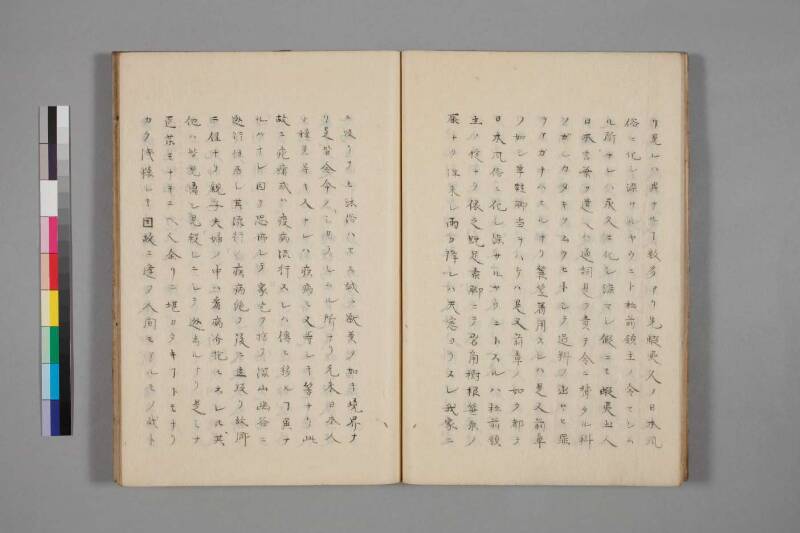
翻刻
【右丁】
リ見レハ異ナルヿ数多アリ先蝦夷人ノ日本風
俗ニ化シ染サルヤウニト松前領主ノ令セシム
ル所ナレハ永久ニ化シ染マシ仮ニモ蝦夷土人
日本言葉ヲ遣ヘハ通詞是ヲ責テ令ニ背タル科
ノガレカタキヲムクヒトシテ過料ヲ出サセ罪
ヲアガナハセルナリ蓑笠着用スレハ是又前章
ノ如シ草鞋脚当ヲハケハ是又前章ノ如ク都テ
日本風俗ニ化シ染サルヤウニトスルハ松前領
主ノ掟ナリ依之跣足素脚ニテ岩角樹根笹原ノ
厭ナク往来シ雨カ降レハ天窓ヨリヌレ我家ニ
【左丁】
ニ帰リテモ沐浴ハセス誠ニ獣類ノ如キ境界ナ
リ是皆令命ノシカラシムル所ナリ元来日本人
ト種類等キ人ナレハ疾病モ又等シキ筈ナリ此
故ニ疱瘡或ハ疫病流行スレハ伝ヒ移ルヿ異ナ
ルハナシ因テ恐怖シテ家宅ヲ捨テ深山幽谷ニ
逃行住居シ其流行ノ疾病絶テ後ニ立帰リ故郷
ニ住ナリ親子夫婦ノ中ハ看病介抱モスレ𪜈其
他ハ皆見離シ見殺シニシテ逃去ルナリ是ミナ
医薬モナキユヘ也余リニ堪カタキヿトモナリ
カク浅猿シキ国政ニ逢フ人間モアルモノ哉ト
現代語訳
【右丁】
(日本人の目か)ら見れば、異なることが数多くある。まず、蝦夷人が日本の風俗に同化・染まらないようにと、松前領主が命令している所であるから、永久に同化・染まることがない。仮にも蝦夷の土人が日本の言葉を使えば、通詞(通訳)がこれを責め立て、命令に背いた罪から逃れがたいとして、過料(罰金)を出させ、罪を償わせるのである。蓑笠を着用すれば、これまた前述のとおりである。草鞋や脚絆を履けば、これまた前述のとおりであり、すべて日本の風俗に同化・染まらないようにするのは、松前領主の掟である。これによって、素足・素脚にて岩の角や木の根、笹原も厭わず往来し、雨が降れば頭から濡れ、我が家に
【左丁】
帰っても沐浴はしない。誠に獣類のような有様である。これはみな、(松前の)命令がそうさせているところである。元来、日本人と同じ種類の人間であるから、疾病もまた同じであるはずである。このゆえに、疱瘡(天然痘)あるいは疫病が流行すれば、伝わり移ること(日本人と)異なることはない。よって(蝦夷人は疫病を)恐怖して家宅を捨て、深山幽谷へと逃げ去って住まい、その流行の疾病が絶えた後に立ち帰り、故郷に住むのである。親子・夫婦の間柄は看病・介抱もするが、その他はみな見離し、見殺しにして逃げ去るのである。これはみな、医薬もないゆえのことである。あまりにも堪えがたいことでもある。かくも浅ましき国政に逢う人間もあるものかな、と
英語訳
[Right folio]
…when seen through Japanese eyes, there are many things that appear strange and different. First, since the lord of Matsumae has issued orders that the Ezo people should not become assimilated into Japanese customs and manners, they are permanently prevented from doing so. Should an Ezo native even casually use the Japanese language, the interpreter (tsūji) would rebuke them, and treating this as an offense from which there is no escape—namely, the crime of acting against the lord's orders—would compel them to pay a fine as punishment for their transgression. If they were to wear a straw raincoat (mino) or a sedge hat (kasa), the same as described above would apply. If they were to wear straw sandals (waraji) or leg guards (kyahan), it would likewise be as described above. In all things, it is the rule of the lord of Matsumae that the Ezo people should not be allowed to assimilate into Japanese customs. Accordingly, they go about barefoot and bare-legged, traversing rocky crags, tree roots, and bamboo-grass fields without complaint, and when rain falls they are soaked from the crown of their heads, and even upon returning home
[Left folio]
they do not bathe. It is truly a condition resembling that of wild beasts. All of this is brought about by the edicts and commands (of the Matsumae domain). Since these people are fundamentally of the same kind as Japanese people, their diseases too ought to be the same. For this reason, when smallpox or epidemic diseases spread, there is no difference in the way the sickness is transmitted and passed on. Thus, overcome by fear, they abandon their homes and flee to deep mountains and secluded valleys to take up residence there, and only after the epidemic disease has fully subsided do they return and live again in their home villages. Between parent and child, or husband and wife, care and nursing may be rendered, but all others are abandoned and left to die as the rest flee. This is all because there is no medicine available to them. It is something that is altogether too difficult to bear. One wonders how there can exist people who must suffer under such a wretched governance of the land.