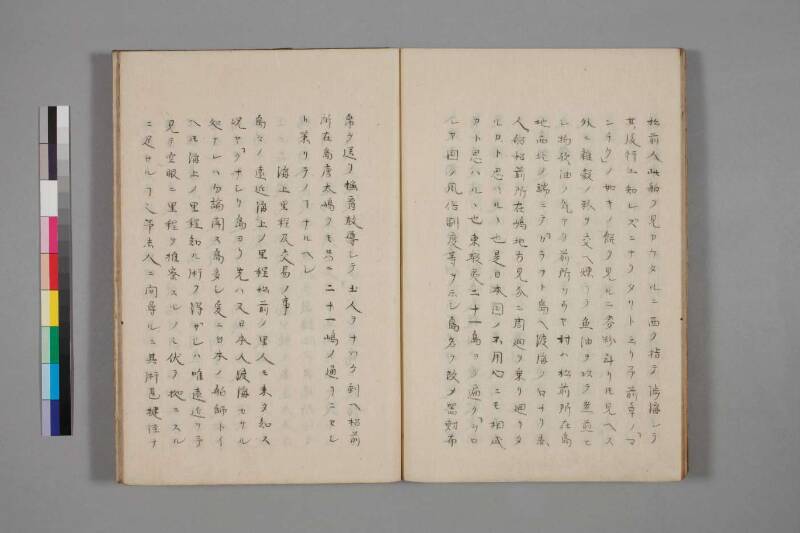
翻刻
【右丁】
松前人此舶ヲ見カケタルニ西ヲ指テ渉海シテ
其後行ハ知レズニナリタリト云リ予前章ノ「マ
ンチウ」ノ如キノ餅ヲ見ルニ麦粉斗リ𪜈見ヘス
外ニ雑穀ノ粉ヲ交ヘ煉リテ魚油ヲ以テ煮煎セ
シ物欤油ノ気アリ前所ソウヤ村ハ松前所在島
地西北ノ端ニテ「カラフト島ヘ渡海ノ口ナリ赤
人船松前所在嶋地方見分ニ周廻ヲ乗リ廻リタ
ルカト思ハルヽ也是日本国ノ不用心ニモ相成
カト思ハルヽ也東蝦夷二十一島ヨリ遍ク「ヲロ
シヤ国ノ風俗制度等ヲ示シ島名ヲ改メ器財布
【左丁】
帛ヲ送リ撫育教導シテ土人ヲナツケ剰ヘ松前
所在島唐太嶋ヲモ共ニ二十一嶋ノ通リニセシ
ト策リテノヿナルヘシ
海上里程及交易ノ事
島々ノ遠近海上ノ里程松前ノ里人モ未タ知ス
況ヤ「クナシリ島ヨリ先ハ又日本人渡海セサル
処ナレハ勿論聞ス島多シ爰ニ日本ノ舶師トイ
ヘ𪜈海上ノ里程知ル術ヲ得ザレハ唯遠近ヲ予
見テ空眼ニ里程ヲ推察スルノミ伏テ拠ニスル
ニ足サルヿ也予赤人ニ問尋ルニ其術甚揵【捷?】径ナ
現代語訳
## (右丁・本文)
松前人もこの船を見かけたところ、西を指して海を渡り、その後の行方は知れなくなったと言う。私が先に述べた「マンチウ(饅頭)」のような餅を見るに、麦粉ばかりとは見えず、外に雑穀の粉を混ぜて練り、魚油をもって煮炒りしたものか、油の気がある。前述の宗谷村は松前の所在する島(北海道本島)の西北の端にあたり、樺太島へ渡海する口(出発地)である。ロシア人の船が松前所在の島地方を見分のために周回して乗り廻ったのではないかと思われる。これは日本国にとって油断のならぬことになりかねないとも思われる。東蝦夷の二十一島より広くロシア国の風俗・制度などを示し、島の名を改め、器財・布帛を送り、撫育・教導して土人(アイヌの人々)を懐柔し、あまつさえ松前の所在する島や唐太島(樺太)をも共に二十一島と同様にしようと謀ってのことであろう。
---
## (左丁・本文)
### 海上里程及び交易の事
島々の遠近・海上の里程は、松前の里人もいまだ知らず、況んや国後島より先は日本人も渡海しない所であるから、もちろん聞き知ることもない。島は多い。ここに日本の船乗りといえども、海上の里程を知る術を得ないため、ただ遠近を目視して、空目(目測)で里程を推察するのみである。伏して(謹んで申し上げるが)、これを根拠として足るものではない。私がロシア人に問い尋ねると、その術(方法)は甚だ捷径(手際よく簡単)で……
英語訳
## (Right folio — main text)
The people of Matsumae also reportedly caught sight of this vessel, which then headed west and crossed the sea, after which its whereabouts became unknown. As I examined the *manju*-like cakes mentioned in the preceding section, they appeared to be made not of wheat flour alone, but with other grain flours mixed in, kneaded together, and cooked in fish oil — for they carried the distinct smell of oil. The aforementioned Sōya village lies at the northwest tip of the island where Matsumae is situated (Hokkaidō), and serves as the point of departure for crossing over to Karafuto (Sakhalin). It is my belief that the Russian vessel was likely making a circuit of the Matsumae island region by way of reconnaissance. This, I fear, may bode ill for the security of Japan. It would appear that their design was to demonstrate Russian customs and institutions across the twenty-one islands of eastern Ezochi and beyond, to rename the islands, to send goods and cloth, to nurture and instruct the native peoples and win their loyalty — and furthermore, to bring the island on which Matsumae stands, as well as Karafuto, under the same arrangement as the twenty-one islands.
---
## (Left folio — main text)
### On Sea Distances and Trade
The distances between the islands and the sea routes between them are not yet known even to the local people of Matsumae, and needless to say, beyond Kunashiri Island, where Japanese vessels do not sail, there is no knowledge whatsoever. The islands are numerous. Even Japanese mariners have no means of accurately measuring distances at sea, and so they can only estimate the distances by eye, gauging near and far by sight alone. I must humbly acknowledge that such estimates are not a sufficient basis for precise reckoning. When I inquired of the Russians, their method was exceedingly efficient and direct…
*(The passage continues.)*