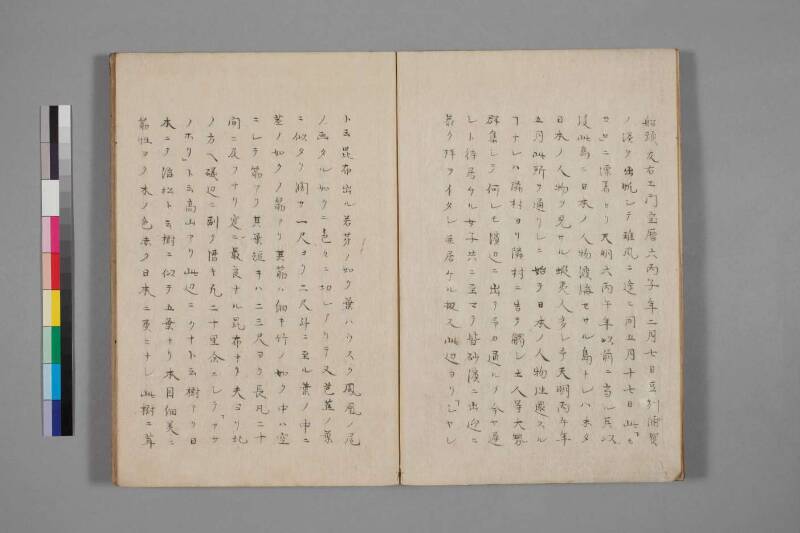
翻刻
【右丁】
船頭友右ヱ門宝暦六丙子年二月七日豆州浦賀
ノ湊ヲ出帆シテ難風ニ逢ヒ同五月十七日此「モ
ヨロ」ニ漂着セリ天明六丙午年以前ニ当ル其以
後此島ニ日本ノ人物渡海セサル島ナレハ未タ
日本ノ人物ヲ見サル蝦夷人多シ予天明丙午年
五月此所ヲ通リシニ始テ日本ノ人物往還スル
ヿナレハ隣村ヨリ隣村ニ告テ触シ土人等大勢
群集シテ何レモ浜辺ニ出テ予カ通ルヲ今ヤ遅
シト待居ケル女子共ニ至マテ皆砂浜ニ出迎ヒ
恭ク拝ヲイタシ並居ケル扨又此辺ヨリ「シヤレ
【左丁】
ト云毘【昆】布出ル若芽ノ如ク葉ハウスク鳳凰ノ尾
ノ画タル如クニ色々ニ切レアリテ又芭蕉ノ葉
ニ似タリ濶サ一尺ヨリ二尺斗ニ至ル葉ノ中ニ
茎ノ如クノ筋アリ其筋ハ細キ竹ノ如ク中ハ空
ニシテ筋アリ其葉短キハ二三尺ヨリ長凡二十
間ニ及フナリ寔ニ最良ナル昆布ナリ夫ヨリ北
ノ方ヘ磯辺ニ副テ漕キ凡二十里余ニシテ「アサ
ノホリ」ト云高山アリ此辺ニクナト云樹アリ日
本ニテ海松ト云樹ニ似テ五葉ナリ本目細美ニ
筋性ヨク木ノ色赤ク日本ニ類ヒナシ此樹ニ茸
現代語訳
【右丁】
船頭は友右衛門で、宝暦六年丙子(1756)年二月七日に豆州浦賀の湊を出帆し、暴風に遭い、同年五月十七日にこの「モヨロ」に漂着した。これは天明六年丙午年(1786)より以前のことにあたる。その後もこの島に日本人が渡海することがなかったため、いまだに日本人を見たことのないアイヌの人々が多かった。私(最上徳内)が天明丙午年五月にこの地を通ったときは、初めて日本人が往来することであったので、隣村から隣村へと知らせが伝わり、土人たちが大勢集まって、みな浜辺に出て、私が通るのを今か今かと待ち構えていた。女子どもに至るまで皆、砂浜に出て出迎え、うやうやしく礼拝して居並んでいた。さて、またこの辺りから「シャレ」と
【左丁】
いう昆布が採れる。若芽のように葉は薄く、鳳凰の尾を描いたように様々に切れ込みがあり、また芭蕉の葉にも似ている。葉の幅は一尺から二尺ほどに及ぶ。葉の中央には茎のような筋があり、その筋は細い竹のようで、中は空洞になっていて筋(繊維)がある。その葉は、短いものでも二、三尺から、長いものはおよそ二十間にも及ぶ。まことに最良の昆布である。そこから北の方へ磯辺に沿って漕ぎ進み、およそ二十里余りで「アサノホリ」という高山がある。この辺りに「クナ」という樹木がある。日本でいう「海松(うみまつ)」という樹木に似ていて、五葉(葉が五枚)である。木目が細かく美しく、木理が良く、木の色は赤く、日本には類するものがない。この樹に茸(きのこ)が(以下次ページへ続く)
英語訳
[Right folio]
The ship's captain was Tomoemon. On the seventh day of the second month of Hōreki 6, the year of Hinoe-Ne (1756), the ship departed from the port of Uraga inIzu Province, encountered a violent storm, and on the seventeenth day of the fifth month of the same year drifted ashore at this place of "Moyoro." This was prior to the sixth year of Tenmei, the year of Hinoe-Uma (1786). Since no Japanese people had crossed to this island after that incident, there were many Ainu who had never yet seen a Japanese person. When I (Mogami Tokunai) passed through this place in the fifth month of Tenmei Hinoe-Uma year, it was the first time Japanese people had come and gone through here, and so word was passed from one neighboring village to the next. A great crowd of natives gathered, and they all came out to the beach, waiting eagerly for me to pass. Even the women and children came out to the sandy shore to greet me, bowing reverently and lining up respectfully.
Furthermore, from around this area a type of kelp called "Share" is harvested.
[Left folio]
Like young shoots, its leaves are thin, cut in various shapes resembling the painted tail feathers of a phoenix, and also similar to the leaves of a banana plant (bashō). The width of the leaves ranges from about one shaku to two shaku. Running along the center of each leaf is a vein resembling a stem, which is like a thin piece of bamboo, hollow inside, yet fibrous. The leaves, when short, measure two to three shaku, and the longer ones can reach approximately twenty ken in length. It is truly the finest variety of kelp. Proceeding from there northward along the rocky coastline, after rowing approximately twenty-odd ri, there is a tall mountain called "Asanohori." In this vicinity, there is a tree called "Kuna." It resembles the tree known in Japan as "umimatu" (sea pine), and has five leaves. The grain of the wood is fine and beautiful, well-fibered, and the color of the wood is red—quite unlike anything found in Japan. On this tree, mushrooms… (continues on the next page)