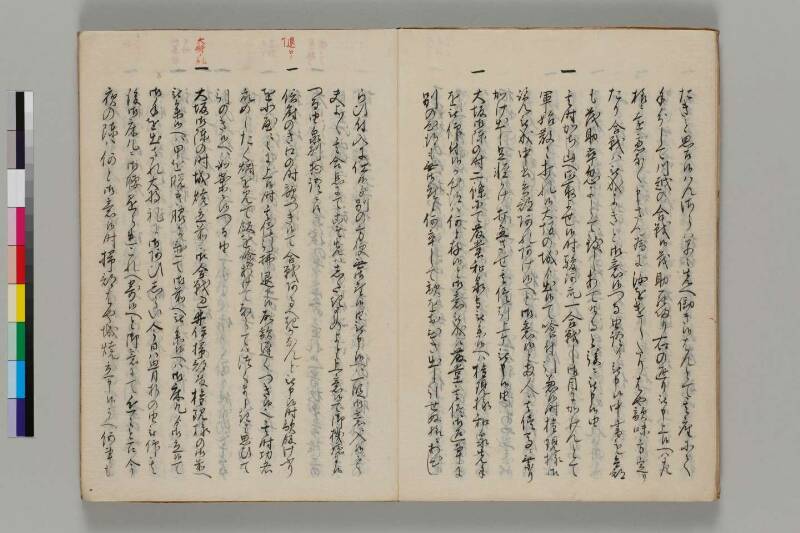
翻刻
たきと思召候はんさらは早々先へ働き候はんとて其座にて
手分して川越の合戦候茂助罷帰り右の通り被申上候へは左
様ニ遠慮なく申さん為に汝を遣したりはや敵味方定り
たり合戦は被成よきと御意候つる由語り被申候中書も兵部
も茂助卒忽にして致しあてけると後に被申候由
一 其時かち山へ御取よせ候時駿河衆一合戦し御目にかけんとて
軍始数々打れ候大阪の城ゟ出候て喰付引兼候時権現様御
覧被成中出兵部あれあけ候へと御意候と両人其侭馬ニ乗り
かけ出し足軽かけ打立させ其侭引上ケ被申候由
一 大坂御陣の時二条にて藤堂和泉守被参候へは権現様和泉先手
を被仰付候か心得は何と存候と御意被成候藤堂其侭御返事に
別の心得も無御座候何卒して敵をおひき出し引せぬ様ニあひし
らひ付入に仕候ゟ別の方便無御座候由被申候へは一段御意ニ入候て
夫よく〳〵其合点にてこそ先はしたきものよと上位候てご機嫌に候
つる由泉州物語ニ候
《割書:退口ノ|コト》【上段に朱書】
一 信府のき口【退き口】の時敵つき候て合戦あるへきかなんど被申候時敵飯けふり
を小屋々々に上候時其侭引き払退申候故敵遅くつき候也其時巧者
衆めしたく烟を見て飯を喰あけてならてはつくましきと思ひて
引のき候へは如案ニ候つる由
《割書: |大将ノ礼》【上段に朱書】
一 大坂御陣の時城焼立前ニ御合戦過井伊掃部殿権現様の御前へ
被参候へは甲を脱き服に置て御前へ被参候へは御床几ゟ御立候て
御手を出され大将礼に御あひしらい卿は骨折の由被仰其
後御床几ニ御腰懸られこれへ寄候へと御意にて近々と召今
夜の陣は何と御意候時掃部はや城焼立申候うへ何事も
現代語訳
たいと思し召されるのであれば、それならば早々先へ働こうということで、その座にて手分けして川越の合戦となった。茂助は帰り、右の通り申し上げると、「そのように遠慮なく申すために汝を遣わしたのだ。もはや敵味方が定まった。合戦をするのが良い」と御意があったとの由を語り申された。中書も兵部も茂助が卒然として成し遂げたと後に申されたという。
一 その時、垣見山へお取り寄せになった時、駿河衆が一合戦して御目にかけようとして軍を始め、数々打たれた。大坂の城から出てきて食いつき、引き兼ねた時、権現様が御覧になって中出兵部に「あれを明けよ」と御意があると、両人そのまま馬に乗りかけ出し、足軽をかけ打ち立たせ、そのまま引き上げ申されたという。
一 大坂御陣の時、二条にて藤堂和泉守が参られると、権現様は「和泉、先手を申し付けるが、心得は何と存ずるか」と御意を成された。藤堂はそのまま御返事に「別の心得も御座いません。何とかして敵を追い引き出し、引かせぬように相手をし、付け入りに仕るより別の方便は御座いません」と申されると、一段と御意に入って「それは良い。その合点にてこそ先はしたいものよ」と上機嫌であったという。泉州物語にある。
一 信府の退き口の時、敵が追いかけてきて合戦があるだろうかなどと申された時、敵の飯の煙を小屋々々に上げた時、そのまま引き払い退いたため、敵が遅く追いついたのである。その時巧者な衆は飯支度の煙を見て「飯を食い上げてからでなくては追いかけるべきでない」と思って引き退いたので、案の定であったという。
一 大坂御陣の時、城が焼け立つ前に御合戦が過ぎ、井伊掃部殿が権現様の御前へ参られると、甲を脱ぎ衣服に置いて御前へ参られた。すると御床几から御立ちになって御手を出され、大将の礼にて御挨拶され、「卿は骨折りであった」と仰せられた。その後御床几にお腰をかけられ、「これへ寄れ」と御意にて近々と召し、「今夜の陣は何と」と御意があった時、掃部は「もはや城は焼け立ちました上、何事も
英語訳
difficult [to determine], then let us quickly advance and fight," and right there they divided their forces and fought the Battle of Kawagoe. When Mosuke returned and reported as described above, [Ieyasu] said, "I sent you so that you would speak without reserve in this manner. Now enemy and ally are determined. It is good to engage in battle." Both Nakatsukai and Hyōbu later said that Mosuke had accomplished this quite suddenly.
1. At that time, when [the enemy] was drawn to Kakimi-yama, the Suruga forces wanted to fight one battle to show [their prowess] before [Ieyasu's] eyes, so they began the military action and many were struck down. When they came out from Osaka Castle, engaged fiercely, and found it difficult to withdraw, Lord Tokugawa observed this and told Nakaide Hyōbu, "Open up that [position]." Immediately both men mounted their horses and charged out, had the foot soldiers charge and attack, then withdrew as they were.
1. During the Osaka Campaign, when Tōdō Izumi-no-kami came to Nijō, Lord Tokugawa said, "Izumi, I am appointing you to the vanguard, but what do you understand [your role] to be?" Tōdō immediately replied, "I have no special understanding. By all means, I will draw the enemy out in pursuit, engage them so they cannot retreat, and press our advantage - there is no other stratagem." [Ieyasu] was greatly pleased and said, "That is excellent. With that understanding, you are just the man I want for the vanguard," and was in high spirits. This is from the Senshū Monogatari.
1. During the retreat from Shinpu, when it was asked whether the enemy would pursue and there would be battle, when the enemy's cooking smoke rose from their various huts, [our forces] immediately withdrew and retreated, so the enemy was slow to pursue. At that time, the experienced men saw the smoke from meal preparation and thought, "They shouldn't pursue until they finish eating," and held back, which proved to be exactly right.
1. During the Osaka Campaign, after the battle was over and before the castle caught fire, when Lord Ii Kamon came before Lord Tokugawa, he removed his helmet, placed it on his clothing, and came forward. Then [Ieyasu] rose from his camp stool, extended his hand, greeted him with the courtesy due a general, and said, "You have worked hard." Afterwards he sat back down on his camp stool, called him near saying "Come closer," and when he asked, "How goes tonight's encampment?" Kamon replied, "The castle has already caught fire, and everything...