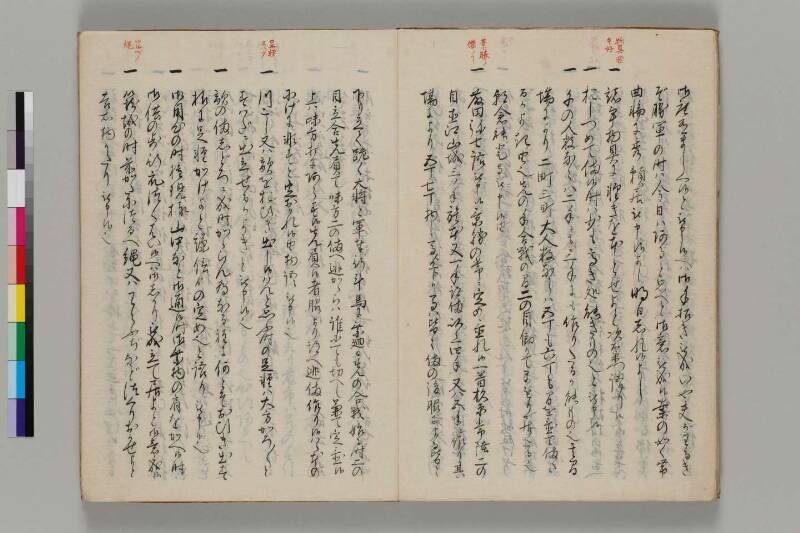
翻刻
御座有ましく候と被申候へは御手招き被成いや夫がわるき
ぞ勝軍の時は今日はあると思へと御意被成候案の如く常
曲輪に秀頼居被申候よし明日しれ候よし
《割書:物具軽|キ好》【上段に朱書】
一 諸事物具に軽きを本とせよと次右衛門語り候
一 おしつめて備候時は少も高き処能きもの也と被申候
一 千の人数ならは二手ニも三手にも作りたるか能もの也其間
場により二町三町大人数ならは五丁も六丁も間を置て備た
るかよき由也先の手合戦の間二の目働かてまもり居たる也
朝倉能登守被申候由
《割書:景勝ノ|備ノコト》【上段に朱書】
一 藤田弥七語被申候景勝の常ニ定め置れ候一番杉原常陸ニの
目直江山城三ノ手旗本又一手跡備以上四手又は五手ニ作り其
場により五丁七丁物し馬ゟ下り馬は皆々備の後脇による皆々
下り立て跪く大将と軍奉行斗馬に乗廻る先の合戦始る時ニの
目立合先負て味方ニの備へ逃かゝらは誰にても切へし兼て定置候
上は味方打にあらす候先負候者脇より跡へ逃備作り候はゝ本の
にげに非すと定おかれ候由物語被申候也
《割書:足軽|スハダ》【上段に朱書】
一 川こし又は敵をおひき出し候はんと思ふ時の足軽は大方かろ〳〵と
すはだニ出立せるかよきと被申候也
一 敵の備しどろニ成時かゝらん為なる程に何とそおひき出す
様に足軽かけよと謙信ゟの定め也と語り被申候也
一 御用心の時権現様山中なと御通候時御乗物の肩をかへ候時
御供の歩行衆つくはい候へは御しかり被成立て居よと御意被成候
《割書:ツルベノ|縄》【上段に朱書】
一 籠城の時前かたにつるへ縄又はわらふぢなどつくりおかせよと
吉右物かたり被申候也
現代語訳
御座有りましく候」と申されると、御手招きされ「いや、それが悪いぞ。勝軍の時は今日はあると思え」と御意を成された。案の如く、常の曲輪に秀頼が居申されたよし、明日知れたよし。
一 諸事、物具に軽きを本とせよと次右衛門が語った。
一 押し詰めて備える時は、少しでも高き処が良きものであると申された。
一 千の人数ならば二手にも三手にも作ったるが良きものである。その間、場により二町三町、大人数ならば五町も六町も間を置いて備えたるが良きという。先の手の合戦の間、二の目は働かずに守り居るのである。朝倉能登守が申されたという。
一 藤田弥七が語り申されたのは、景勝が常に定め置かれた一番杉原常陸、二の目直江山城、三の手旗本、また一手跡備、以上四手または五手に作り、その場により五町七町、物見は馬より下り、馬は皆々備の後脇に寄る。皆々下り立って跪く。大将と軍奉行ばかり馬に乗り廻る。先の合戦始まる時、二の目立ち合い、先が負けて味方の二の備へ逃げかかれば、誰にても切り伏せよと兼ねて定め置いた。上は味方討ちにあらず。先が負けた者が脇より跡へ逃げ、備を作るのであれば本の逃げに非ずと定め置かれたという物語を申された。
一 川越しまたは敵を追い引き出そうと思う時の足軽は、大方軽々と素肌に出立せるが良いと申された。
一 敵の備がしどろになった時にかかるためになるほどに、何とぞ追い引き出すように足軽をかけよと謙信からの定めであると語り申された。
一 御用心の時、権現様が山中などを御通りの時、御乗物の肩を代える時、御供の歩行衆がうずくまうと、御叱りを成され「立て居よ」と御意を成された。
一 籠城の時、前方につるべ縄またはわら縄などを作り置かせよと吉右が物語り申された。
英語訳
"there is nothing much [to be done]," [Ieyasu] beckoned with his hand and said, "No, that attitude is wrong. When victorious in battle, think 'today exists [for us].'" As expected, Hideyori was said to be in the regular bailey, which became known the next day.
1. In all matters, make lightness in military equipment the foundation - so spoke Jirōuemon.
1. When forming up in close formation, even slightly higher ground is better, it was said.
1. With a force of a thousand men, it is better to form them into two or three units. Depending on the terrain, space them two to three chō apart, or if it's a large force, five to six chō apart when forming up. While the vanguard is fighting, the second unit waits and guards without engaging. This was said by Asakura Noto-no-kami.
1. Fujita Yahichi related that Kagekatsu had regularly established: first unit under Sugihara Hitachi, second unit under Naoe Yamashiro, third unit the headquarters, and another unit as rear guard - a total of four or five units. Depending on the situation, they would be spaced five to seven chō apart. Scouts would dismount from their horses, and all horses would be kept to the rear and sides of the formations. Everyone would dismount and kneel. Only the general and military magistrates would ride around on horseback. When the battle began, if the second unit engaged and the vanguard was defeated and fled back toward the allied second formation, anyone should cut them down - this was predetermined. The higher-ups [said] this was not killing allies. If those who were defeated fled from the side to the rear and formed ranks, then it was not true fleeing - this was established as policy, he related.
1. When crossing rivers or when intending to draw out and pursue the enemy, it is better for foot soldiers to be equipped lightly, mostly in undergarments, it was said.
1. When the enemy's formation becomes disordered, in order to attack at that moment, by all means send forth foot soldiers to draw them out in pursuit - this was Kenshin's established policy, it was related.
1. As a precaution, when Lord Tokugawa passed through mountain areas and the bearers of his palanquin were changed, if the walking attendants crouched down, he would scold them, saying "Stand upright."
1. During a siege, prepare well ropes or straw ropes in front [of the fortification] - so related Kichiuemon.