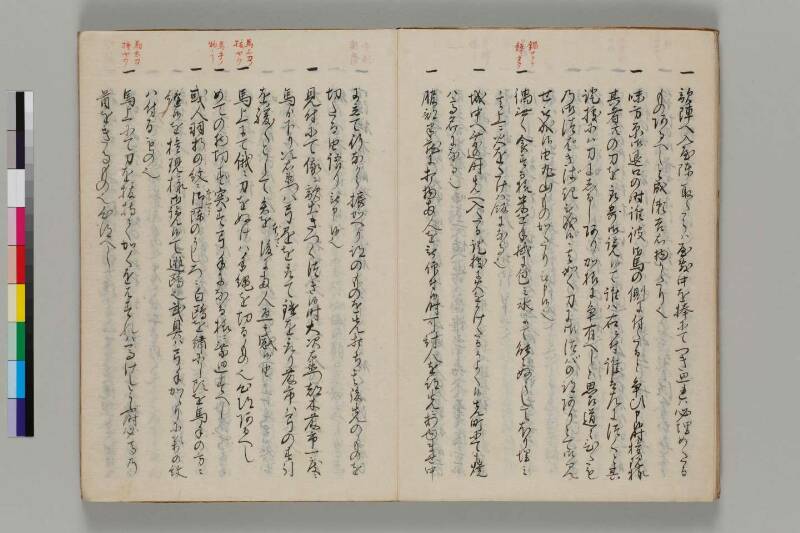
翻刻
一 敵陣へ入屋陣取たらは屋敷中を棒にてつき廻れは必埋めたる
ものあるへしと成瀬吉右物かたり也
一 味方原御退口の時誰彼御馬の側に付たると争ひ申候字権現様
其者共の刀を取寄御覧候て誰は右ニ付誰は左につくと其
証拠には刀にしるしありか様に争有へしと思召道々ひたも
の【ひたすら】御つばきばき被成候其如く刀に御つばの跡ありとて御見
せ被成候由丸山ものかたり被申候也
《割書:鍋ナクテ|飯ヲタク》【上段に朱書】
一 鍋無く食する様米を手拭に包み水にて能々ぬらしてほり埋み
其上ニ火をたけは飯になる也
一 城中へ乗廻時先へ入たる証拠に火をかけたるかよく候先町にても焼
は高名になる也
一 服部半蔵に打物両人を被仰付候時可討人を跡先ニあゆませ中
に立て跡なから振かへり跡のものを先打ち其後先のものを
切たる由語り被申候也
一 見付にて俄ニ敵出きつくつき候時大沢右衛門都木藤市一度ニ
馬ゟ下り次右衛門は弓懸を取て鑓を取り藤市は弓のす引
を駿〳〵として矢を(本ノマヽ)後に両人互ニ感候由
《割書:馬上刀ノ|抜ヤウ》【上段に朱書】
一 馬上にて俄ニ刀をぬけは手縄を切るもの也心得あるへし
《割書:馬手ノ|物ノコト》【上段に朱書】
一 めての物切ず突す弓手になる様に乗廻すへし
一 或人羽折の紋ニ御陣(本ノマヽ)のうしろニ白鴎を繍にし頭を馬手の方ニ
縫候を権現様御覧候て逃鴎也武具は弓手かゝりに万の紋
は付るもの也
《割書:馬太刀|持ヤウ》【上段に朱書】
一 馬上にて刀を抜持てかくをはすれは馬けしとぶ時必馬の
首をきるもの也心すへし
現代語訳
一 敵陣へ入り屋敷に陣取ったならば、屋敷中を棒で突き回れば、必ず埋めてあるものがあるだろうと成瀬吉右が物語った。
一 味方ヶ原の御退却の時、誰彼が御馬の側に付いたと争い申した時、権現様はその者共の刀を取り寄せて御覧になり、「誰は右に付き、誰は左に付く」と、その証拠には刀に印があるか、このように争いがあるだろうと思し召し、道々ひたすら御唾を吐きかけなさった。その通り刀に御唾の跡があるとて御見せになったという。丸山が物語り申した。
一 鍋無くして食事をする方法として、米を手拭に包み、水でよくよく濡らして地面に埋め、その上に火を焚けば飯になる。
一 城中へ乗り込む時、先へ入った証拠に火をかけるのが良い。先陣でも焼けば高名になる。
一 服部半蔵に打物(討伐)二人を仰せ付けられた時、討つべき人を前後に歩ませ、中に立って、後ろながら振り返り、後の者を先に打ち、その後先の者を切ったという話を申された。
一 見張りにて俄に敵が出てきて突いてきた時、大沢右衛門と都築藤市が一度に馬より下り、次右衛門は弓懸を取って槍を取り、藤市は弓筈引を素早くして矢を(原文のまま)、後に両人互いに感じ入ったという。
一 馬上にて俄に刀を抜けば手綱を切るものである。心得があるべし。
一 馬手の物は切らず突かず、弓手になるように乗り回すべし。
一 或る人の羽織の紋に御陣(原文のまま)の後ろに白鷗を刺繍し、頭を馬手の方に縫ったのを権現様が御覧になって「逃げ鷗である。武具は弓手掛かりに万の紋は付けるものである」と言われた。
一 馬上にて刀を抜き持って隠を忘れれば、馬が跳び跳ねる時、必ず馬の首を切るものである。心すべし。
英語訳
1. When entering enemy positions and taking up quarters in their residences, if you probe around the premises with sticks, there will surely be buried items [valuables] - so related Naruse Kichiuemon.
1. During the retreat at Mimatagahara, when retainers argued about who had stayed by [Ieyasu's] horse, Lord Tokugawa had their swords brought to him for inspection, saying "This person was on the right, this person on the left." [He said] there should be evidence on the swords if such a dispute occurred, and as he thought, he spat continuously along the way. Indeed, he showed them the traces of his spittle on the swords. This was related by Maruyama.
1. To cook rice without a pot: wrap the rice in a hand towel, thoroughly wet it with water, bury it in the ground, and make a fire on top - it will become cooked rice.
1. When charging into a castle, it is good to set fires as proof of having entered first. Even burning the outer areas brings military honor.
1. When Lord Tokugawa ordered Hattori Hanzō to eliminate two men, he had the targets walk in front and behind, stood in the middle, and while facing backward, struck down the rear person first, then cut down the front person - so this story was related.
1. When enemies suddenly appeared at a lookout post and attacked, Ōsawa Uemon and Tsuzuki Tōichi both dismounted at once; Jiuemon took his bow-rest and grasped his spear, while Tōichi quickly drew his bowstring and [nocked] an arrow (as in original text). Afterward, both men admired each other's actions.
1. When suddenly drawing a sword while mounted, one may cut the reins. This should be kept in mind.
1. Objects on the right side [of the horse] should not be cut or thrust at; one should maneuver to engage from the left side.
1. When a certain person embroidered a white gull on the back of his jinbaori with its head facing toward the right side, Lord Tokugawa observed it and said, "That is a fleeing gull. On military equipment, all crests should be oriented toward the left side."
1. When drawing and holding a sword while mounted, if one forgets to keep it concealed, when the horse jumps and bounds, one will surely cut the horse's neck. This should be minded.