翻刻
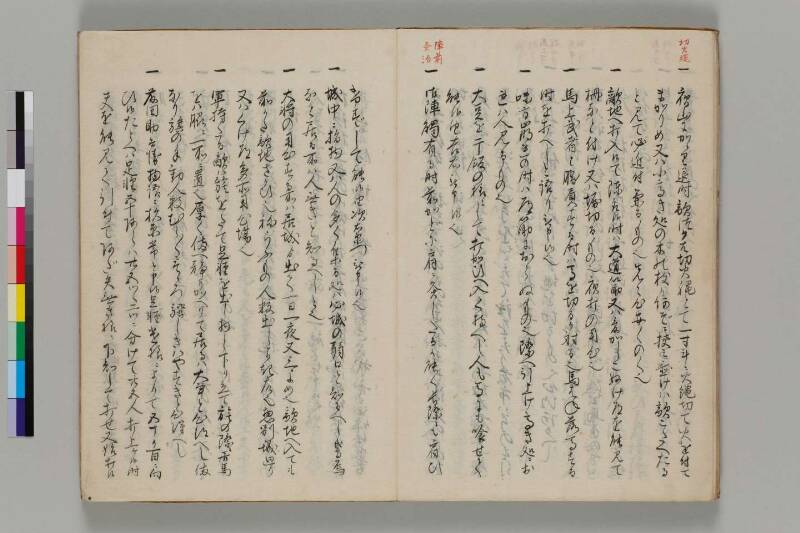
《割書: |切火縄》【上段に朱書】
一 夜山にかゝり退時敵つかは切火縄とて一寸計ニ火縄切て火を付て
まかりめ又は小高き処の木の枝か何ぞニ挟み置けは敵こたへたる
と見て必近付兼るもの也先々心安くのく也
一 敵地へ打入候て陣取候時は大道筋又は爰かしこぬけ道を能見て
柵なと付け又は堀切るもの也夜討の用心也
一 馬上武者と勝負する時は馬を切るか射る也馬はね落馬する
時を打へしと語り被申候也
一 味方崩れの時は道筋におらぬもの也際へ引上げ高き処ニお
れは人見るもの也
一 大豆を干飯の様ニして打かひへ入て持へし人も馬にも喰せて
能候由吉右被申候也
《割書:陣前|灸治》【上段に朱書】
一 御陣触有る時前かどに【前もって】肩ニ灸したるか能く長際ニも肩ひ
けずして能候由次右衛門被申候也
一 城中ニ指物又は人の多く集る処は必城の弱口と知るへし鴟烏
なと居る所は人無きと知るへしと也
一 大将の用心する所は居城ゟ出て一日一夜又三よめ也敵地へ入ても
前かた敵地さり行也ねらふもの人数出しよき故也惣別城廻り
又はくけ道【抜け道】多所用人場也
一 軍持たる敵は旗をたて足軽を出し物し下り立て旗の際ニ居馬
をは脇ニ一所ニ置也厚く備へ静りかへりて居るは大事と心得へし備
なり旗の手動人数むら〳〵ニそゝろ騒しきはやすきと心得へし
一 藤田助兵衛物語ニ杉原常と申候足軽遣様【やりよう】ニよりて五十か百ニ向
ひ候たとへは足軽五十あらは廿五ツヽニツニ分けて廿五人打上ケ候時
夫を能見て引付てあだ矢無き様ニ下知して打せ又始打候
現代語訳
一 夜、山にかかって退却する時、敵を欺く「切火縄」という方法がある。一寸ほどに火縄を切って火を付け、曲がり角や小高い所の木の枝などに挟んで置けば、敵は(まだ味方が)こたえている(留まっている)と見て、必ず近付きかねるものである。(味方は)先々心安く退くことができる。
一 敵地へ打ち入って陣取る時は、大通りや、あちこちの抜け道をよく見て、柵などを付け、また堀を切るものである。夜討ちの用心である。
一 馬上武者と勝負する時は、馬を切るか射るのである。馬が跳ね、落馬する時を打つべしと語り申された。
一 味方が崩れる時は、道筋にいてはならない。脇へ引き上げ、高い所にいれば、人に見られるものである。
一 大豆を干飯のようにして打嚢へ入れて持つべし。人も馬にも食わせて良いと吉右が申された。
一 御陣触れがある時、前もって肩に灸をしたのが良い。長陣の際にも肩が凝らずに良いと次右衛門が申された。
一 城中に指物や人が多く集まる所は、必ず城の弱い口と知るべし。鴟烏(とび・からす)などが居る所は人がいないと知るべしということである。
一 大将が用心する所は、居城より出て一日一夜、また三夜目である。敵地へ入っても、前方の敵地を去り行く時である。狙う者が人数を出しやすい故である。総別、城回りや抜け道は多くの所用人場である。
一 軍を持った敵は、旗を立て足軽を出し、物見を下り立て、旗の際に居て、馬は脇の一所に置く。厚く備えて静まり返って居るのは大事と心得べし。備えである。旗の手が動き、人数がむらむらとそぞろ騒がしいのは易しいと心得べし。
一 藤田助兵衛の物語に、杉原常と申す者が、足軽の遣い様によって五十か百に向かった。たとえば足軽五十あらば、二十五ずつに二つに分けて、二十五人が打ち上がった時、それをよく見て引き付けて、無駄矢がないように下知して打たせ、また始めから打った。
英語訳
1. When retreating through mountains at night, there is a method called "cut matchcord" to deceive the enemy. Cut matchcord to about one inch, light it, and place it in tree branches at turns or elevated spots. The enemy will think [our forces] are still holding position and will hesitate to approach, allowing our forces to retreat safely.
1. When attacking enemy territory and taking positions, one should carefully observe main roads and escape routes everywhere, install palisades, and cut trenches. This is preparation against night attacks.
1. When fighting mounted warriors, one should cut or shoot the horse. Strike when the horse rears and the rider falls - so it was related.
1. When our forces are routed, one must not stay on the main road. Withdraw to the sides and stay in elevated places, as people will be watching.
1. Soybeans should be prepared like dried rice and carried in military pouches. They are good for feeding both men and horses, as Kichiuemon said.
1. When campaign orders are issued, it is good to apply moxa treatment to the shoulders beforehand. Even during long campaigns, the shoulders won't become stiff, as Jiuemon said.
1. Places in a castle where many battle standards or people gather should be recognized as the castle's weak points. Places where birds of prey such as hawks and crows perch should be understood as having no people.
1. A general should be cautious when: leaving his home castle for one day and night, or for three nights; entering enemy territory; and when departing from forward enemy positions. This is because those lying in ambush can easily deploy forces. Generally, areas around castles and escape routes are important tactical locations.
1. An enemy with military forces will raise banners, deploy foot soldiers, post lookouts, position themselves near the banners, and keep horses grouped to one side. When they are heavily prepared and completely quiet, this should be understood as serious - it is a proper formation. When banner units are moving and troops are restlessly making various disturbances, this should be understood as manageable.
1. In Fujita Sukebei's account, a man named Sugihara Tsune, depending on how he deployed foot soldiers, engaged fifty or one hundred [enemies]. For example, if there were fifty foot soldiers, he would divide them into two groups of twenty-five each. When twenty-five men charged up, he would observe carefully, draw the enemy in, give commands to avoid wasted arrows, have them shoot, then begin attacking again.