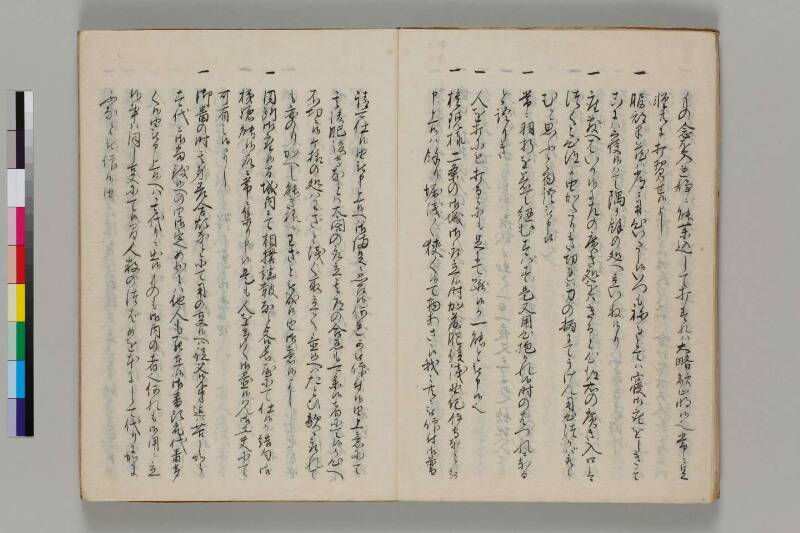
翻刻
もの念を入れ静ニ能薬込して打すれは大略敵崩候也常ニ足
軽共に打習はせ候よし
一 服部半蔵は常ニ用心いたし候いつもねるとては寝御座をしきそ
こには寝候はて隅々余の処へ立いねけり
一 座敷へはいり候に左の広き処をはきると心得右の広き入口にて
つくと心得候由かたりき切れは刀の柄にてうけん用心つかば取ら
むと思ふと物語被申候
一 常ニ羽折を着て紐むすばす是又用心抱かれ候時のはつれニなる
と語りき
一 人を打にも打るゝにも足にて蹴候か一能と被申候也
一 権現様二条の御城御取立候時加藤肥後浅野紀伊守なと被
申上候は余り堀浅く狭く候て物あさニ候我々共ニ被仰付御普
請可仕候由被申上候へは御帰足ニ思召候何れか被仰付候由上意にて
其後肥後守なとは太閤の取立其道の合点も可参候者にて候か心へ
不切ニ候ケ様の処はわざと浅く取立て置候へはたとひ敵ニ取れて
も亦のりかへし能き様ニわざと被成候由御意候よし
一 同所御座候間城内ニて相撲謡鼓なと各長屋にて仕候か結句御
機嫌能候故ニ常ニ集り申候是も人を多く御置候はん御工夫にて
可有是候よし
一 御番の時其身差合煩なとにて用の事候へは従父兄弟迄は苦しから
す代ニ御当致候への由御定め少々は他人も罷在候御番頭衆代番多
く候由被申上候へは其代りニ出候ものも御内の者也何れも御用ニ立
候事は同じ事にて候間人数のつばめを本にして代りにかま
ふなと被仰候由
現代語訳
もの(は)念を入れ静かによく弾込みして撃たせれば、大略敵は崩れるものである。常に足軽共に撃ち習わせたとのことである。
一 服部半蔵は常に用心をした。いつも寝る時には寝具を敷くが、そこには寝ずに、隅々や他の所で立って寝たのであった。
一 座敷へ入る時には、左の広い処を抜けると心得よ。右の広い入口で突かれると心得よと語った。切られれば刀の柄で受けようと用心し、掴まれれば取ろうと思うと物語られた。
一 常に羽織を着て紐を結ばない。これもまた用心で、抱きつかれた時の外れ(逃れ)になると語った。
一 人を打つにも打たれるにも、足で蹴るのが一番良いと申された。
一 権現様(徳川家康)が二条の御城を御築城された時、加藤肥後(清正)、浅野紀伊守などが申し上げたのは「あまりに堀が浅く狭くて、物足りません。我々にお申し付けくだされば普請を仕りましょう」と申し上げたところ、御返答として思し召されたのは「どちらでもお申し付けしよう」との上意であった。その後(家康は)「肥後守などは太閤の築城、その道の合点も参るであろう者であるが、心得違いである。このような所はわざと浅く築いて置けば、たとえ敵に取られても、また乗り返しやすいようにわざとなさった」との御意であったとのことである。
一 同じ所にいらっしゃる間、城内にて相撲・謡・鼓など、各々長屋にて行うが、結局御機嫌が良い故に常に集まり申す。これも人を多く御置きになろうとの御工夫であろうとのことである。
一 御番の時、その身に差し合い・煩いなどで用事がある時は、従父兄弟までは苦しからず、代わりに御当番をするとの御定め。少々は他人も罷在するが、御番頭衆が代番が多いと申し上げたところ、「その代わりに出る者も御内の者である。何れも御用に立つ事は同じ事であるから、人数の詰めを本として、代わりに構うな」と仰せられたとのことである。
英語訳
The men should concentrate carefully, quietly load their guns well, and then fire - this way the enemy will generally collapse. He always had the foot soldiers practice shooting.
1. Hattori Hanzō was always cautious. When sleeping, he would always lay out bedding but not sleep there; instead he would sleep standing in corners or other places.
1. When entering a room, understand that you should exit through the wide space on the left. Understand that you will be stabbed at the wide entrance on the right, he said. If cut, be prepared to parry with the sword hilt; if grabbed, think to seize [the opponent], so it was related.
1. Always wear a haori (jacket) without tying the cords. This too is a precaution - it becomes a means of escape when grabbed, he said.
1. Whether striking or being struck by a person, kicking with the feet is best, it was said.
1. When Lord Ieyasu (Gongensama) built Nijō Castle, Katō Kiyomasa (Higo) and Asano Kii-no-kami said: "The moats are too shallow and narrow, and inadequate. If you would entrust this to us, we would undertake the construction work." His reply was that he thought, "Either way, I shall entrust it to someone." Later [Ieyasu said]: "Higo-no-kami and others have experience with Taikō's construction methods and should understand such matters, but they misunderstand. Such places are intentionally built shallow, so that even if taken by the enemy, they can be easily retaken" - such was his intention.
1. While staying at the same place, within the castle there would be sumo, noh chanting, drumming, etc., performed in various longhouses. Ultimately, because this pleased him, people would constantly gather. This too was likely his strategy for keeping many people around.
1. Regarding guard duty, when one has conflicts of schedule, illness, or other business, relatives up to cousins may substitute without problem - such was the regulation. Though some outsiders were also present, when the guard captains reported that there were many substitute guards, [Ieyasu] said: "Those who serve as substitutes are also my retainers. Since serving my needs is the same for all, focus on maintaining the required numbers and do not worry about substitutions."