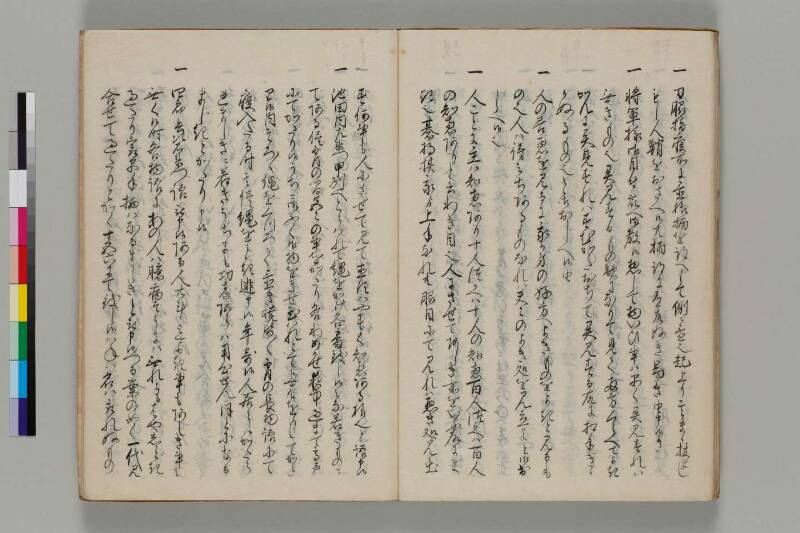
翻刻
一 刀脇指寝所に置様柄を跡へして側ニ置也起上り其まゝ抜よし
もし人鞘をおさへ候共柄跡に有故ぬき易き由申候き
一 将軍様御目付衆へ御教候惣して物いひ事は早く異見すれは
無きもの也異見するもの敵になりて見て両方くらへてよき
かんに異見すれはすむかたおちて異見する故に相手きゝ
かぬるもの也と御おしへ候由
一 人の善恵を見るに我か身の好方へよきものをよきと見るも
の也人は得みちあるものなれは夫々のよき処を見立よと御お
しへ候也
一 人ことに主は知恵あり十人つかへは十人の知恵百人つかへは百人
の知恵ありと云わき目也人にさせてあらき所をいふ故によ
き也碁将棋我ゟ上手なれ共脇目にて見れは悪き処見出
す何事も人にさせて見て直すはやすく知恵ある様也と語申候
一 池田内左衛門甲州へとらはれて縄をかけ各番致し候みな若きものニ
てある侭宵の間色々の事をかたり各わめかせ夜中過まて高声
にてかたり候うちに御ふく御物をきせ玉はれとて上はをりしてかた
り候内そろ〳〵縄をくつろて【緩めて】置き暁皆〳〵宵の長物語にて
寝入たる時其侭縄をとき逃申候年寄候人居らはかたら
れましきニ若きうちにも功者あらは用心せんほとになる
まじきとかたり申候
一 四郎兵次右衛門語被申候ある人廿斗【ばかり】迄よき事もあしき事も
無く候時各物語にあの人は臆病そうには無れともはやしどき
過たり㝡早【最早】手柄はなるましきと被申候つる案の如く一代見
合せて過たりとかく十五六にて致し候はねは名は取れぬもの
現代語訳
一 刀・脇差を寝所に置く様は、柄を後ろにして側に置く。起き上がってそのまま抜くのが良い。もし人が鞘を押さえても、柄が後ろにあるため抜きやすいと申した。
一 将軍様が御目付衆へお教えになったのは、「総じて物を言うことは、早く異見すれば効果がない。異見する者を敵になって見て、両方を比べて良い加減に異見すれば済む。方が落ちて異見するので、相手は聞かないものである」とお教えになった。
一 人の善悪を見るのに、我が身の好みの方へ良いものを良いと見るものである。人はそれぞれ得意分野があるものなので、それぞれの良い所を見立てよとお教えになった。
一 人はことに主君は知恵がある、十人仕えれば十人の知恵、百人仕えれば百人の知恵があるという脇目である。人にさせて粗い所を指摘するから良いのである。碁・将棋は自分より上手であっても、脇で見れば悪い所を見出す。何事も人にさせて見て直すのは易しく、知恵があるようであると語り申した。
一 池田内左衛門が甲州へ捕らわれて縄をかけられ、各々番をしていた。皆若い者であったので、そのまま宵の間、色々なことを語り、各々を騒がせ、夜中過ぎまで高声で語った。その内に「御服・御物をお着せ賜われ」といって上衣を脱いで語っているうちに、そろそろ縄を緩めて置き、暁に皆々宵の長物語で寝入った時、そのまま縄を解いて逃げ申した。年寄りがいれば語られなかったであろうに、若いうちにも功者があれば用心するほどになるまじきと語り申した。
一 四郎兵衛・次右衛門が語って申すには、「ある人二十ばかりまで良いことも悪いことも無い時、各々物語にあの人は臆病そうには見えないが、勇ましい時期を過ぎた。最早手柄はなるまじき」と申していた。案の如く一代見合わせて過ぎた。とかく十五、六で致さなければ名は取れないものである。
英語訳
1. Regarding how to place swords and short swords in the sleeping quarters: place them at your side with the hilt toward the back. When you rise up, you can draw immediately. Even if someone presses down on the scabbard, since the hilt is at the back, it is easy to draw, he said.
1. What the Shogun taught to his inspectors: "Generally speaking, when giving advice, if you give advice too quickly, it has no effect. If you view the advice-giver as an enemy and compare both sides, giving advice at the right moment will suffice. Since you give advice from a position of decline, the other party will not listen," he taught.
1. In observing people's good and bad qualities, one tends to judge as good what aligns with one's own preferences. Since people each have their areas of expertise, one should recognize the good points in each, he taught.
1. People say that especially a lord has wisdom - if ten people serve, there is the wisdom of ten people; if a hundred serve, there is the wisdom of a hundred. This is the perspective of an observer. It is good because one has people act and then points out the rough spots. Even in go and shogi, though someone may be more skilled than oneself, when watching from the side, one can spot bad moves. In all things, having people act while observing and then correcting is easy and appears wise, he said.
1. Ikeda Naizaemon was captured and taken to Kai Province, bound with rope, with guards taking turns watching him. Since they were all young men, he spent the evening telling various stories, making them all excited, talking loudly until past midnight. During this, saying "Please let me put on my garments," he removed his upper clothing and continued talking. Meanwhile, he gradually loosened his ropes, and at dawn when everyone had fallen asleep from the long evening of storytelling, he untied his ropes and escaped. Had there been older men present, he could not have fooled them this way. Even among the young, if there had been capable ones, they should have been more vigilant, he said.
1. Shirōbei and Jiuemon said: "There was a certain person who until about age twenty had done neither particularly good nor bad things. In conversation, people said 'That person doesn't seem cowardly, but his time for bravery has passed. He will no longer achieve great deeds.'" As expected, looking back over his entire life, this proved true. In any case, if one does not act at fifteen or sixteen, one cannot make a name for oneself.