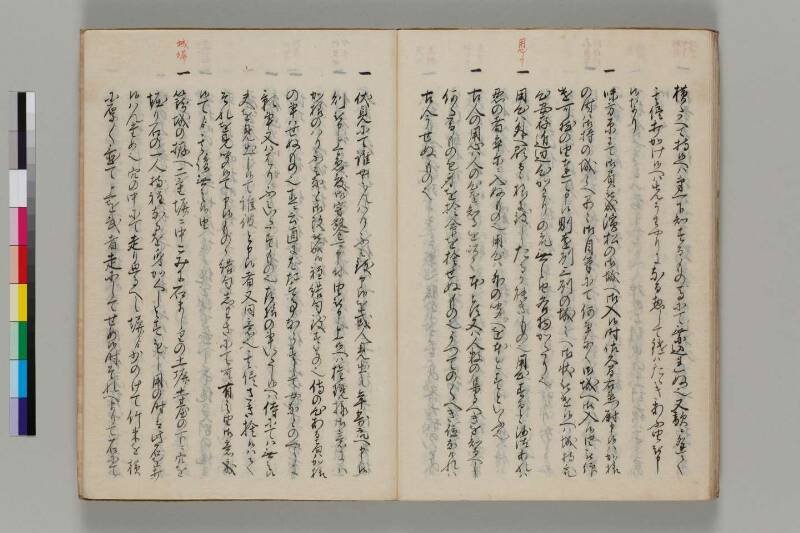
翻刻
横たへて持候へは第一下知するもの馬にて乗込れぬ也又敵ニ逢て
其侭打かけ候へは先うわやりになる惣して鑓はたゝきあふ由被申
候なり
一 味方原にて後負被成浜松の御城へ御入候時佐久間右衛門尉申候はか様
の時は御持の城々へ早々御自筆にて何事なく御城へ御入候由被仰
遣可然の由達て申候則遠州三州の城々へ御状被遣候へは城持衆
心安存近辺心かわりの衆無之由各物かたり也
用心ノコト【上段に朱書】
一 用心は外へ顕るゝ様に致したるか能きもの也用心すると沙汰あれは
忍の者卒爾ニ入ぬもの也用心は外の聞へを本とすといふ也
一 古人の用心は人の心を知るを以て本とす又は人数の集るへきを知るへし
何たるものも身を捨命を捨せぬもの也うつてのくへき位なけれは
古今せぬもの也
一 伏見にて誰やらんはりふみ致申候を或人見出し年寄衆へ申候
則被申上急度御穿鑿金可申付由被申上候へは権現様御意には
か様のはりふみなと御改被成候程結句致すもの也侍の心ある者はか様
の事はせぬもの也直ニにはたす事ならすして女なとのやうに
影事又ははりふみいたすもの也左様の事いたし候へは侍にては無之候
夫を見出し候て誰彼と申候物又同意也其侭さき捨候はて
それを見聞候て申候ものゝ結句しわさにて可有之由御意成
候てゟ其後無之候由
城塀【上段に朱書】
一 籠城の拵へ二重堀ニ中こみに石ましりの土塀土台の下ニ穴を
堀り石の一人持程なるを身かくしとすもし用の時は此石を打
候はんため也穴の中にて走り廻るへし塀ゟ少のけて竹束を横
に厚く置て上を武者走にしてせめ候時それへよりて石にて
現代語訳
横にして持てば、第一に下知する者が馬で乗り込めない。また敵に遭ってそのまま打ちかかれば、先に上槍になる。総じて槍は叩き合うものであると申されている。
一 三方ヶ原にて後れを取り、浜松の御城へお入りになった時、佐久間右衛門尉が申すには、「このような時は、お持ちの城々へ早々に御自筆で何事もなく御城へお入りになった旨をお伝えになるのがよろしい」と強く申した。すぐに遠州・三州の城々へお手紙を遣わされたところ、城持の衆は心安く思い、近辺に心変わりする衆もいなかったと各々物語っている。
《用心のこと》
一 用心は外に現れるようにするのがよいものである。用心していると評判があれば、忍びの者も軽々しく入らないものである。用心は外聞を本とするということである。
一 古人の用心は人の心を知ることを基本とする。また人数の集まるべきことを知るべきである。どのような者も身を捨て命を捨てないものである。討って出るべき地位がなければ、古今やらないものである。
一 伏見にて誰かが張り紙をしたのを、ある人が見つけて年寄衆へ申した。すぐに申し上げて、厳しく御詮議を申し付けるべき旨を申し上げたところ、権現様の御意には「このような張り紙などを御改めになるほど、結局はやる者である。侍で心ある者はこのような事はしないものである。直接には果たすことができずして、女などのように陰で事をなし、また張り紙をするものである。そのような事をすれば侍ではない。それを見つけて誰彼と申す者もまた同じ意味である。そのまま先に捨て置いて、それを見聞きして申す者の結局の仕業であろう」との御意になってから、その後は無くなったということである。
《城塀》
一 籠城の準備として、二重堀に中込みに石まじりの土塀、土台の下に穴を掘り、石の一人持ち程のものを身隠しとする。もし必要な時はこの石を打つためである。穴の中で走り回るべきである。塀から少し離して竹束を横に厚く置いて、上を武者走りにして攻められる時、それに寄って石で
英語訳
If held horizontally, first of all, the commander on horseback cannot charge in. Also, when encountering the enemy and striking immediately, one's spear will be above theirs. Generally, spears are meant for striking each other, as they say.
1. After the defeat at Mikatagahara, when [Tokugawa] entered Hamamatsu Castle, Sakuma Uemon-no-jō said: "At times like this, it would be best to quickly send letters in your own hand to the castles under your control, informing them that you have safely entered the castle." He insisted on this. Immediately letters were sent to castles in Enshū and Sanshū provinces, and the castle lords felt reassured, with no one in the vicinity changing allegiance, as everyone tells.
《Matters of Vigilance》
1. Vigilance should be displayed outwardly. If there is a reputation for being vigilant, spies will not enter carelessly. Vigilance is based on external reputation.
1. The vigilance of the ancients was fundamentally based on knowing people's hearts. One should also know when people will gather. No person will abandon their life and body lightly. Without a position from which to sally forth, people throughout history have not acted.
1. At Fushimi, someone posted notices, which a certain person discovered and reported to the council of elders. When it was immediately reported that strict investigation should be ordered, Gongensama's opinion was: "The very act of investigating such posted notices will encourage those who do such things. Samurai with proper spirit do not do such things. Those who cannot accomplish things directly, like women, work in shadows or post notices. If one does such things, one is not a samurai. Those who discover this and report 'so-and-so did it' are of the same mind. Leave it alone and ignore it - those who see and hear it and then report it are ultimately the same type." After this imperial opinion, such incidents ceased.
《Castle Walls》
1. For siege preparations: double moats with stone-mixed earthen walls as filling, dig holes under the foundation, using stones of one-person-carrying size as cover. If needed, these stones are for throwing. One should be able to run around in the holes. Place thick bamboo bundles horizontally at some distance from the wall, making the top into a warrior's walkway, so when under attack, one can approach it and [defend] with stones...