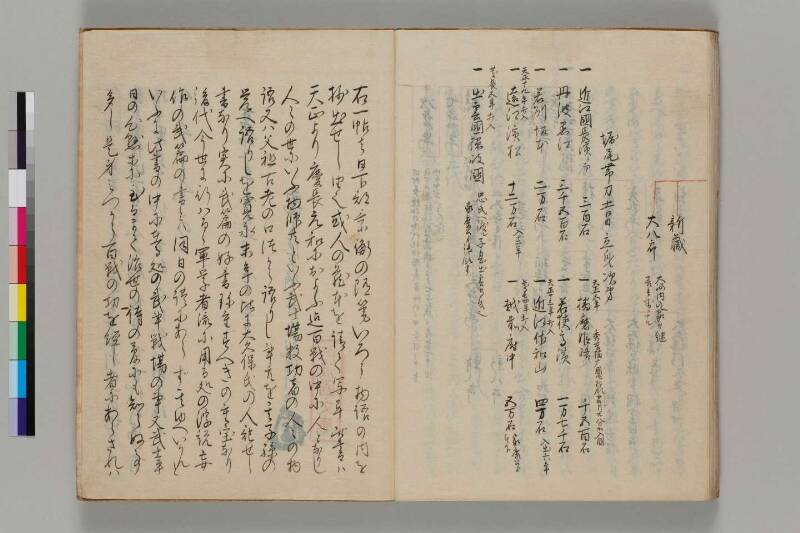
翻刻
【右頁】【右二行は前頁に繰入れました】
堀尾帯刀吉日【晴】立身次第【時系列に一列に並べました】
一 近江国長浜ニ而 三百石【1上】
一 播磨姫路(天正五年) 千五百石(秀吉播磨国御拝領霜月廿八日御入国)【1下】
一 丹波黒江 三千五百石【2上】
一 若狭高浜 一万七千石【2下】
一 若州坂本 二万石【3上】
一 近江佐和山(天正十三年打入) 四万石 入出六年【3下】
一 遠江浜松(天正十九年打入) 十二万石 入十二年【4上】
一 越前府中(慶長四年打入) 五万石《割書:家康公ゟ|被下》【4下】
一 出雲国隠岐国(慶長五年打入) 《割書:忠氏へ渡ル子息出雲守殿也| 家康公ゟ拜領す》【5上】
【左頁】
右一帖は日下部景衡の随筆いろう【遺老】物語の内を
抄出【※】せし由也或人の蔵本を請て写畢此書は
天正より慶長元和におよふ迄百戦の中に人となりし
人々の世にいふ物師共といふ武士場数功者の人々の物
語又は父祖古老の口つから語りし事共を其子孫の
覚へ語りしを寛永末年の頃に大久保氏の人記せし
書なり実に武篇の好書珍【珎】重すへきの重宝なり
後代今世に行はるゝ軍学者流に用る処の浮説妄
作の武篇の書とは同日の談にあらず其ゆへいかんと
いふに此書の中に在る処の武事戦場の事又武士平
日の心懸等に到るまて治世の侍の夢にも知らぬ事
多し是身みつから百戦の功を経し者にあらされは
【※ここでいう抄出とは、『遺老物語』から「三河之物語」の部分を写したという意味です。】
【https://websv.aichi-pref-library.jp/wahon/detail/190.html】
【以下で『遺老物語』内の「三河之物語」が閲覧できます。判別困難な字がある場合、参考になりそうです】
【https://websv.aichi-pref-library.jp/wahon/pdf/1103267027-01.pdf】
現代語訳
【右頁】
堀尾帯刀吉晴の立身次第
一 近江国長浜にて 三百石
一 播磨姫路(天正五年) 千五百石(秀吉播磨国御拝領霜月二十八日御入国)
一 丹波黒江 三千五百石
一 若狭高浜 一万七千石
一 若狭坂本 二万石
一 近江佐和山(天正十三年打入) 四万石 入出六年
一 遠江浜松(天正十九年打入) 十二万石 入十二年
一 越前府中(慶長四年打入) 五万石《家康公より下される》
一 出雲国隠岐国(慶長五年打入) 《忠氏へ渡る。子息出雲守殿である。家康公より拝領する》
【左頁】
右の一帖は日下部景衡の随筆「遺老物語」の内容を抄出したものであるという。或る人の蔵本を請うて写し終えた。この書は天正から慶長・元和に及ぶまで百戦の中で人となった人々の、世にいう「物師」といわれる武士、場数を踏んだ功者の人々の物語、または父祖・古老の口から直接語られた事柄を、その子孫が覚え語ったものを、寛永末年の頃に大久保氏の人が記した書である。実に武篇の好書で珍重すべき重宝である。後代今世に行われている軍学者流が用いる浮説妄作の武篇の書とは同日の談ではない。その理由はなぜかというと、この書の中にある武事戦場の事、また武士平日の心懸けなどに至るまで、治世の侍の夢にも知らない事が多い。これは身自ら百戦の功を経た者でなければ
英語訳
【Right Page】
The Career Advancement of Horio Tatewaki Yoshiharu
1. At Nagahama in Ōmi Province: 300 koku
2. Himeji in Harima (5th year of Tenshō): 1,500 koku (When Hideyoshi received Harima Province and entered the domain on the 28th day of the 11th month)
3. Kuroe in Tamba: 3,500 koku
4. Takahama in Wakasa: 17,000 koku
5. Sakamoto in Wakasa: 20,000 koku
6. Sawayama in Ōmi (entered in 13th year of Tenshō): 40,000 koku, held for 6 years
7. Hamamatsu in Tōtōmi (entered in 19th year of Tenshō): 120,000 koku, held for 12 years
8. Fuchū in Echizen (entered in 4th year of Keichō): 50,000 koku 《granted by Lord Ieyasu》
9. Izumo and Oki Provinces (entered in 5th year of Keichō): 《passed to Tadauji. This is his son, Lord Izumo-no-kami. Received from Lord Ieyasu》
【Left Page】
The above volume is said to be an excerpt from the essays of Kusakabe Kagehira called "Irō Monogatari" (Tales of the Aged). Someone borrowed a manuscript copy from a certain person's collection and finished copying it. This book records the stories of people who made their mark during the hundred battles from the Tenshō through Keichō and Genna eras - those called "monoshi" (experienced warriors) and veterans who had seen many battles, as well as accounts directly told by fathers, ancestors, and elderly people, which their descendants remembered and related. These were recorded by a person of the Okubo family around the end of the Kan'ei era. It is truly an excellent book of military affairs and a treasure to be cherished. It cannot be compared to the fabricated military treatises used by today's military scholars. The reason is that the military affairs and battlefield matters contained in this book, as well as the daily mindset of warriors, include many things that even samurai of peaceful times could never dream of knowing. This is because unless one has personally experienced the achievements of a hundred battles...