翻刻
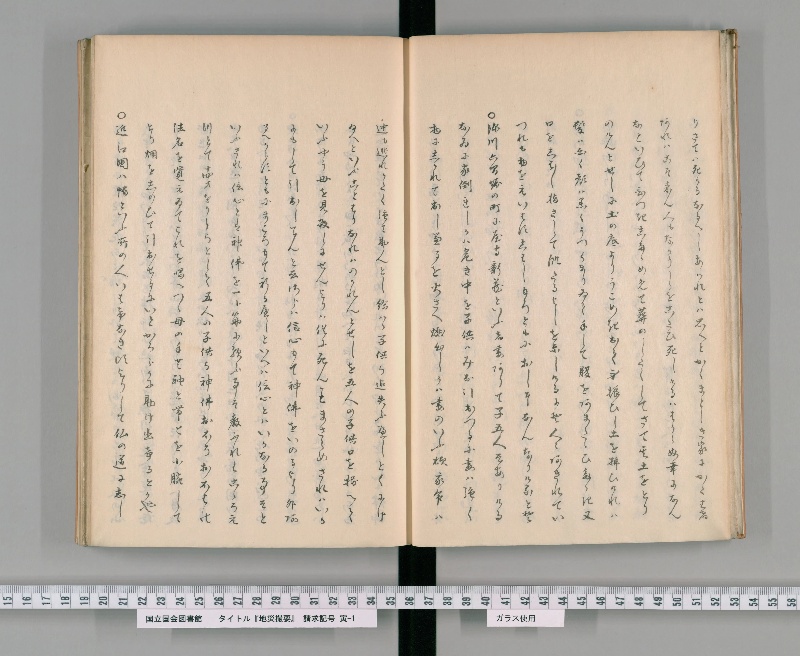
りさては死けるなるへしあはれとは思へとかくまとし【まどし=貧し】き家にかたは者
あれはこそ来ん人もなかりしをこたひ死しけるははからぬ幸になん
なといひてひつきしたゝめめ【「め」の重複か】て葬のしたくしてさて其土をとり
のけんとせしに土の底よりうこめき出て身振ひし土を払ひけれは
髪は白く顔ハ黒くうつくまりゐて手して腹をあまたゝひたゝき又
口をしは〳〵指さして飢たるよしを示しけるにそ人々あきれてい
つれも物をえいはすしはしもろともにおしになんなりけるとそ
○深川六間堀の町に屋守新蔵といふ者妻ありて子五人そありける
なゐに家倒れしかは危き中を子供はみな引出つるに妻は強く
物にしかれて出し兼るを火さへ燃出しかは妻のいふ様我命は
迚も逃れかたく強て助んとし給はゝ子供ら迄失ふへしとくにけ
給へといふことはりなれはのかれんとせしを五人の子供口を揃へて
いふやう母を見殺しにせんよりは倶に死んことまさらめされはいか
にもして引出してんと言さらは信心もて神仏をいのるより外あ
るへからすともにまころ【「まごころ」とすれば、「こ(ゝ)の脱落】もて祈るへしといへは信心とはいかなる事そと
いふされは信心とは神仏を一ト筋に願ふ事そ教ふれはこゝろえ
つとて十四才をかしらとして五人の子供ら神仏おほち【おおぢ=祖父】おほは【おおば=祖母】の
法名を覚えゐてこれを唱へつゝ母の手と袖と帯とを小腕して
とり烟をしのひて引出せるにいとかろらかに助け出けるとかや
○近江国ハ幡といふ所の人いはけなき頃よりして仏の道に志し
現代語訳
ところが死んだと思われたが、哀れとは思うものの、このような貧しい家に身体障害者がいては、来る人もなかったのだから、今度死んだのは思いがけない幸いだなどと言って、棺を準備して葬式の支度をして、さてその土を取り除こうとしたところ、土の底からうごめき出て身震いし、土を払うと、髪は白く顔は黒く、うずくまって座り、手で腹を何度も叩き、また口を指差して飢えていることを示したので、人々は驚いて、誰も物を言うことができず、しばらく皆も唖になってしまったということである。
○深川六間堀の町に屋守新蔵という者がおり、妻がいて子供が五人いた。地震で家が倒れたので、危険な中を子供たちは皆引き出したが、妻は強く物に挟まれて出すことができず、火まで燃え出したので、妻が言うには「私の命はとても助からないでしょう。無理に助けようとなさったら、子供たちまで失うことになります。早くお逃げください」ということは道理であったので、逃れようとしたが、五人の子供が口を揃えて言うには「母を見殺しにするよりは、一緒に死ぬ方がましです。どうにかして引き出しましょう」と言うので「それならば信心をもって神仏に祈る以外にないだろう。皆で真心をもって祈ろう」と言うと「信心とはどのようなことですか」と問うので、「信心とは神仏を一筋に願うことだ」と教えたので、理解して、十四歳を頭として五人の子供たちが、神仏や祖父祖母の法名を覚えていて、これを唱えながら母の手と袖と帯を小さな腕で取り、煙を耐えて引き出したところ、とても軽々と助け出すことができたということである。
○近江国八幡という所の人で、幼い頃から仏の道に志し
英語訳
However, though she was thought to be dead, while they felt pity, they said that since this was such a poor household with a disabled person, no one would come to marry into it anyway, so her death this time was an unexpected blessing. They prepared a coffin and made arrangements for the funeral. When they tried to remove the earth, she stirred from beneath the soil, shivered, and brushed off the dirt. Her hair was white and her face was black, and she crouched down, repeatedly striking her belly with her hands and pointing to her mouth to indicate that she was hungry. The people were so astonished that no one could speak, and for a while they all became mute themselves.
○In Rokken-bori town in Fukagawa, there was a man called house-keeper Shinzo who had a wife and five children. When the house collapsed in the earthquake, the children were all pulled out from the dangerous situation, but the wife was strongly pinned down by debris and could not be extracted. When fire even broke out, the wife said, "My life can hardly be saved. If you force yourselves to rescue me, you will lose the children as well. Please escape quickly." This was reasonable, so they tried to flee, but the five children said in unison, "Rather than letting mother die, it would be better to die together. Let us somehow pull her out." He said, "Then there is nothing else but to pray to the gods and Buddha with faith. Let us all pray with sincere hearts." When they asked "What is faith?" he taught them, "Faith is to wish to the gods and Buddha with single-minded devotion." Understanding this, the five children, led by the fourteen-year-old, remembered the Buddhist names of the gods, Buddha, grandfather and grandmother, and while chanting these, they took hold of their mother's hands, sleeves, and sash with their small arms, endured the smoke, and pulled her out. They were able to rescue her very easily.
○A person from a place called Hachiman in Omi Province who had aspired to the Buddhist path since childhood