翻刻
朝いな小人島のさい
字から思ひつき
大人国に
いひふく
めて
百じやう
じきの大
字のせき
書こう
ぎやう
のすり
物をし
て
か
ま
く
ら中へ
くばり一日
けん長寺の庭にて
風雅(ふうか)の雅の字を
百じやうじきの
紙一ばいにかゝせ
ければかまくら
中のひやうばん
つよくわれも〳〵と
見物に
来り
朝いな
当るの
せき
りやう
をうんとこさと
いふほどせしめこれ
にてやつとそん
金を持にする
これは中〳〵
人間わざで
はならぬ大
仏でもかな
はぬ〳〵
ヤンヤ〳〵
これでは
どふか
しやみせんを
ほめるやうだ
ひつほう
かりう【我流】
なら
コウ
ヱヽ
なんの
こつた
現代語訳
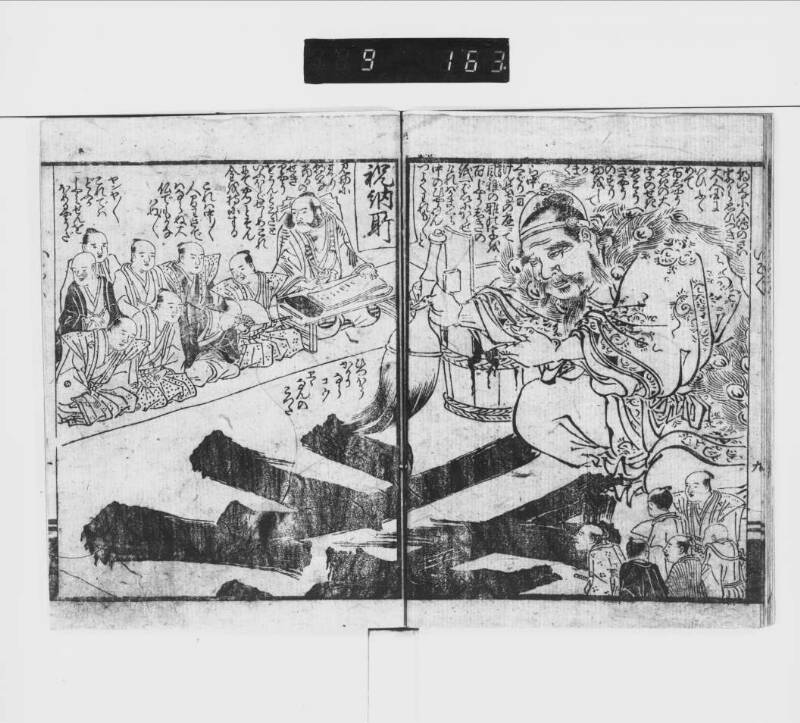
朝比奈は小人島の細字から思いつき、大人国に言い含めて、百畳敷の大きな紙に石書・楷行の摺物をして鎌倉中へ配り、一日建長寺の庭にて「風雅」の「雅」の字を百畳敷の紙いっぱいに書かせたところ、鎌倉中の評判が高く、われもわれもと見物に来て、朝比奈は当たるほどの施料をうんと稼ぎ、これでやっと損金を取り戻した。
【見物人の台詞】
「これは中々人間業ではならぬ。大仏でも敵わぬぞ」
「やんややんや。これではどうか三味線を褒めるようだ」
「筆法我流ならこういうものか。ええ、なんのこった」
英語訳
Inspired by Kojin-shima's fine calligraphy, Asahina instructed the Giant Country people to create printed materials with large stone script and standard script on hundred-tatami-sized paper, distributing them throughout Kamakura. One day in the garden of Kenchoji Temple, he had them write the character "ga" (elegant) from "fuuga" (refined elegance) filling an entire hundred-tatami-sized paper. This became highly acclaimed throughout Kamakura, with everyone coming to see it. Asahina earned considerable fees from the spectators, finally recovering his losses.
【Spectators' dialogue】
"This is certainly not human work. Even the Great Buddha couldn't match this!"
"Bravo, bravo! But this is somewhat like praising a shamisen."
"If this is his own calligraphic style, well, what of it?"