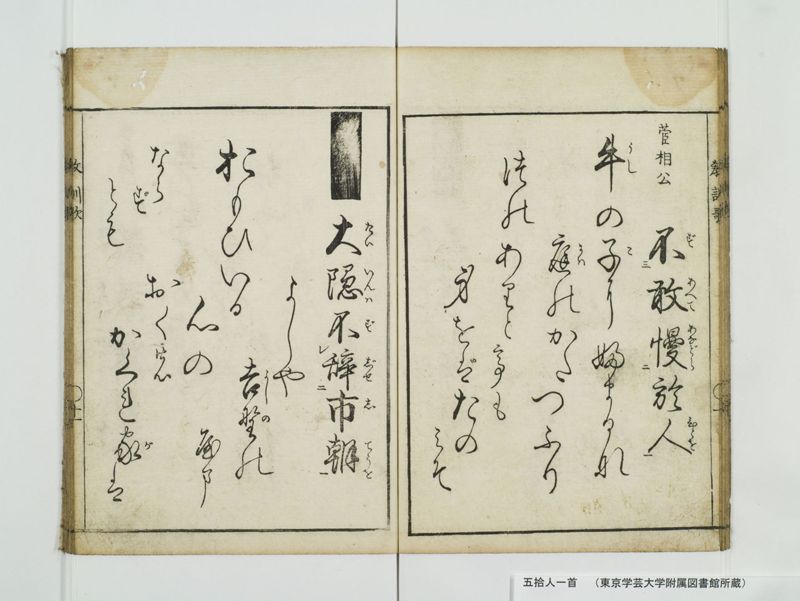
翻刻
【右丁】
《割書:菅相公》 不(ず)_三敢慢(あへてあなどら)_二於 人(ひとを)_一
牛(うし)の子(こ)にふまるな
庭(には)のかたつふり
つのありと
ても
身をばたの
みそ
【左丁】
□□□□ 《振り仮名:大隠|たいいんは》不(ず)_レ辞(じせ)_二市朝(し てうを)_一
よ し や
お も ひ い る 吉(よし)野(の)の
心 の やま
ならず お く の
とも かくれ家(が)は
現代語訳
【右丁】
《菅相公(かんしょうこう)》 「敢(あえ)て人を慢(あなど)らず」
牛(うし)の子(こ)に
ふまるな
庭(にわ)の
かたつふり
つのありとても
身(み)をば
たのみそ
(庭のかたつむりよ、牛の子に踏まれてしまうな。角があるからといって、それだけを頼りにしてはいけないぞ。)
(角という小さな武器を持っているからといって、自分の力を過信してはならない。世の中には、自分よりはるかに大きな力を持つものがいる。同時に、どんなに小さな相手であっても、侮ってはならない——「人を慢(あなど)らず」の戒めは、強者・弱者双方への教えである。)
---
【左丁】
《□□□□(作者名・出典、判読不明)》 「大隠(たいいん)は市朝(しちょう)を辞(じ)せず」
よしや
おもひいる
吉野(よしの)の
心(こころ)の
やま
ならずとも
かくれ家(が)は
奥(おく)の
(たとえ憧れの吉野山の奥深くに隠れ住むことができなくとも、心の山の奥に隠れ家を持てばよい。)
(「大隠は市朝を辞せず」——真の隠者は、山奥に逃げ込まなくとも、市中・朝廷のただ中にあっても、心の内に静かな隠れ家を持つものだ。吉野の奥山に実際に籠らずとも、心の中に「吉野の山の奥」を持つならば、それで足りる——この歌はそう説く。)
英語訳
【Right Page】
《Kan Shōkō (Lord Sugawara, i.e., Sugawara no Michizane)》 *"Dare not look down upon others."*
O garden snail —
do not be trodden upon
by the calf!
Even though you have your horns,
do not place
your trust in them alone.
(O little snail in the garden — take care not to be trampled by the calf! Even though you have your horns, do not rely upon them as your sole protection.)
(The snail's tiny horns may seem like a kind of defense, but they are no match for the heedless weight of a calf. The poem carries a double lesson: do not be so overconfident in your own small advantages that you fail to perceive greater dangers; and equally, do not underestimate or look down upon others, however small they may appear. The classical injunction — *"dare not be contemptuous of others"* — cuts both ways.)
---
【Left Page】
《□□□□ (Author/source illegible)》 *"The truly great hermit does not shun the marketplace or the court."*
Even should it be
that you cannot truly enter
Yoshino —
that mountain
of the longing heart —
even so,
a hidden dwelling
lies in the depths within.
(Even if you cannot withdraw in body to the famed depths of Yoshino Mountain, you need not despair — for a hidden dwelling exists in the depths of your own heart.)
(The classical Chinese phrase declares that the *truly* great recluse does not flee to the mountains; he carries his solitude within him, even while dwelling in the midst of the busy marketplace or the bustling court. This poem renders that idea into waka form: one need not literally seclude oneself in Yoshino's remote valleys — that beloved symbol of poetic retreat and spiritual withdrawal. True refuge is interior. The "hidden dwelling in the depths" is the quiet, untroubled place within one's own mind, available to those of cultivated spirit wherever they may be.)