翻刻
【右丁】
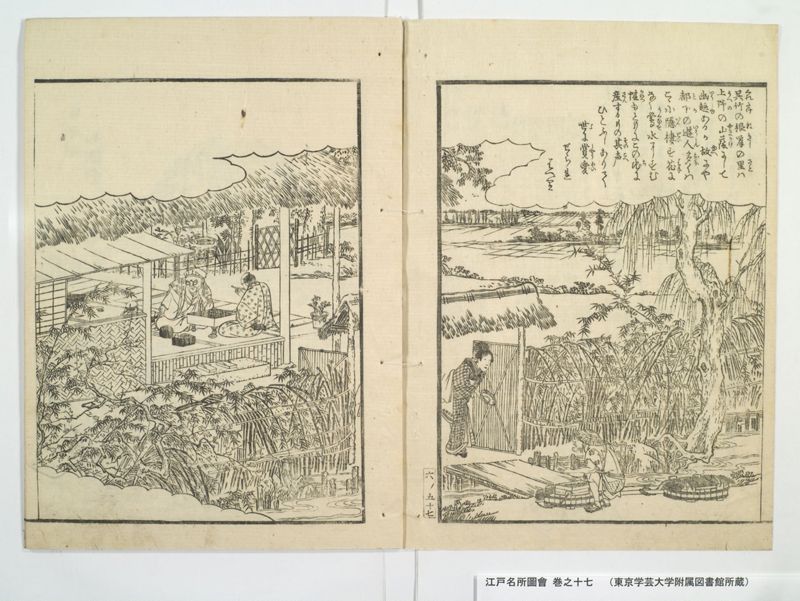
呉竹(くれたけ)の根岸(ねきし)の里(さと)は
上野(うへの)の山蔭(やまかけ)にして
幽趣(いうしゆ)あるか故(ゆへ)にや
都下(とか)の遊人(いうしん)多(おほ)くは
こゝに隠棲(いんせい)す花(はな)に
なく鶯(うくひす)水にすむ
蛙(かはつ)もともにこの地(ち)に
産(さん)するもの其声(そのこへ)
ひとふしありて
世(よ)に賞愛(しやうあい)
せられ
はへり
【左丁 文字無し】
現代語訳
【右丁】
呉竹の根岸の里は上野の山陰にあって趣深いところであるためか、江戸の遊び人の多くがここに隠棲している。花に鳴く鶯も、水に住む蛙も、ともにこの地に生まれ育つものは、その鳴き声に一段と風情があって、世の人々に愛でられている。
【左丁】
(文字なし)
英語訳
【Right Page】
The village of Negishi of the black bamboo (Kuretake) lies in the shadow of Ueno hill, and perhaps because of its profound charm, many pleasure-seekers from Edo choose to retreat and live in seclusion here. The warblers that sing among the flowers and the frogs that dwell in the water - those born and raised in this land - have a special quality to their voices that is cherished and beloved by the world.
【Left Page】
(No text)