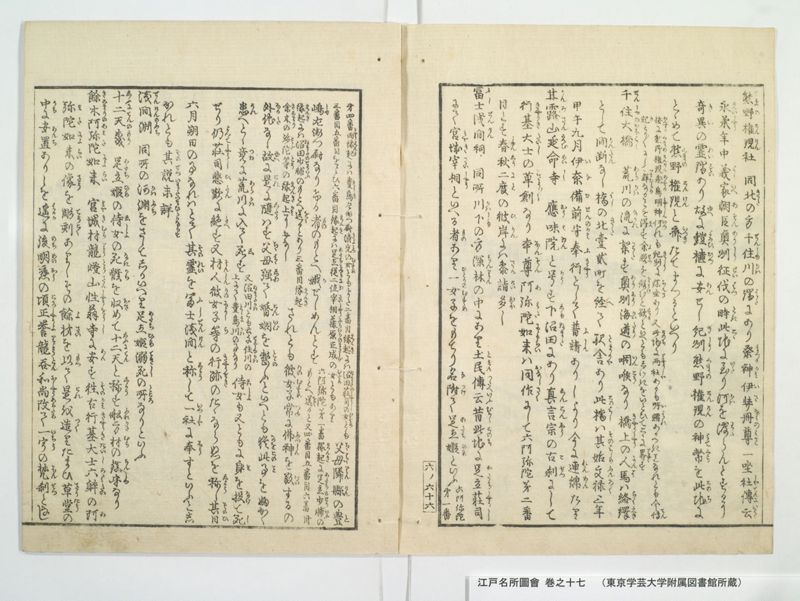
翻刻
【右丁】
熊野権現社(くまのこんけん ) 同 北(きた)の方 千住川(せんしゆかは)の端(はた)にあり祭神(まつりかみ)伊弉冊尊(いさなみのみこと)一坐 社伝云(しやてんにいはく)
永承(えいしやう)年中 義家朝臣(よしいへあそん)奥州征伐(あうしうせいはつ)の時(とき)此地(こゝ)に至(いた)り河(かは)を渡(わた)らんとするに
奇異(きい)の霊瑞(れいすい)あり故(ゆへ)に鎧櫃(よろひひつ)に安(あん)せし紀州(きしう)熊野権現(くまのこんけん)の神幣(みてくら)を此地(このち)に
とゝめて熊野権現(くまのこんけん)と斎(いつき)たてまつるといへり
《割書:按(あんする)に熊野権現(くまのこんけん)飛鳥明神(あすかみやうしん)何(いつ)れも紀州(きしう)に鎮坐(ちんさ)あり又 此地(このち)に両社(りやうしや)あるも所謂(いはれ)あるへきことなれとも今 伝(てん)|記(き)とり〳〵にして詳(つまひらか)なることを得(え)す余説(よせつ)を■(まうけ)【注①】むと欲(する)といへともしけきをいとひてこゝに略(りやく)す》
千住大橋(せんしゆのおほはし) 荒川(あらかは)の流(なかれ)に架(わた)す奥州海道(あうしうかいたう)の咽喉(いんこう)なり橋上(きやうしやう)の人馬(にんは)は絡繹(らくえき)
として間断(かんたん)なし橋(はし)の北(きた)壱弐町を経(へ)て駅舎(とまりや)あり此橋(このはし)は其(その)始(はしめ)文禄(ふんろく)三年
甲午九月 伊奈備前守(いなひせんのかみ)奉行(ふきやう)として普請(ふしん)ありしより今に連綿(れんめん)たり
甘露山延命寺(かんろさんえむめいし) 応味院(おうみゐん)と号(かう)す下沼田(しもぬまた)にあり真言宗(しんこんしう)の古刹(こせつ)にして
行基大士(きやうきたいし)の草創(さう〳〵)なり本尊(ほんそん)阿弥陀如来(あみたによらい)は同作(おなしさく)にして六阿弥陀第二番
目とす春秋(しゆんしう)二度(にと)の彼岸(ひかん)には参詣(さんけい)多(おほ)し
富士浅間祠(ふしせんけん ) 同所 川下(かはしも)の方 深林(しんりん)の中にあり土民(とみん)伝(つたへ)云(いふ)昔(むかし)此地(このち)に足立荘司(あたちしやうし)
にて宮城宰相(みやきさいしやう)といへる者(もの)あり一女子(ひとりのむすめ)をもてり名附(なつけ)て足立姫(あたちひめ)といふ《割書:六阿弥陀|第一番》
【左丁】
《割書:第四番 両縁起(りやうえんき)には豊島(としま)左衛門尉 清光(きよみつ)の女(むすめ)ともまた二番目 縁起(えんき)には沼田荘司(ぬまたのしやうし)の女(むすめ)とも|三番目五番目をよひ六番目 縁起(えんき)には足立従二位宰相藤原正成(あたちちゆうにゐさいしやうふちはらのまさしげ)の女(むすめ)ともあり》父母(ちゝはゝ)隣県(りんけん)の豊(と)
嶋(しま)左衛門尉なりける者(もの)のもとへ娥(か)【注②】せしめんとす《割書:六阿弥陀第一番 縁起(えんき)に足立少輔(あたちのせういふ)の|もとへ送(をく)ると又四番目五番目六番目》
《割書:縁起(えんき)には沼田少輔(ぬまたのせういふ)のもとへ送(をく)るとあり三番目 縁起(えんき)|余木(きあまり)の弥陀(みだ)等(とう)の縁起(えんき)上(かみ)におなし》されとも彼(かの)女子(むすめ)常(つね)に仏神(ふつしん)を敬(けい)するの
外(ほか)他(た)なし故(ゆへ)に是(これ)に随(したか)はす父母(ちゝはゝ)強(しゐ)て婚姻(こんいむ)を整(とゝの)ふといへとも猶(なを)此事(このこと)をふかく
患(うれ)へとし竟(つゐ)に荒川(あらかは)に入て死(し)す《割書:又 沼田川(ぬまたかは)とも云 千住川(せんしゆかは)の|上にて豊島川(としまかは)の事なり》侍女(ししよ)も又ともに身(み)を投(なけ)て死(し)
せり仍(よつて)荘司(しやうし)悲歎(ひたん)に絶(たへ)す又 村人(そんしん)彼(かの)女子(によし)等(ら)の行跡(きやうせき)のたゝならぬを称(しよう)し其日(そのひ)
六月朔日の事なれはとて其(その)霊(れい)を富士浅間(ふしせんけん)と称(しよう)して一社(いつしや)に奉(ほう)すといふとし
かれとも其(その)説(せつ)未詳(いまたつまひらかならす)
浅間淵(せんけんのふち) 同所の河淵(かはふち)をさしてしかいへり足立姫(あたちひめ)溺死(てきし)の所(ところ)なりといふ
十二天森(しふにてんのもり) 足立姫(あたちひめ)の侍女(ししよ)の死骸(なきから)を収(おさ)めて十二天(しふにてん)と称(しよう)す船方村(ふなかたむら)の鎮守(ちんしゆ)なり
余木阿弥陀如来(きあまりのあみたによらい) 宮城村(みやきむら)龍燈山(りうとうさん)性翁寺(しやうをうし)に安(あん)す往古(そのかみ)行基大士(きやうきたいし)六体(ろくたい)の阿(あ)
弥陀如来(みたによらい)の像(さう)を彫刻(てうこく)ありしその余材(よさい)を以(もつ)て是(これ)を造(つく)りたまひ草堂(さうたう)の
中(うち)に安置(あんち)ありしを遥(はるか)に後(のち)明応(めいおう)の頃(ころ)正誉龍呑和尚(しやうよりようとんおしやう)改(あらため)て一宇(いちう)の梵刹(ほんせつ)となし
【注① ■は「亻+設」 「儲」の誤】
【注② 「娥」は「嫁」の誤】
現代語訳
【右丁】
熊野権現社(くまのごんげんしゃ) 千住の北方、千住川の端にある。祭神は伊弉冊尊(いざなみのみこと)一座。社伝によると、
永承年間(1046-1053)、源義家朝臣が奥州征伐の時、この地に至り川を渡ろうとすると、
不思議な霊験があった。そこで鎧櫃に安置していた紀州熊野権現の神幣をこの地に
留めて熊野権現として祀ったという。
《注:考えてみると、熊野権現・飛鳥明神はいずれも紀州に鎮座している。また、この地に両社があることにも理由があるはずだが、現在の伝記は断片的で詳しいことは分からない。他の説を設けたいと思うが、煩雑になるのを避けてここでは省略する》
千住大橋(せんじゅおおはし) 荒川の流れに架かる奥州街道の要所である。橋上の人馬は絡繹として絶え間がない。橋の北に一、二町行くと宿場がある。この橋は文禄三年(1594年)甲午九月、伊奈備前守を奉行として建設されて以来、現在まで続いている。
甘露山延命寺(かんろさんえんめいじ) 応味院と号する。下沼田にある真言宗の古刹で、
行基大師の草創である。本尊阿弥陀如来は同じ作で、六阿弥陀の第二番
目とする。春秋二度の彼岸には参詣が多い。
富士浅間祠(ふじせんげんし) 同所の川下の方、深い林の中にある。土地の人々が伝えるところによると、昔この地に足立荘司
で宮城宰相という者がいた。一人娘を持ち、名を足立姫という。《注:六阿弥陀第一番》
【左丁】
《注:第四番の両縁起には豊島左衛門尉清光の娘とも、また二番目の縁起には沼田荘司の娘とも、三番目・五番目・六番目の縁起には足立従二位宰相藤原正成の娘ともある》父母は隣県の豊
島左衛門尉なる者のところへ嫁がせようとした。《注:六阿弥陀第一番の縁起に足立少輔のもとへ送るとも、また四番目・五番目・六番目》
《注:縁起には沼田少輔のもとへ送るともある。三番目の縁起、余木の弥陀等の縁起は上記と同じ》しかし、その娘は常に仏神を敬う
以外に関心がない。そのため結婚に従わず、父母が強引に婚姻を整えようとしても、なおもこのことを深く
憂い、ついに荒川に身を投げて死んだ。《注:また沼田川ともいう。千住川の上で豊島川のことである》侍女もまた共に身を投げて死
んだ。そのため荘司は悲しみに堪えない。また村人たちはその娘らの行いが立派であることを称え、その日が
六月朔日のことであったので、その霊を富士浅間と称して一社に祀ったという。しか
し、その説は詳細不明である。
浅間淵(せんげんのふち) 同所の川淵をさしてそう呼ぶ。足立姫が溺死した所だという。
十二天森(じゅうにてんのもり) 足立姫の侍女の死骸を収めて十二天と称する。船方村の鎮守である。
余木阿弥陀如来(きあまりのあみだにょらい) 宮城村龍燈山性翁寺に安置する。昔、行基大師が六体の阿
弥陀如来の像を彫刻された時、その余材でこれを造られ、草堂の
中に安置されていたのを、遥か後の明応の頃(1492-1501)、正誉龍呑和尚が改めて一宇の寺院とした。
英語訳
【Right Page】
Kumano Gongen Shrine (Kumano Gongen-sha) Located at the edge of the Senju River in the northern part of Senju. The enshrined deity is Izanami-no-Mikoto, one deity. According to shrine tradition,
During the Eisho era (1046-1053), when Minamoto no Yoshiie Asomi was on his expedition to suppress Oshu, he arrived at this place and was about to cross the river when
a mysterious divine manifestation occurred. Therefore, he left the sacred offerings of Kumano Gongen from Kishu, which he had kept in his armor chest, at this place
and enshrined them as Kumano Gongen.
《Note: Upon consideration, both Kumano Gongen and Asuka Myojin are enshrined in Kishu Province. There should be reasons why both shrines exist in this location, but current records are fragmentary and detailed information cannot be obtained. I would like to present other theories, but I omit them here to avoid complexity》
Senju Great Bridge (Senju Ohashi) This bridge spans the Arakawa River and serves as the throat of the Oshu Highway. The flow of people and horses on the bridge is continuous without interruption. One or two cho north of the bridge, there is a post station. This bridge was first constructed in the ninth month of Bunroku 3 (1594), year of the Wood Horse, with Ina Bizen-no-Kami as magistrate, and has continued to the present day.
Kanrozan Enmei-ji Temple (Kanrozan Enmei-ji) Also called Omiin. Located in Shimo-Numata, it is an ancient temple of the Shingon sect
founded by the great master Gyoki. The principal image, Amida Nyorai, is of the same creation and is considered the second
of the Six Amida. Many people visit during the spring and autumn equinox periods.
Fuji Sengen Shrine (Fuji Sengen-shi) Located downstream in the same area, within a deep forest. According to local tradition, long ago there was a person in this area who was an Adachi manor overseer
called Miyagi Saisho. He had one daughter named Adachi-hime. 《Note: First of the Six Amida》
【Left Page】
《Note: In the dual origin stories of the fourth, it is said to be the daughter of Toshima Saemon-no-jo Kiyomitsu, in the second origin story the daughter of Numata-no-shoji, and in the third, fifth, and sixth origin stories the daughter of Adachi Junior Second Rank Chancellor Fujiwara no Masashige》The parents tried to marry her to a person who was Toshima Saemon-no-jo in the neighboring county. 《Note: The first origin story of the Six Amida says she was to be sent to Adachi Shoyu, and also the fourth, fifth, and sixth》
《Note: origin stories say she was to be sent to Numata Shoyu. The third origin story and the origin stories of Kiamari-no-Mida etc. are the same as above》However, the daughter had no interest other than revering Buddhist deities. Therefore, she would not comply with the marriage, and even though her parents forcibly arranged the marriage, she still deeply
worried about this matter and finally threw herself into the Arakawa River and died. 《Note: Also called Numata River. This refers to Toshima River, which is upstream of Senju River》Her lady-in-waiting also threw herself in and died
together with her. Therefore, the manor overseer was inconsolable with grief. The villagers also praised the noble conduct of the daughters, and since it happened on
the first day of the sixth month, they enshrined their spirits as Fuji Sengen in a shrine. However,
the details of this account are unclear.
Sengen Pool (Sengen-no-fuchi) This refers to the river pool in the same location. It is said to be where Adachi-hime drowned.
Juniten Forest (Juniten-no-mori) The remains of Adachi-hime's lady-in-waiting were buried here and called Juniten. It serves as the tutelary shrine of Funakata Village.
Kiamari Amida Nyorai (Kiamari-no-Amida Nyorai) Enshrined at Ryutosan Shooji Temple in Miyagi Village. Long ago, when the great master Gyoki carved six statues of A-
mida Nyorai, he created this one from the leftover materials and it was placed in a grass hut.
Much later, around the Meio era (1492-1501), the priest Shoyo Ryuton reformed it into a proper temple building.