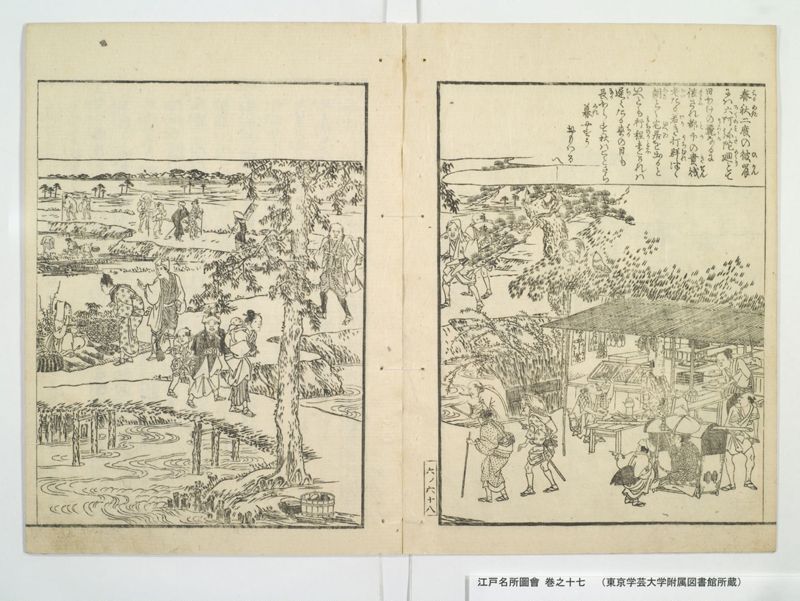
翻刻
【右丁】
春秋(はるあき)二度の彼岸(ひかん)
には六阿弥陀廻(ろくあみためくり)とて
日かけの麗(うらゝか)なるに
催(もよほ)され都下(とか)の貴賤(きせん)
老(おい)たる若(わか)き打群(うちむれ)つゝ
朝(あさ)とく宅居(いへゐ)を出ると
いへとも行程(みちのり)遠(とほ)けれは
遅々(ちゝ)たる春(はる)の日も
長(なか)からす秋(あき)はことさら
暮(くれ)やすう
おもはる
へし
現代語訳
【右丁】
春と秋の二度の彼岸には「六阿弥陀廻り」といって、日差しが美しく暖かなのに誘われて、江戸の身分の高い人も低い人も、老人も若者も連れ立って、朝早く家を出発する。とはいえ、行程が遠いので、のんびりとした春の日でも長くは感じられず、秋はなおさら日が暮れやすく感じられるであろう。
英語訳
【Right Page】
During the spring and autumn equinoxes, there is a practice called "Roku Amida Meguri" (pilgrimage to six Amida temples). Enticed by the beautiful and warm sunlight, people of all social classes in Edo - noble and common, old and young - gather in groups and set out early in the morning from their homes. However, since the journey is long, even the leisurely spring days do not feel long enough, and autumn days especially seem to grow dark quickly.