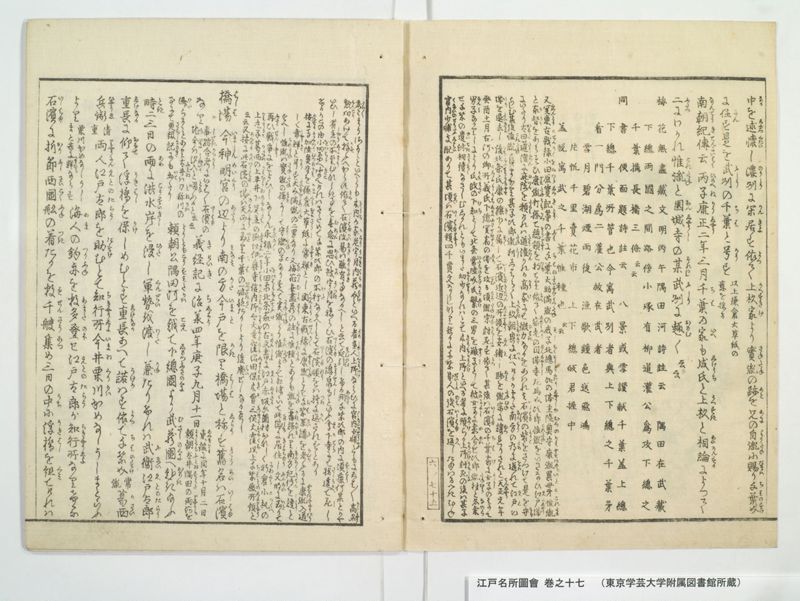
翻刻
【右丁】
中(なか)を述懐(しゆつくはい)し濃州(のうしう)に閑居(かんきよ)す依(よつ)て上杉家(うヘすきけ)より実胤(さねたね)の跡(あと)を兄(あに)の自胤(よりたね)に賜(たまは)り千葉介(ちはのすけ)
に任(にん)す是を武州(ふしう)の千葉(ちは)と号(かう)す《割書:以上鎌倉大草紙の|意を採る》
南朝紀伝(なんてうきてんに)云(いはく)丙子(ひのへね)康正(かうしやう)二年三月 千葉(ちは)の家(いへ)も成氏(しけうち)と上杉(うへすき)と相論(あいろんする)によつて
二(ふたつ)にわかれ惟胤(これたね)と園城寺(おんしやうし)の某(それかし)武州(ふしう)に趣(おもむ)く云云
梅 花 無 盡 蔵 文 明 丙 午 隅 田 河 詩 註 云 隅 田 在 武 蔵
下 総 両 国 之 間 路 傍 小 塚 有 柳 道 灌 公 為 攻 下 総 之
千 葉 構 長 橋 三 條 云云
同 書 便 面 題 詩 註 云 八 景 或 雪 讃 献 千 葉 蓋 上 総
下 総 千 葉 所 管 也 今 寓 武 州 者 与 上 下 総 之 千 葉 矛
盾 一 門 分 為 二 灌 公 ■ 在 武 者
雪 月 碧 湖 煙 雨 後 漁 歌 鐘 色 送 飛 鴻
片 帆 千 里 売 花 市 上 下 総 帰 君 握 中
蓋 祱 寓 武 之 千 葉 惟 種 也 云云
《割書:又 関東古戦録(くはんとうこせんろく)小田原実記(をたはらしつき)等(とう)の書(ふみ)に千葉大助満胤(ちはのたいすけみつたね)の庶子(そし)北総(ほくそう)馬加(まくはり)の城主(しやうしゆ)陸奥守康胤(むつのかみやすたね)異母弟(いとこ)惟胤(これたね)|と家督(かとく)をあらそひ康胤(やすたね)打勝(うちかつ)て総領(そうりやう)を持(たも)てり依(よつ)て宿老(しゆくろう)の園城寺(ゑんしやうし)左馬介次郎 惟胤(これたね)をいさなひ江戸城(えとしやう)|にいたり太田道灌(おほたたうかはん)に庇院(ひいん)を頼(たのみ)けれは道灌(たうくはん)かれる高家(かうけ)にて微力(ひりき)なるをあはれみ石浜(いしはま)の砦(とりて)をさつけて是を守(まも)|らしむ其後 惟胤(これたね)身まかり其子 次郎胤利( たねとし)しはらく上杉朝興(うへすきともおき)に仕(つか)へけるかまた南方(なんはう)の為(ため)に追(をは)れて江戸(えと)の|城(しろ)を退去(たいきよ)し後(のち)北条氏康(ほふてううちやす)の旗下(きか)に属(そく)して石浜(いしはま)近辺(きんへん)の所領(しよりやう)を安緒(あんと)【堵ヵ】し跡(あと)を胤宗(たねむね)に譲(ゆつ)れりされと天正(てんしやう)元年|癸酉十一月 古河(こか)の御所(こしよ)義氏(よしうち)下総関宿(しもつふさせきやと)の城(しろ)を攻(せむ)る頃(ころ)胤宗(たねむね)討死(うちしに)す依(よつ)て其後は石浜(いしはま)の千葉家(ちはけ)に女子(によし)のみにて|男子(なんし)なかりしにより氏政(うちまさ)の下知(けち)として北条常陸介氏繁( ひたちのすけうちしけ)の三男を養子(やうし)として彼(かの)女子(によし)に妻合(めあは)せ次郎胤村( たねむら)と名乗(なのら)|せ千葉の遺跡(ゆいせき)相続(さうそく)なさしむしかれともいまた幼少(えうせう)なれはとて木内上野(きうちかうつけ)といへる者に預(あつけ)らる上野(かうつけ)討死(うちしに)の後は其子|宮内省輔(くないのせういふ)支配(しはい)ありて其頃( ころ)は石浜領(いしはまりやう)四千貫文なりしなり然るに千葉 成人(せいしん)の後(のち)石浜(いしはま)を返(かへ)したまはるへきむね》
【左丁】
《割書:度々(たひ〳〵)まうするゝといへとも木内(きうち)か家老(からう)宇月内蔵介(うつきくらのすけ)といへる者(もの)主人(しゆしん)上野(かうつけ)ならひに宮内少輔(くないのせういふ)ともにしは〳〵高名(かうみやう)|勲功(くんこう)あけて数(かそ)ふへからす依(よつ)て石浜(いしはま)改易(かいえき)は難有(ありかたき)事なかるへしと云て延引(えむいむ)しける間(あひた)千葉次郎の内に須藤何某(すとう )とかや|いひし者 主(しゆう)の所望(しよまう)むなしき事を無念(むねん)に思(おも)ひ彼(かの)宇月(うつき)をねらひ石浜(いしはま)の総泉寺(そうせんし)といふ会下寺(えかてら)にて指違(さしちかへ)て死(し)し|けるかこの由 小田原(をたはら)へ聞(きこ)へけれはさためて千葉次郎の所行(わさ)なるへしとて石浜領(いしはまれう)をは終(つゐ)に返(かへ)されすとあり》
《割書:按(あんする)に馬加陸奥守(まくはりむつのかみ)を鎌倉大草紙(かまくらおほさうし)に常輝(しやうき)とし関東古戦録(くはんとうこせんろく)に康胤(やすたね)とす千葉系譜(ちはけいふ)を考(かむか)ふるに康胤(やすたね)入道(にうたう)|して常輝(しやうき)と号(かう)す大介満胤(たいすけみつたね)の二男なり又 梅花無盡蔵(はいくわむしんさう)の註(ちゆう)に惟種(これたね)とあるも胤(たね)を書誤(かきあやま)れり南方紀伝(なんほうきてん)を證(しよう)と|すへし惟胤(これたね)は実胤(さねたね)の孫(まこ)にして守胤(もりたね)の子(こ)なりすへて実胤(さねたね)より惟胤(これたね)まて相つゝいて此城(このしろ)に居住(きよちゆう)し文明(ふんめい)に至(いた)りて|再(ふたゝ)ひ戦争(せんしやう)にをよひしならん永禄(えひろく)二年 小田原(をたはら)北条家(ほふてふけ)の古文書(こもんしよ)に江戸(えと)赤坂(あかさか)六箇村おなしく新倉(にゐくら)小机(こつくへ)の|上丸子(かみまるこ)葛西(かさい)の上平井(かみひらゐ)下足立(しもあたち)の淵江(ふちえ)伊興寺(いこうてら)信内(のふうち)野郷(のゝかう)太多窪(おほたくほ)沼田(ぬまた)保木曽(ほきそ)三俣(みつまた)大窪(おほくほ)以上 千葉殿(ちはとの)所領(しよりやう)と|云云又 按(あんする)に此(この)石浜(いしはま)の城(しろ)は天正(てんしやう)に至(いた)り千葉(ちは)の一跡(いつせき)絶(たへ)たりしより後 廃(はい)せしなるへし》
橋場(はしは) 今(いま)神明宮(しんめいくう)の辺(あたり)より南(みなみ)の方(かた)今戸(いまと)を限(かき)り橋場(はしは)と称(しよう)す旧名(きうめい)は石浜(いしはま)
なり《割書:事跡合考(しせきかつかう)にいはく石浜(いしはま)の|地(ち)今(いま)は汐入(しほいり)と唱(とな)ふると云云》義経記(きけいき)に治承(ちしよう)四年庚子九月十一日《割書:東鑑(あつまかゝみ)に同年十月二日|頼朝(よりとも)太井(ふとゐ)隅田(すみた)の両河(りやうか)を》
《割書:済(わた)るゝとあり太井(ふとゐ)は刀袮川(とねかは)の|事にて更級記(さらしなのき)にも出(いて)たり》頼朝公(よりともこう)隅田川(すみたかは)を越(こえ)て下総国(しもつふさのくに)より武蔵国(むさしのくに)へ赴(おもき)き給ふ
時(とき)二三日の雨(あめ)に洪水(こうすい)岸(きし)を浸(ひた)し軍勢(くんせい)を渡(わた)し兼(かね)たりけれは武衛(ふゑい)江戸太郎(えとのたらう)
重長(しけなか)に仰(おほせ)て浮橋(うきはし)を係(かけ)しめむとす重長(しけなか)あへて諾(うけか)はす依(よつ)て千葉介(ちはのすけ)《割書:常|胤》葛西(かさい)
兵衛(ひやうゑ)《割書:清|重》両人(りやうにん)江戸太郎(えとのたらう)を助(たすけ)むとて知行所(ちきやうしよ)今井(いまゐ)栗川(くりかは)かめなしうしまとゝいふ
より《割書:栗川かめなしうし|まと共に詳(つまひら)ならす》海人(あま)の釣舟(つりふね)を数多(あまた)登(のほ)せ江戸太郎(えとのたらう)が知行所(ちきやうしよ)なりける
石浜に折節(おりふし)西国船(さいこくふね)の着(つき)たるを数千艘(すせんさう)集(あつ)め三日の中(うち)に浮橋(うきはし)を組(くみ)てけれは
現代語訳
【右丁】
世の中を嘆き、美濃国に隠居した。そのため上杉家より実胤の跡を兄の自胤に与え、千葉介に任命した。これを武州の千葉と号する。《以上は鎌倉大草紙の意を採る》
南朝紀伝によると、丙子康正二年三月、千葉の家も成氏と上杉が相争うことによって二つに分かれ、惟胤と園城寺の某が武州に赴いたという。
梅花無盡蔵文明丙午隅田河詩註によると「隅田は武蔵と下総両国の間にあり、路傍の小塚に柳があり、太田道灌公が下総の千葉を攻めるため長橋三條を構えた」とある。
同書便面題詩註によると「八景あるいは雪讃を千葉に献ず。思うに上総・下総は千葉の所管である。今武州に寓居する者は上総・下総の千葉と対立し、一門が二つに分かれた。道灌公が武州にいた時の詩である。
雪月碧湖煙雨後 漁歌鐘色送飛鴻
片帆千里売花市 上下総帰君握中
思うに武州に寓居した千葉惟種のことである」とある。
《また関東古戦録・小田原実記等の書によると、千葉大助満胤の庶子で北総馬加の城主陸奥守康胤が、異母弟惟胤と家督を争い、康胤が勝って総領となった。そのため宿老の園城寺左馬介次郎が惟胤を誘い江戸城に至り、太田道灌に庇護を頼んだ。道灌はこの高家が微力なのを憐れみ、石浜の砦を与えてこれを守らせた。その後惟胤が亡くなり、その子次郎胤利がしばらく上杉朝興に仕えたが、また南方のために追われて江戸城を退去し、後に北条氏康の旗下に属して石浜近辺の所領を安堵され、跡を胤宗に譲った。しかし天正元年癸酉十一月、古河の御所義氏が下総関宿の城を攻める頃、胤宗は討死した。そのため、その後は石浜の千葉家に女子のみで男子がいなかったので、氏政の下知として北条常陸介氏繁の三男を養子として、その女子に妻合わせ次郎胤村と名乗らせ、千葉の遺跡を相続させた。しかしまだ幼少であるとして木内上野という者に預けられた。上野討死の後はその子宮内少輔が支配し、その頃は石浜領四千貫文であった。しかし千葉が成人した後、石浜を返してもらうべき旨を》
【左丁】
《度々申し上げるといっても、木内の家老宇月内蔵介という者が、主人上野並びに宮内少輔ともにしばしば高名・勲功があって数え切れないので、石浜改易は有り難いことではないと言って延引していた間、千葉次郎の内に須藤何某とかいう者が、主の所望が空しいことを無念に思い、その宇月を狙い、石浜の総泉寺という会下寺で指違えて死んだ。このことが小田原に聞こえたので、きっと千葉次郎の所行であろうとして、石浜領は遂に返されなかったとある》
《考えるに、馬加陸奥守を鎌倉大草紙では常輝とし、関東古戦録では康胤とする。千葉系譜を考えると、康胤が入道して常輝と号した。大介満胤の二男である。また梅花無盡蔵の註に惟種とあるのも、胤を書き誤ったものである。南方紀伝を証拠とすべきである。惟胤は実胤の孫で守胤の子である。すべて実胤より惟胤まで相続いてこの城に居住し、文明に至って再び戦争に及んだのであろう。永禄二年の小田原北条家の古文書に、江戸・赤坂六箇村、同じく新倉・小机の上丸子・葛西の上平井・下足立の淵江・伊興寺・信内・野郷・太多窪・沼田・保木曽・三俣・大窪、以上千葉殿所領とある。また考えるに、この石浜の城は天正に至り千葉の一跡が絶えたより後、廃止されたのであろう》
橋場 今の神明宮の辺りより南の方、今戸を限りとして橋場と称する。旧名は石浜である。《事跡合考によると、石浜の地は今は汐入と唱えるとある》義経記に治承四年庚子九月十一日《東鑑に同年十月二日、頼朝が太井・隅田の両河を渡るとある。太井は利根川のことで、更級記にも出ている》頼朝公が隅田川を越えて下総国より武蔵国へ赴かれた時、二三日の雨で洪水が岸を浸し、軍勢を渡し兼ねたので、武衛が江戸太郎重長に仰せて浮橋を架けさせようとした。重長は承知しなかった。そのため千葉介《常胤》、葛西兵衛《清重》両人が江戸太郎を助けようとして、知行所の今井・栗川・かめなし・うしまとというところから《栗川・かめなし・うしまとともに詳細は不明》海人の釣舟を数多く上らせ、江戸太郎の知行所であった石浜に折節着いていた西国船を数千艘集め、三日の内に浮橋を組んだので
英語訳
【Right Page】
Lamenting the state of the world, he retired to Mino Province. Therefore, the Uesugi family granted Sanetane's succession to his elder brother Yoritane and appointed him as Chiba-no-suke. This lineage was called the Chiba of Musashi Province. <<The above follows the intent of the Kamakura Ōsōshi>>
According to the Nanchō Kiden, in the third month of Kōshō 2 (1456), year of hinoe-ne, the Chiba house also split in two due to the conflict between Shigeuji and Uesugi, and Koretane and a certain person from Onjō-ji proceeded to Musashi Province.
According to the poetry annotations of Baikamujinzō on the Sumida River from Bunmei hinoe-uma: "Sumida is located between Musashi and Shimōsa provinces. There are willows by small mounds along the roadside, where Lord Ōta Dōkan constructed three long bridges to attack the Chiba of Shimōsa."
The same book's poetry annotations state: "Eight scenic views or snow poems were dedicated to Chiba. Kazusa and Shimōsa were under Chiba's jurisdiction. Those now residing in Musashi opposed the Chiba of Kazusa and Shimōsa, dividing the clan in two. This refers to when Lord Dōkan was in Musashi:
'After snow, moon, blue lakes, and misty rain / Fishermen's songs and bell sounds send off flying geese
A single sail travels a thousand ri to the flower market / Kazusa and Shimōsa return to your grasp'
This likely refers to Chiba Koretane who resided in Musashi."
<<According to books such as the Kantō Kosen-roku and Odawara Jikki, Chiba Daisuke Mitsu-tane's illegitimate son, Mutsu-no-kami Yasutane, lord of Makuhari castle in northern Sōshū, fought for succession with his half-brother Koretane. Yasutane won and became the family head. Therefore, the elder retainer Onjō-ji Sama-no-suke Jirō took Koretane to Edo Castle and requested protection from Ōta Dōkan. Dōkan pitied this noble house's weak position and granted them Ishihama fortress to defend. Later, Koretane died, and his son Jirō Tanetoshi served Uesugi Tomooki for a while but was again driven out by southern forces and left Edo Castle. He later served under Hōjō Ujiyasu's banner, was granted lands near Ishihama, and passed the succession to Tanemune. However, in the eleventh month of Tenshō 1 (1573), when Lord Yoshiuji of Koga attacked Sekiyado castle in Shimōsa, Tanemune was killed in battle. Afterward, the Ishihama Chiba house had only daughters and no sons, so by Ujimasa's order, the third son of Hōjō Hitachi-no-suke Ujishige was adopted, married to that daughter, named Jirō Tanemura, and made to inherit the Chiba legacy. However, since he was still young, he was entrusted to someone called Kiuchi Kōzuke. After Kōzuke's death in battle, his son Kunai-shōyū took charge, and at that time the Ishihama domain was worth 4,000 kan-mon. However, when Chiba came of age, he repeatedly requested the return of Ishihama.>>
【Left Page】
<<Despite repeated petitions, Kiuchi's chief retainer Utsuki Kura-no-suke argued that his masters Kōzuke and Kunai-shōyū both had numerous distinguished services and achievements, so the confiscation of Ishihama would be unreasonable, thus causing delays. Meanwhile, someone called Sudō from among Chiba Jirō's retainers, feeling bitter about his lord's unfulfilled desires, targeted Utsuki and committed seppuku at Sōsen-ji, a subsidiary temple in Ishihama. When this was reported to Odawara, they concluded it must have been Chiba Jirō's doing, and ultimately never returned the Ishihama domain.>>
<<Upon consideration, the Kamakura Ōsōshi calls the Makuhari Mutsu-no-kami "Shōki," while the Kantō Kosen-roku calls him "Yasutane." Examining the Chiba genealogy, Yasutane took the tonsure and was called Shōki. He was the second son of Daisuke Mitsu-tane. Also, the annotation in Baikamujinzō gives "Koretane" but mistakenly writes the character for "tane." The Nanpō Kiden should be taken as evidence. Koretane was Sanetane's grandson and Moritane's son. From Sanetane to Koretane, they continuously resided in this castle, and by the Bunmei era, warfare resumed. In a Hōjō family document from Eiroku 2, the following are listed as Lord Chiba's domains: Edo, Akasaka six villages, similarly Niikura, Kotsukue's Kami-maruko, Kasai's Kami-hirai, Shimo-adachi's Fuchie, Ikōji, Nobūchi, Nogō, Ōtakubo, Numata, Hokiso, Mitsumata, and Ōkubo. Upon further consideration, this Ishihama castle was likely abandoned after the Chiba lineage ended in the Tenshō era.>>
Hashiba: From the vicinity of today's Shinmei Shrine southward to the boundary of Imado is called Hashiba. Its old name was Ishihama. <<According to the Shiseki Katsukō, the land of Ishihama is now called Shioiri.>> The Gikeiki records that on the 11th day of the 9th month of Jishō 4 (1180), year of kanoe-ne <<The Azuma Kagami states that on the 2nd day of the 10th month of the same year, Yoritomo crossed the Futoi and Sumida rivers. Futoi refers to the Tone River, which also appears in the Sarashina Diary>>, when Lord Yoritomo crossed the Sumida River traveling from Shimōsa to Musashi Province, two or three days of rain caused floods that submerged the banks, making it difficult to ferry the army across. The military commander ordered Edo Tarō Shigenaga to construct a floating bridge. Shigenaga refused to comply. Therefore, Chiba-no-suke <<Tsunetane>> and Kasai Hyōe <<Kiyoshige>> decided to help Edo Tarō. From their domains of Imai, Kurikawa, Kamenashi, and Ushimato <<the details of Kurikawa, Kamenashi, and Ushimato are unclear>>, they mobilized numerous fishermen's boats, and gathered several thousand ships from the western provinces that happened to be anchored at Ishihama, which was Edo Tarō's domain, constructing a floating bridge within three days.