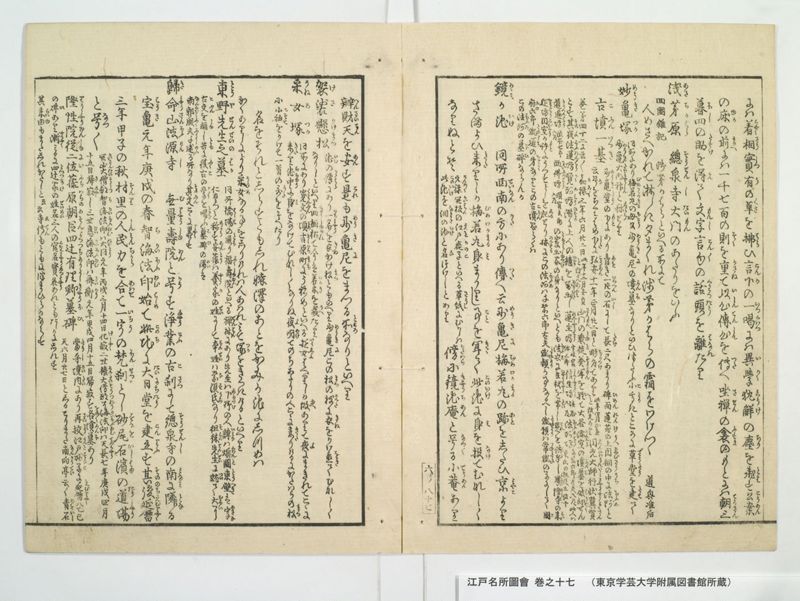
翻刻
【右丁】
には着相実有(ちやくさうしつう)の草(くさ)を払(はら)ひ言下(こんか)の一喝(いつくはつ)には異学執解(いかくしうけ)の塵(ちり)を■(とは)【飛ヵ】す公案(こうあん)
の床(ゆか)の前(まへ)には一千七百の則(そく)を重(かさね)て以心伝心(いしんてんしん)を伝(つた)へ坐禅(させん)の衾(ふすま)のもとには朝三(てうさん)
暮四(ほし)の助(たすけ)を得(え)て文字言句(もんしこんく)の話頭(くわつたう)を離(はなれ)たり
浅茅原(あさちかはら) 総泉寺(そうせんし)大門(たいもん)のあたりをいふ
《割書:回国雑記 浅茅かはらといへる所にて》
人めさへかれて淋しき夕まくれ浅茅かはらの霜をわけつゝ 道興准后
妙亀塚(めうきつか)《割書:同所にあり梅若丸(むめわかまる)の母公(ほこう)妙亀尼(めうきに)の墳墓(ふんほ)なりといひつたふ小高(こたか)きところに草堂(さうたう)を建(たて)て|妙亀大明神(めうきたいみやうしん)と称(しよう)せり》
古墳一基(こふんいつき)《割書:妙亀堂(めうきたう)の下(もと)にあり青(あを)き一片(いつへん)の石(いし)にして長(たけ)二尺あまり碑面(ひめん)蓮花(れんけ)の上(うへ)円相(ゑむさう)の中(うち)法阿(ほふあ)と|云 号(な)をちりはめ下(した)に弘安(こうあん)十一年正月廿二日と彫付(ほりつけ)てあり《割書:此年四月正応|と改元あり》円光大師(えんくわうたいし)行状翼賛(きやうしやうよくさん)》
《割書:巻第四十二に云く嘉禄(かろく)三年六月廿二日《割書:此年十二月安貞|と改元あり》山門(さんもん)の衆徒(しゆと)奏聞(そうもん)を経(へ)て大谷源空( けんくう)の墳墓(ふんほ)を破却(はきやく)せん|とす其夜(そのよ)法蓮坊(ほふれんはう)覚阿坊(かくあはう)潜(ひそか)に上人の櫃(ひつぎ)を堀出(ほりいた)し蓮生坊(れんしやうはう)《割書:宇津宮|弥三郎》信生坊(しんしやうはう)《割書:塩谷|入道》法阿坊(ほふあはう)《割書:千葉六郎太夫入道此人は|東氏の祖従五位下》|道遍坊(たうへんはう)《割書:渋谷七郎|入道》西仏坊(さいふつはう)《割書:頓宮兵衛|入道》の輩(ともから)出家(しゆつけ)の身(み)なりといへとも法衣(ほふえ)に兵杖(ひやうちやう)を帯(たい)し是(これ)を供奉(くふ)し広隆寺(くわうりうし)の来(らい)|迎坊円空(かうはうゑむくう)か許(もと)にうつすよしを記(しる)せり按(あんする)にこの法阿(ほふあ)は千葉六郎太夫胤頼( たねより)か事なるへし胤頼(たねより)は常胤(つねたね)の子にして国(こ)|府六郎胤道(ふの たねみち)の弟(をとゝ)なりこの古墳(こふん)恐らくは|この法阿(ほふあ)の墓碑(ほひ)ならんか》
《振り仮名:鏡か池|かゝみ いけ》 同所 西南(せいなん)の方(かた)にあり伝(つた)へ云 妙亀尼(めうきに)梅若丸(むめわかまる)の跡(あと)をしたひ京(みやこ)より
さまよひ来(きた)りしか梅若丸(むめわかまる)身(み)まかりし事(こと)を聞(きゝ)て此池(このいけ)に身(み)を投(なけ)てむなしく
なりぬとそ《割書:元禄(けんろく)開板(かいはん)の江戸鹿子(えとかのこ)といへる草紙(さうし)にむかしは|此池(このいけ)を泪(なみた)の池(いけ)と名(な)つけしとあり》傍(かたはら)に鏡池庵(きやうちあん)と号(なつく)る小庵(せうあん)あり
【左丁】
弁財天(へんさいてん)を安(あん)す是(これ)も妙亀尼(めうきに)をまつる所(ところ)なりといへり
袈裟懸松(けさかけまつ)《割書:池(いけ)の傍(かたはら)にあり一名(いちみやう)を衣(きぬ)かけ松(まつ)ともいへり妙亀尼(めうきに)この松(まつ)の枝(えた)に衣(きぬ)をかけ置(をき)てむなしく|なりしといへり旧樹(きうしゆ)枯(かれ)て今は若木(わかき)を栽(うへ)たり》
采女塚(うねめつか)《割書:同所にあり寛文(くわんふん)の頃(ころ)吉原町(よしはらまち)にうねめといへる遊女(いうしよ)はへりしか故(ゆへ)ありて夜(よ)にまきれてこゝに|来(きた)り池中(ちちゆう)に身(み)をなけてむなしくなりぬ夜明(よあけ)てのちあたりの人こゝに来(きた)りけるにかたはらの松(まつ)》
《割書:に小袖(こそて)をかけて一首の哥(うた)をそへたり|》
名をそれとしらすともしれ猿沢のあとをかゝみか池にしつめは
《割書:かくありしにより采女(うねめ)なる事をしりけれは人あはれみて塚(つか)をきつきけるといへり|》
東野先生之墓(とうやせんせいのはか)《割書:同所 橋場(はしは)の通(とほ)り福寿院(ふくしゆゐん)といへる禅林(せんりん)にあり先生は下野(しもつけ)の人 諱(いみな)は燠図(くはんと)【注】東壁(とうへき)は字(あさな)|仁右衛門と称(しよう)す安藤(あんとう)は養家(やうか)の姓(せい)にして本姓(ほんせい)は奈須氏(なすうち)なり徂徠先生(そらいせんせい)に就(つい)て大(おほひ)に》
《割書:古文(こふん)を誦(しゆ)し共(とも)に復古(ふくこ)の学(かく)を唱(とな)ふ墓碑(ほひ)の銘(めい)は|南郭服(なんくはくふく)夫子(ふうし)述(のふ)る所なり其文(そのふん)こゝに略(りやく)す》
帰命山法源寺(きみやうさんほふけんし) 無量寿院(むりやうしゆゐん)と号(かう)す浄業(しやうこふ)の古刹(こさつ)にして総泉寺(そうせんし)の南(みなみ)に隣(とな)る
宝亀(はうき)元年庚戌の春 智海法印(ちかいほふゐむ)始(はしめ)て此地(このち)に大日堂(たいにちたう)を建立(こんりふ)す其後(そののち)延暦(えむりやく)
三年甲子の秋 村里(そんり)の人民(しんみん)力(ちから)を合(あはせ)て一宇(いちう)の梵刹(ほんせつ)とし砂尾(すなを)石浜(いしはま)の道場(たうしやう)
と号(なつ)く《割書:開山(かいさん)大僧都(たいそうつ)智海法印(ちかいほふゐむ)は大同(たいとう)元年丙戌三月十四日 化寂(けしやく)二世 権大僧都(こんたいそうつ)了海法印(れうかいほふゐむ)は天長(てんちやう)七年庚戌四月|十五日 帰寂(きしやく)し三世 恵海法印(けいかいほふゐむ)は斉衡(さいかう)元年甲戌四月十五日帰寂す各(をの〳〵)墳墓(ふんほ)あり》
隆性院従二位藤原朝臣四辻有理卿墓碑(りうしやうゐんしゆにいふちはらのあそんよつつちありよしきやうほひ)《割書:当寺(たうし)境内(けいたい)にあり再校江戸砂子(さいかうえとすなこ)に延暦(えむりやく)八乙巳【注】|天六月廿七日としるせりまた南向亭(なんかうてい)云く青石(あおいし)》
《割書:の碑(ひ)あり漸(やうやく)みるに四辻家(よつつちけ)の姓名(せいめい)三人の官名(くはんみやう)実名(しつみやう)あれともたしかにしれす|其 来由(らいゆ)もまたしれかたしと云云 寺伝(してん)もともにつまひらかならす》
【注 「燠図」は「煥図」の誤】
【注 「乙巳」は「己巳」の誤】
現代語訳
【右丁】
において着相実有の執着を払い除け、言下の一喝では異学執解の迷いを吹き飛ばす。公案の座の前では一千七百の則を重ねて以心伝心を伝え、坐禅の布団の下では朝三暮四の助けを得て文字言句の話頭を離れている。
浅茅原 総泉寺の大門のあたりを言う
(『回国雑記』に「浅茅が原といえる所にて」とある)
「人目さえ枯れて淋しき夕暮れ 浅茅が原の霜を分けつつ」 道興准后
妙亀塚 同じ場所にある。梅若丸の母公である妙亀尼の墳墓であると伝えられている。小高い所に草堂を建てて妙亀大明神と称している。
古墳一基 妙亀堂の下にある。青い一片の石で長さ二尺余り、碑面には蓮花の上、円相の中に「法阿」という名を刻み、下に「弘安十一年正月二十二日」と彫り付けてある(この年四月に正応と改元された)。『円光大師行状翼賛』巻第四十二によると、嘉禄三年六月二十二日(この年十二月に安貞と改元された)、山門の衆徒が奏聞を経て大谷源空の墳墓を破却しようとした。その夜、法蓮坊・覚阿坊がひそかに上人の棺を掘り出し、蓮生坊(宇都宮弥三郎)、信生坊(塩谷入道)、法阿坊(千葉六郎太夫入道、この人は東氏の祖で従五位下)、道遍坊(渋谷七郎入道)、西仏坊(頓宮兵衛入道)らが、出家の身でありながら法衣に兵仗を帯び、これを供奉して広隆寺の来迎坊円空のもとに移したとある。考えるに、この法阿は千葉六郎太夫胤頼のことであろう。胤頼は常胤の子で国府六郎胤道の弟である。この古墳はおそらくこの法阿の墓碑であろうか。
鏡が池 同じ場所の西南の方にある。伝えによると、妙亀尼は梅若丸の跡を慕って京都からさまよい来たが、梅若丸が亡くなったことを聞いて、この池に身を投げて空しくなったという(元禄開板の『江戸鹿子』という草紙には、昔はこの池を涙の池と名付けたとある)。傍らに鏡池庵と号する小庵があり、
【左丁】
弁財天を安置している。これも妙亀尼を祀る所であるという。
袈裟懸松 池の傍らにある。別名を衣掛け松とも言う。妙亀尼がこの松の枝に衣を掛け置いて空しくなったという。旧樹は枯れて今は若木を植えている。
采女塚 同じ場所にある。寛文の頃、吉原町にうねめという遊女がいたが、事情があって夜に紛れてここに来て、池中に身を投げて空しくなった。夜明けて後、あたりの人がここに来てみると、傍らの松に小袖を掛けて一首の歌を添えてあった。
「名をそれとしらずともしれ 猿沢の跡をかがみが池に沈めば」
このようであったので采女であることを知ったので、人々が哀れんで塚を築いたという。
東野先生の墓 同じ場所、橋場の通りの福寿院という禅林にある。先生は下野の人で、諱は煥図、東壁は字、仁右衛門と称した。安藤は養家の姓で本姓は奈須氏である。徂徠先生について大いに古文を誦し、ともに復古の学を唱えた。墓碑の銘は南郭服夫子が述べたものである。その文はここに略する。
帰命山法源寺 無量寿院と号する。浄土教の古刹で総泉寺の南に隣接している。宝亀元年庚戌(770年)の春、智海法印が初めてこの地に大日堂を建立した。その後延暦三年甲子(784年)の秋、村里の人民が力を合わせて一宇の梵刹とし、砂尾石浜の道場と号した(開山大僧都智海法印は大同元年丙戌(806年)三月十四日に化寂、二世権大僧都了海法印は天長七年庚戌(830年)四月十五日に帰寂し、三世恵海法印は斉衡元年甲戌(854年)四月十五日に帰寂した。各々墳墓がある)。
隆性院従二位藤原朝臣四辻有理卿墓碑 当寺境内にある。『再校江戸砂子』に延暦八己巳天(789年)六月二十七日と記されている。また『南向亭』によると、青石の碑があり、ようやく見ると四辻家の姓名、三人の官名・実名があるが確かには知れず、その来由もまた知り難いという。寺伝もともに詳らかでない。
英語訳
【Right Page】
In this way, they sweep away the attachments of substantial existence of phenomena, and with a single shout under the words, they blow away the dust of heterodox learning and rigid understanding. Before the platform of kōan study, they pile up 1,700 cases to transmit mind-to-mind transmission, and under the quilts of zazen meditation, with the help of "three in the morning, four in the evening," they separate from the verbal discussions of letters and phrases.
Asaji-ga-hara - Refers to the area around the main gate of Sōsen-ji Temple
(In "Kaikoku Zakki" it states "at a place called Asaji-ga-hara")
"Even human eyes have withered in the lonely evening twilight, parting the frost of Asaji-ga-hara" - Dōkō Jun-gō
Myōki Mound - Located in the same place. It is said to be the tomb of Myōki-ni, the mother of Umewaka-maru. A grass hall was built on a small elevation and is called Myōki Daimyōjin.
One Ancient Tomb - Located below Myōki Hall. It is a single piece of blue stone over two feet long, with the name "Hōa" carved within a circular form above a lotus flower on the stone face, and "22nd day of the 1st month of Kōan 11" carved below (the era name was changed to Shōō in the 4th month of this year). According to "Enkō Daishi Gyōjō Yokusan" Volume 42, on the 22nd day of the 6th month of Karoku 3 (the era name was changed to Antei in the 12th month of this year), the monks of the mountain gate attempted to destroy the tomb of Ōtani Genkū after receiving imperial permission. That night, Hōren-bō and Kaku-a-bō secretly dug up the master's coffin, and Renshō-bō (Utsunomiya Yasaburō), Shinshō-bō (Shioya Nyūdō), Hōa-bō (Chiba Rokurō-Tayū Nyūdō, this person was the ancestor of the Tō clan, Junior Fifth Rank Lower), Dōhen-bō (Shibuya Shichirō Nyūdō), and Saibutsu-bō (Tongu Hyōe Nyūdō), though they were monks, wore weapons over their religious robes and escorted it to Kōrai-bō Enkū of Kōryū-ji Temple. Upon consideration, this Hōa is likely Chiba Rokurō-Tayū Tanetoshi. Tanetoshi was a son of Tsunetane and younger brother of Kokufu Rokurō Tanemichi. This ancient tomb is probably the grave marker of this Hōa.
Kagami-ga-ike (Mirror Pond) - Located to the southwest of the same place. According to tradition, Myōki-ni wandered here from Kyoto following the traces of Umewaka-maru, but when she heard that Umewaka-maru had died, she threw herself into this pond and perished (In a booklet called "Edo Kanoko" published in the Genroku era, it states that this pond was formerly called "Namida-no-ike" [Pond of Tears]). Nearby is a small hermitage called Kagami-chi-an,
【Left Page】
which enshrines Benzaiten. This is also said to be a place where Myōki-ni is worshipped.
Kesa-kake Pine - Located beside the pond. Also called Kinu-kake Pine (Robe-hanging Pine). It is said that Myōki-ni hung her robes on the branches of this pine and then perished. The old tree withered and now a young tree has been planted.
Uneme Mound - Located in the same place. During the Kanbun era, there was a courtesan named Uneme in Yoshiwara-machi, but due to certain circumstances, she came here under cover of night and threw herself into the pond, perishing. After daybreak, when people from the area came here, they found a kosode robe hanging on a nearby pine tree with a poem attached:
"Though you may not know the name, know this: I sink the traces of Sarusawa into Kagami Pond"
Because of this, people knew she was an uneme (court lady), so they pitied her and built a mound.
Grave of Master Tōya - Located in the same place, at a Zen temple called Fukuju-in on Hashiba Street. The master was from Shimotsuke Province, his personal name was Kanto, Tōheki was his courtesy name, and he was called Jin'emon. Andō was his adoptive family name, and his original family name was Nasu. He studied under Master Sorai and greatly recited ancient literature, together advocating the study of restoration to antiquity. The inscription on his grave marker was composed by Master Nankaku Fuku. That text is omitted here.
Kimyō-san Hōgen-ji - Also called Muryōju-in. It is an ancient temple of the Pure Land school, adjacent to the south of Sōsen-ji. In the spring of Hōki 1, year of Kanoe-Inu (770), Dharma Seal Chikai first built a Dainichi Hall at this site. Later, in the autumn of Enryaku 3, year of Kinoe-Ne (784), the people of the village joined forces to make it a Buddhist temple, calling it the Dōjō of Sunao Ishihama (The founding abbot Great Monk Superintendent Dharma Seal Chikai died on the 14th day of the 3rd month of Daidō 1, year of Hinoe-Inu [806]. The second abbot, Provisional Great Monk Superintendent Dharma Seal Ryōkai, died on the 15th day of the 4th month of Tenchō 7, year of Kanoe-Inu [830], and the third abbot, Dharma Seal Keikai, died on the 15th day of the 4th month of Saikō 1, year of Kinoe-Inu [854]. Each has a tomb).
Grave Marker of Ryūshō-in Junior Second Rank Fujiwara-no-Ason Yotsutsuji Ariyoshi - Located within the temple grounds. "Saikō Edo Sunago" records the 27th day of the 6th month of Enryaku 8, year of Tsuchinoto-Mi (789). Also, "Nankōtei" states that there is a blue stone monument, and upon examination, there are family names of the Yotsutsuji house and official names and real names of three people, but they cannot be clearly identified, and their origins are also difficult to know. The temple records are also not detailed.