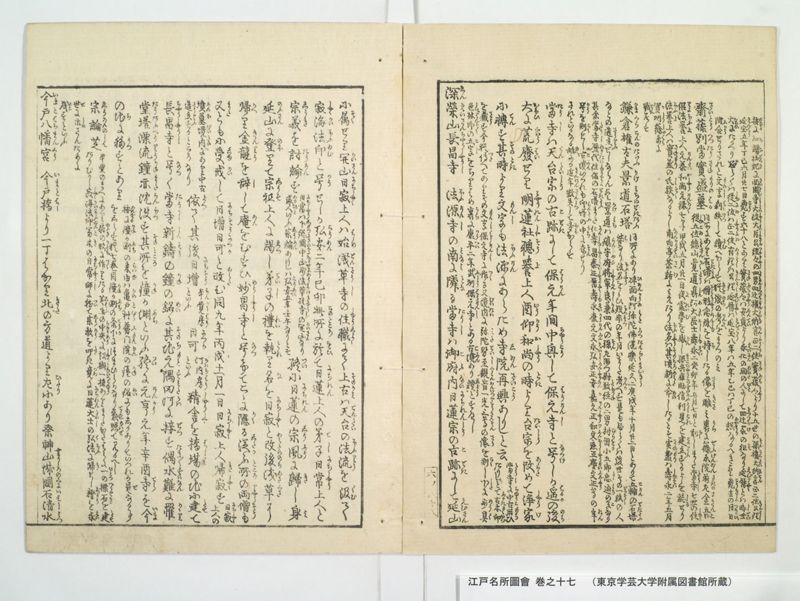
翻刻
【右丁】
《割書:按(あんする)に知譜拙記(ちふせつき)に西園寺大政大臣公経卿(さいをむしたいしやうたいしんきんつねきやう)の四男(よなん)四辻権大納言正二位実藤卿(よつつちこんたいなこんしやうにゐさねふちきやう)より十五世の孫(そん)権大納言(こんたいなこん)正二位 公理(きんよし)|延宝(えんはう)五年丁巳六月廿七日 薨(こう)す六十八とあり実藤卿(さねふちきやう)は安貞(あんてい)より永仁(えいにん)の間(あひた)の人(ひと)にして四辻家(よつつちけ)の祖(そ)なり延暦(えむりやく)とは時世(しせい)|大(おほひ)にたかへり恐らくは従二位(しゆにゐ)は正二位(しやうにゐ)有理(ありよし)は公理(きんよし)延暦(えむりやく)は延宝(えむはう)八年は五年乙巳は丁巳の誤(あやまり)なるへき歟 薨去(こうきよ)の月日(つきひ)|附合(ふかう)せりされと文字(もんし)剝欠(はくけつ)して読(よむ)へからす猶(なを)後(のち)の考(かんかへ)をまつのみ》
斎藤別当実盛墓(さいとうへつたうさねもりのはか)《割書:同所にあり石塔(せきたふ)は僧形(そうきやう)念珠(ねんしゆ)を持(ち)したる像(さう)を雕(きさ)み裏(うら)に篠原院(せふけんゐん)前左金吾(さきのさきんこ)|従五位徳山覚道真阿大居士(しゆこゐとくさんかくたうしんあたいこし)寿永(しゆえい)二癸卯年五月七日と刻(こく)しまた当寺(たうし)七世の住(しゆう)》
《割書:侶(りよ)法誉上人(ほふよ )元泰和尚(けんたいおしやう)元禄(けんろく)七年甲戌五月廿一日 夜(よ)霊夢(れいむ)を感(かん)し孫(まこ)兵庫助信利(ひやうこのすけのふとし)是(これ)を建立(こんりふ)するよしを誌(しる)せり|法誉上人(ほふよ )は実盛(さねもり)の氏族(しそく)なるよし南向亭茶話(なんかうていさわ)にみえたり法名(ほふみやう)は其頃(そのころ)新(あらた)に命(めい)したるとそ実盛(さねもり)は寿永(しゆえい)二年五月|賀州(かしう)篠原(しのはら)に|戦死(せん )す》
鎌倉権太夫景道石塔(かまくらこんのたいふかけみちのせきたふ)《割書:同所にあり碑(ひ)面向(めんかう)阿弥陀仏(あみたふつ)湛楽(たんらく)延久(えむきう)二庚戌年十月廿二日とありて五輪(こりん)の石塔(せきたう)|婆(は)なり法名(ほふみやう)をよひ歿卒(ほつそつ)の年月いまた考(かんか)へす是も恐らくは後世その一族(いちそく)の人》
《割書:なとの造立(さうりふ)せしならん歟 景道(かけみち)は鎮守府将軍良兼(ちんじゆふしやうくんよしかね)四代の孫(そん)左衛門尉 致経(ともつね)の二男 村岡小五郎忠道(むらおか たゝみち)の子(こ)なり|其余 当寺(たうし)歴代(れきたい)住侶(しゆうりよ)の石塔(せきたふ)また仁寿(にんしゆ)昌泰(しやうたい)正暦(しやうりやく)寿永(しゆえい)康元(かうけん)文永(ふんえい)弘安(こうあん)正安(しやうあん)嘉元(かけん)正和(しやうわ)文応(ふんおう)正慶(しやうけい)文正(ふんしやう)等の年(ねん)|号(かう)を刻(こく)せし古墳(こふん)いつれも卵塔(らんたふ)の中(うち)に存(そん)せり|されといかなる故(ゆへ)にか近年(きんねん)散失(さんしつ)して多(おほ)からす》
当寺(たうし)は天台宗(てんたいしう)の古跡(こせき)にして保元(はうけん)年間 中興(ちゆうこう)して保元寺(はうけんし)と号(なつけ)しか遥(はるか)の後(のち)
大(おほひ)に荒廃(くはうはい)せり明蓮社(みやうれんしや)聡誉上人(そうよ )酉仰和尚(いうかうおしやう)の時(とき)より台宗(たいしう)を改(あらた)めて浄家(しやうけ)
に転す其時(そのとき)より文字(もんし)も法源(ほふけん)にあらため寺院(しゐん)再興(さいこう)ありしと云《割書:当寺(たうし)に中古(ちゆうこ)用(もち)ひ|たりしとて古(ふるき)木印(もくいむ)》
《割書:を蔵(さう)す今猶 伝(つた)へてありその文字(もんし)保元寺(はうけんし)に作(つく)る又 境内(けいたい)に弥陀勢至観音(みたせいしくわんおん)一光三尊(いつくわうさんそん)の像(さう)を刻(こく)し下(した)に妙具(めうく)|色林即(しきりんそく)の五字(こし)をちりはめ裏(うら)に康平(かうへい)二年 武州(ふしう)保元寺(はうけんし)とある古墳(こふん)あり證(しよう)とすへし》
深栄山長昌寺(しんえいさんちやうしやうし) 法源寺(ほふけんし)の南(みなみ)に隣(とな)る当寺(たうし)は御府内(こふない)日蓮宗(にちれんしう)の古跡(こせき)にして延山(えむさん)
【左丁】
に属(そく)せり開山(かいさん)日寂上人(にちしやく )は始(はしめ)浅草寺(せんさうし)の住職(しゆうしよく)にて上古(そのかみ)は天台(てんたい)の法流(ほふりう)を汲(くむ)て
寂海法印(しやくかいほふゐむ)と号(かう)せしか弘安(こうあん)二年己卯 此所(このところ)に於(をひ)て日蓮上人(にちれん )の弟子(てし)日常上人(にちしやう )と
宗義(しうき)を討論(たうろん)す《割書:日常(にちしやう)は下総国(しもつふさのくに)中山(なかやま)妙法華経寺(めうほけきやうし)の開山(かいさん)なり|或人(あるひと)いふ宗論(しうろん)ありしは弘安(こうあん)五年壬午なりとそ》終(つい)に日蓮(にちれん)の宗風(しうふう)に帰(き)し身(み)
延山(のふさん)に登(のほ)りて宗祖上人(しうそ )に謁(ゑつ)し弟子(ていし)の礼(れい)を執(とれ)り名(な)を日寂(にちしやく)と改(あらため)後(のち)浅草(あさくさ)に
帰(かへ)り金龍(きんりう)を辞(し)して庵(あん)をむすひ妙昌寺(めうしやうし)と号(なつ)けてこゝに隠(かく)る従(したか)ふ所(ところ)の両僧(りやうそう)も
又(また)ともに受戒(しゆかい)して日増(にちそう)日可(につか)と改(あらた)む同九年丙戌十一月一日 日寂上人(にちしやく )帰寂(きしやく)す《割書:日寂(にちしやく)|上人の》
《割書:墳墓(ふんほ)境内(けいたい)にあり中古|造立(さうりふ)するところなり》依(よつ)て其後 日増(にちそう)《割書:本覚房(ほんかくはう)|といふ》日可(につか)《割書:河内房(かはちはう)|といふ》精舎(しやうしや)を橋場(はしは)の地に建(たて)て
長昌寺(ちやうしやうし)と号(なつ)く当寺(たうし)新鋳(しんとう)の鐘(かね)の銘(めい)に其地(そのち)元(もと)隅田河(すみたかは)に接(せつ)す偶(たま〳〵)水難(すいなん)に罹(かゝり)
堂塔(たうたふ)漂流(へうりう)鐘(かね)亦(また)沈没(ちんほつ)す其所(そのところ)を《振り仮名:鐘か淵|かね ふち》といふ終(つい)に元亨(けんかう)元年辛酉 寺(てら)を今(いま)
の地(ち)に移(うつ)すとあり《割書:按(あんする)に《振り仮名:鐘か淵|かね ふち》の来由(らいゆ)は亀戸村(かめとむら)普門院(ふもんゐん)の鐘(かね)の銘(めい)にもしかありていつれか是(せ)なる事|をしらす猶七巻目《振り仮名:鐘か淵|かね ふち》の条下(てうか)につまひらかなり応照(てらしあはせ)て見るへし》
宗論芝(しうろんのしは)《割書:本堂のまへにあり扇(あふき)の形(かたち)に作(つく)りたる芝生(しはふ)の中央(ちゆうあう)に松樹(しやうしゆ)一株(いつちゆう)ありまたかたはらに一(ひとつ)の標石(へうせき)を建(たて)|たりむかし寂海法印(しやくかいほふゐん)富木(とき)の日常師(にちしやうし)に就(つい)て宗教(しうけう)を叩(たゝ)き竟(つゐ)に日蓮大士(にちれんたいし)の弘法(くほふ)に帰(き)せし證(しよう)を永(えい)》
《割書:世(せ)に示(しめ)さんために|残(のこ)すといふ》
今戸八幡宮(いまとはちまんくう) 今戸橋(いまとはし)より一丁はかり北(きた)の方道より左(ひたり)にあり祭神 山城国(やましろのくに)石清水(いはしみつ)
現代語訳
【右丁】
按ずるに『知譜拙記』によると、西園寺大政大臣公経卿の四男である四辻権大納言正二位実藤卿より十五世の孫、権大納言正二位公理は延宝五年丁巳(1677年)六月二十七日に薨去し、六十八歳であったとある。実藤卿は安貞から永仁の間の人で四辻家の祖である。延暦とは時世が大いに違っている。おそらく従二位は正二位、有理は公理、延暦は延宝、八年は五年、乙巳は丁巳の誤りであろうか。薨去の月日は一致している。しかし文字が剝落して読めない。なお後の考証を待つのみである。
斎藤別当実盛墓 同じ場所にある。石塔は僧形で念珠を持った像を彫り、裏に「篠原院前左金吾従五位徳山覚道真阿大居士 寿永二癸卯年五月七日」と刻んである。また当寺七世の住職である法誉上人元泰和尚が元禄七年甲戌(1694年)五月二十一日の夜に霊夢を感じ、孫の兵庫助信利がこれを建立したと記している。法誉上人は実盛の氏族であると『南向亭茶話』に見えている。法名はその頃新たに命じたという。実盛は寿永二年(1183年)五月、加賀国篠原で戦死した。
鎌倉権太夫景道石塔 同じ場所にある。碑面に「阿弥陀仏 湛楽 延久二庚戌年十月二十二日」とあって、五輪の石塔の塔身部分である。法名と没年月日はまだ考証していない。これもおそらく後世にその一族の人などが造立したものであろうか。景道は鎮守府将軍良兼四代の孫、左衛門尉致経の二男、村岡小五郎忠道の子である。その他、当寺歴代住職の石塔、また仁寿・昌泰・正暦・寿永・康元・文永・弘安・正安・嘉元・正和・文応・正慶・文正等の年号を刻んだ古墳がいずれも卵塔の中に存在していた。しかしどういう理由か近年散失して多くない。
当寺は天台宗の古跡で、保元年間に中興して保元寺と号したが、はるか後に大いに荒廃した。明蓮社聡誉上人酉仰和尚の時より台宗を改めて浄土宗に転じた。その時より文字も法源に改め、寺院の再興があったという(当寺に中古用いたという古い木印を蔵している。今なお伝えてあり、その文字は保元寺に作る。また境内に弥陀勢至観音一光三尊の像を刻み、下に妙具色林即の五字をちりばめ、裏に「康平二年 武州保元寺」とある古墳があり、証拠とすべきである)。
深栄山長昌寺 法源寺の南に隣接している。当寺は御府内日蓮宗の古跡で延山
【左丁】
に属している。開山日寂上人は初め浅草寺の住職で、上古は天台の法流を汲んで寂海法印と号していたが、弘安二年己卯(1279年)この所において日蓮上人の弟子日常上人と宗義を討論した(日常は下総国中山妙法華経寺の開山である。ある人は宗論があったのは弘安五年壬午であるという)。ついに日蓮の宗風に帰し、身延山に登って宗祖上人に謁見して弟子の礼を執った。名を日寂と改め、後に浅草に帰り、金龍を辞して庵を結び、妙昌寺と号してここに隠れた。従う所の両僧もまたともに受戒して日増・日可と改めた。同九年丙戌(1286年)十一月一日、日寂上人は帰寂した(日寂上人の墳墓は境内にあり、中古に造立したものである)。よってその後、日増(本覚房という)・日可(河内房という)が精舎を橋場の地に建てて長昌寺と号した。当寺新鋳の鐘の銘にその地は元々隅田川に接していた。たまたま水難に遭って堂塔が漂流し、鐘もまた沈没した。その所を鐘ヶ淵という。ついに元亨元年辛酉(1321年)寺を今の地に移したとある(按ずるに鐘ヶ淵の来由は亀戸村普門院の鐘の銘にも同様にあって、いずれが正しいか分からない。なお七巻目鐘ヶ淵の条下に詳しい。照らし合わせて見るべきである)。
宗論芝 本堂の前にある。扇の形に作った芝生の中央に松樹一株があり、また傍らに一つの標石を建てている。昔寂海法印が富木の日常師について宗教を叩き、ついに日蓮大士の弘法に帰した証を永世に示すために残すという。
今戸八幡宮 今戸橋より一丁ほど北の方、道より左にある。祭神は山城国石清水
英語訳
【Right Page】
According to consideration of the "Chifu Setsu-ki," Yotsutsuji Gon-Dainagon Shōnii Sanefuji-kyō, the fourth son of Saionji Daijō-Daijin Kintsune-kyō, had a descendant in the fifteenth generation, Gon-Dainagon Shōnii Kinmichi, who died on the 27th day of the 6th month of Enpō 5, Hinoto-Mi (1677) at the age of sixty-eight. Sanefuji-kyō lived during the period from Antei to Einin and was the ancestor of the Yotsutsuji family. The Enryaku era is greatly different in time period. Probably "Jūnii" should be "Shōnii," "Ariyoshi" should be "Kinmichi," "Enryaku" should be "Enpō," "eighth year" should be "fifth year," and "Kinoto-Mi" should be "Hinoto-Mi." The month and day of death match. However, the characters are worn away and cannot be read. We can only await further investigation.
Grave of Saitō Bettō Sanemori - Located in the same place. The stone pagoda is carved with the image of a monk holding prayer beads, and on the back is inscribed "Shinohara-in Saki-no-Sakingo Jūgoi Tokusan Kakudō Shin'a Daikoji, 7th day of 5th month of Jūei 2, Year of Mizunoto-U." Also, the seventh head priest of this temple, Hōyo Shōnin Gentai Oshō, felt a divine dream on the night of the 21st day of the 5th month of Genroku 7, Kinoe-Inu (1694), and his grandson Hyōgo-no-suke Nobutoshi built this, as recorded. Hōyo Shōnin was said to be of Sanemori's clan according to "Nankōtei Sawa." The Buddhist name was newly given at that time. Sanemori died in battle at Shinohara in Kaga Province in the 5th month of Jūei 2 (1183).
Stone Pagoda of Kamakura Gon-no-Taifu Kagemichi - Located in the same place. On the stone face is written "Amida Buddha, Tanraku, 22nd day of 10th month of Enkyū 2, Year of Kanoe-Inu," and it is the body section of a five-ring stone pagoda. The Buddhist name and year of death have not yet been investigated. This too was probably erected later by someone from his clan. Kagemichi was the son of Muraoka Kogorō Tadamichi, second son of Saemon-no-jō Tomatsune, great-great-grandson of Chinzei-fu Shōgun Yoshikane. In addition, stone pagodas of successive head priests of this temple, and ancient tombs carved with era names such as Ninjū, Shōtai, Shōryaku, Jūei, Kōgen, Bun'ei, Kōan, Shōan, Kagen, Shōwa, Bun'ō, Shōkei, Bunshō, etc., all existed within the egg-shaped pagoda area. However, for some reason, many have been scattered and lost in recent years.
This temple is an ancient site of the Tendai sect, and was revived during the Hōgen period and called Hōgen-ji, but much later fell into great ruin. From the time of Myōrensha Sōyo Shōnin Yūkō Oshō, the Tendai sect was changed to the Pure Land sect. From that time, the characters were also changed to Hōgen, and the temple was restored (This temple preserves an old wooden seal that was used in medieval times. It still exists today, and its characters read Hōgen-ji. Also, in the temple grounds there is an ancient tomb with images of Amida, Seishi, and Kannon as the three honored ones in one light, with the five characters "Myōgu Shikirin Soku" inlaid below, and on the back "Kōhei 2, Bushū Hōgen-ji," which should serve as evidence).
Shin'ei-san Chōshō-ji - Adjacent to the south of Hōgen-ji. This temple is an ancient site of the Nichiren sect within the imperial capital and belongs to Eisan
【Left Page】
The founding priest Nichijaku Shōnin was initially the head priest of Sensō-ji Temple, and in ancient times followed the Tendai doctrinal lineage and was called Jakkai Hōin. In the 2nd year of Kōan, Tsuchinoto-U (1279), at this place he debated doctrine with Nichijō Shōnin, a disciple of Nichiren Shōnin (Nichijō was the founding priest of Myōhoke-kyō-ji Temple in Nakayama, Shimōsa Province. Some say the doctrinal debate occurred in Kōan 5, Mizunoe-Uma). He finally converted to Nichiren's sect, climbed Minobu-san to meet the founding master and performed the rites of discipleship. He changed his name to Nichijaku, later returned to Asakusa, left Kinryū and built a hermitage, calling it Myōshō-ji and living in seclusion there. The two monks who followed him also received ordination together and changed their names to Nichizō and Nichika. In the 9th year, Hinoe-Inu (1286), on the 1st day of the 11th month, Nichijaku Shōnin died (Nichijaku Shōnin's tomb is in the temple grounds, erected in medieval times). Therefore, afterward Nichizō (called Hongaku-bō) and Nichika (called Kawachi-bō) built a temple hall at Hashiba and called it Chōshō-ji. According to the inscription on this temple's newly cast bell, that place originally bordered the Sumida River. By chance it suffered flood damage, the halls and pagodas drifted away, and the bell also sank. That place is called Kane-ga-fuchi. Finally in Genkō 1, Kanoto-Tori (1321) the temple was moved to its present location (Upon consideration, the origin of Kane-ga-fuchi is similarly described in the bell inscription of Fumon-in in Kameido Village, and we don't know which is correct. It is detailed in the seventh volume under Kane-ga-fuchi section. It should be compared and examined).
Doctrinal Debate Lawn - Located in front of the main hall. In the center of a lawn made in the shape of a fan is one pine tree, and beside it a marker stone is erected. It is said that this was left to show forever to the world the proof that long ago Jakkai Hōin questioned Nichijō-shi of Toki about religion and finally converted to the propagation of Nichiren Daishi.
Imado Hachiman Shrine - Located about one chō north from Imado Bridge, on the left side of the road. The deity enshrined is from Iwashimizu in Yamashiro Province