翻刻
【右丁】
に同し別当は天台宗(てんたいしう)にして松林院(しようりんゐん)と号(かう)す祭礼(さいれい)は毎年八月十五日にして
放生会(はうしやうゑ)を修行(しゆきやう)せり
社記曰 源頼義朝臣義家公(みなもとのよりよしあそんよしいへこう)と共(とも)に勅(ちよく)を奉(ほう)して奥州(あうしう)安倍貞任(あへさたたう)宗任(むねたう)を誅戮(ちゆうりく)
し給ふ仍(よつて)康平(かうへい)六年癸卯八月 其(その)祈願(きくはん)として鎌倉(かまくら)由比郷(ゆひのさと)をよひ此 今戸(いまと)の
地(ち)に至(いた)り石清水八幡宮(いはしみつはちまんくう)を勧請(くはんしやう)あり《割書:今戸社記(いまとしやき)に今津(いまつ)に作(つく)る小田原(おたはら)北条家(ほうてうけ)の分限帳(ふんけんちやう)に|木内宮内少輔 所領(しよりやう)に石浜(いしはま)今津(いまつ)と云地名を加(くは)へたり》
《割書:按(あんする)に津戸(つと)は通音(つふをん)なれは|いつしか今戸(いまと)といひならはせしなるへし》其後(そののち)奥州(あうしう)武衡宗衡兄弟(たけひらむねひらきやうたい)叛逆(ほんきやく)の時(とき)も義家朝臣(よしいへあそん)鎌倉(かまくら)鶴(つるか)
岡(おか)をよひ当社(たうしや)八幡宮(はちまんくう)等(とう)に祈願(きくはん)ありて賊徒(そくと)を亡(ほろほ)し勝利(しようり)ありし故(ゆへ)永保(いやうほ)元年
辛酉 両社(りやうしや)の修造(しゆさう)を加(くは)へられ行基(きやうき)彫造(てうさう)の弥陀(みた)を以(もて)こゝの本地仏(ほんちふつ)とし又同作の
薬師(やくし)をよひ慈覚(しかく)の作(さく)の観音(くはんをん)等(とう)の像(さう)をも安置(あんち)ありしとなり其後(そののち)文治(ふんち)五年
右大将(うたいしやう)頼朝公(よりともこう)奥州(あうしう)の泰衡(やすひら)追討(ついたう)として進発(しんはつ)の時(とき)も此(この)御神(おんかみ)に祈誓(きせい)ありて勝利(しようり)
を得(え)給ひ建久(けんきう)元年庚戌 下河辺庄司行平(しもかうへのしやうしゆきひら)を奉行(ふきやう)として宮社(きうしや)を重建(ちようこん)あり然(しかる)
に寛永(くはんえい)十三年丙子 台命(たいめい)を奉(ほう)し船越伊予守(ふなこしいよのかみ)八木但馬守(やきたしまのかみ)等(とう)是を司(つかさと)
り当社(たうしや)御再興(こさいこう)ありしよりこの已降(このかた)神光(しんくはう)日々に新(あらた)に霊威(れいい)月々に盛(さかむ)なり
【左丁】
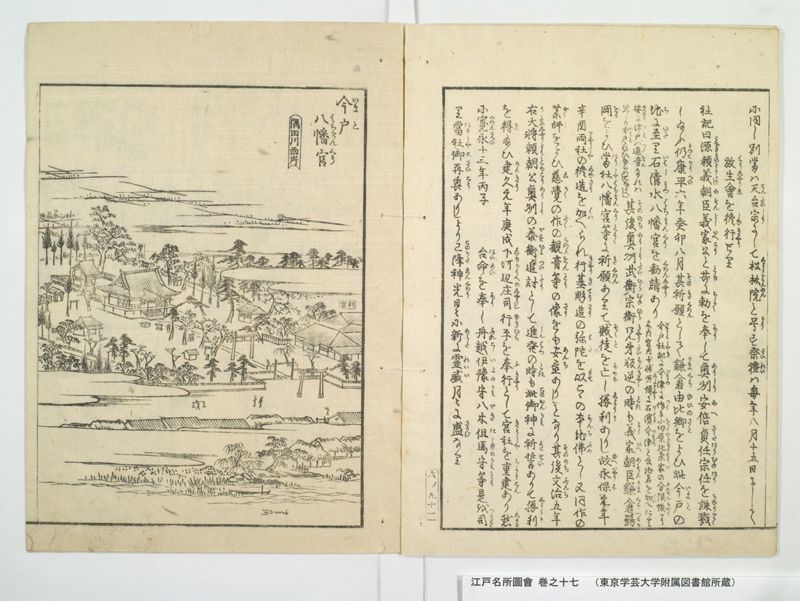
今戸(いまと)
八幡宮(はちまんくう)
隅田川西岸
別当
すみた川
本社
現代語訳
【右丁】
同様に別当は天台宗で松林院と号する。祭礼は毎年八月十五日で、放生会を執り行っている。
社記によると、源頼義朝臣が義家公と共に勅命を奉じて奥州の安倍貞任・宗任を討伐した際、康平六年癸卯八月、その祈願のため鎌倉由比郷から此の今戸の地に至り、石清水八幡宮を勧請した。《今戸社記には今津と記されており、小田原北条家の分限帳には木内宮内少輔の所領として石浜今津という地名を加えている》《考察するに津戸は通音であるから、いつしか今戸と呼び慣らされるようになったのであろう》その後、奥州で武衡・宗衡兄弟が叛逆した時も、義家朝臣は鎌倉鶴岡および当社八幡宮等に祈願して賊徒を滅ぼし勝利を得たため、永保元年辛酉、両社の修造を加えられ、行基彫造の弥陀をここの本地仏とし、また同作の薬師および慈覚の作の観音等の像をも安置したという。その後、文治五年、右大将頼朝公が奥州の泰衡追討のため進発した時も、この御神に祈誓して勝利を得、建久元年庚戌、下河辺庄司行平を奉行として宮社を重建した。しかるに寛永十三年丙子、台命を奉じ船越伊予守・八木但馬守等がこれを司り、当社の御再興があって以来、神光は日々に新たに、霊威は月々に盛んである。
【左丁】
今戸八幡宮
隅田川西岸
別当
隅田川
本社
英語訳
【Right Page】
Similarly, the bettō (head priest) belongs to the Tendai sect and is called Shōrin-in. The festival is held annually on August 15th, when a hōjōe (ritual release of living beings) is performed.
According to the shrine records, when Minamoto no Yoriyoshi Ason, together with Yoshiie-kō, received imperial orders to subjugate Abe no Sadatō and Munetō in Ōshū, in the 6th year of Kōhei, 8th month of the year of mizunoe-u (1063), they came from Yuhi-gō in Kamakura to this land of Imado for their prayers and invited the spirit of Iwashimizu Hachiman Shrine. 《The Imado shrine records write it as Imatsu, and the Odawara Hōjō family's estate register includes the place names Ishihama Imatsu among the holdings of Kiuchi Kunaishōsuke》 《Upon consideration, since Tsudo and Imado are homophones, it probably came to be called Imado over time》 Later, when the brothers Takehira and Munehira of Ōshū rebelled, Yoshiie Ason also made prayers at Kamakura Tsurugaoka and this shrine's Hachiman-gū, destroyed the rebels and achieved victory. Therefore, in the 1st year of Eihō, year of kanoto-tori (1081), repairs were added to both shrines, and Gyōki's carved Amida was made the honji-butsu (Buddhist deity) of this place, while also enshrining statues of Yakushi of the same maker and Kannon by Jikaku. Later, in the 5th year of Bunji (1189), when Right General Yoritomo-kō set out to pursue Yasuhira of Ōshū, he also made vows to this deity and achieved victory. In the 1st year of Kenkyū, year of kanoe-inu (1190), the shrine was rebuilt with Shimokōbe-no-shōji Yukihira as the magistrate. However, in the 13th year of Kan'ei, year of hinoe-ne (1636), receiving imperial commands, Funakoshi Iyo-no-kami, Yagi Tajima-no-kami and others took charge of the restoration of this shrine, and since then, the divine light becomes new daily and the spiritual power flourishes monthly.
【Left Page】
Imado Hachiman-gū
West bank of the Sumida River
Bettō (Head priest)
Sumida River
Main shrine