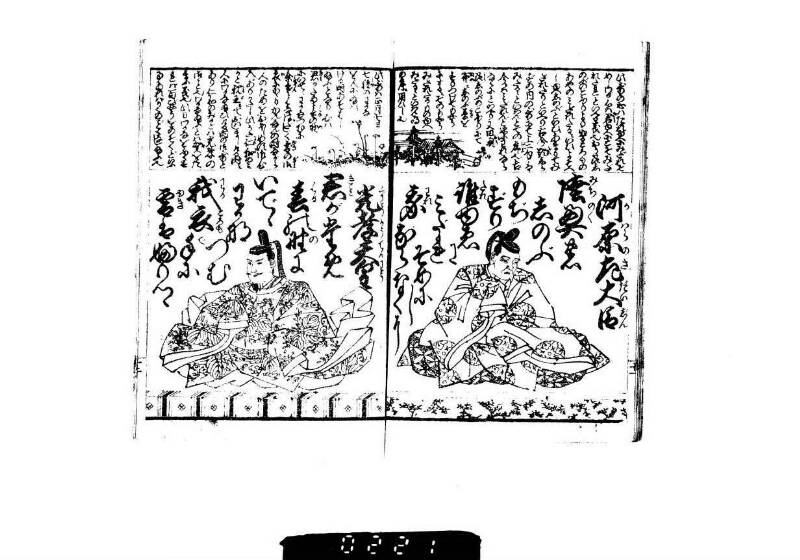
翻刻
【右頁中】
河原左大臣(かはらのさだいじん)
陸奥(みちのく)の
しのぶ
もぢ
ずり
誰(たれ)ゆゑに
みだれ
そめにし
我(われ)ならなくに
【右頁上】
此哥の心はたれゆへにみだれそ
めしわが心は君(きみ)ゆへにこそみだ
れたれといへる義也おう州し
のぶのこほり【郡】より
出るころもの
あや【文=模様】のみだれたるにいひよそへ
しゆへしのぶといひあまりてみ
だれたりといへり古今 題(だい)しら
ずの内の哥にて上二句は
みたるゝといはんとての序(じよ)也古
今に【「か」に見えるが別刷で「に」を確認】はみだれんと思ふわれなら
なくにといへり又曰 奥(おう)
州(しう)しのぶのこほりにて
布(ぬの)にしのぶ草(くさ)を
すりつけてもやう
にするにそのもやう
みだれたるものゆへ
みたるゝといはん為
の序に用ひし也
【左頁中】
光孝天皇(くわうかうてんわう)
君(きみ)がため
春(はる)の野(の)に
いでゝ
わかな
つむ
我(わが)衣手(ころもで)に
雪(ゆき)はふりつゝ
【左頁上】
此哥は正月七日
七 種(しゆ)のわかな
を人に給ひ
ける時あそばし
給ふとなり心は
君(きみ)がため春(はる)の野(の)
にいでゝわかなつむに
余寒(よかん)はなはだしく雪(ゆき)の御(ぎよ)
衣(い)にかゝりかんなん【艱難】の時ながら
人のためをおぼしめす御心
入れありがたし此うた仁和(にんわ)のみ
かど親王(みこ)にておはしましける時に
人にわかな給ひける時の御哥と
あり仁和のみかどは光孝の
御こと也わかな給ふとは賀(が)をた
まふ義也此日わかなをふく【服】す
れば百びやうをのぞくこ【別刷による】といふ
事あればかくのごとくなし給ふ也
現代語訳
【右頁中】
河原左大臣
陸奥の
しのぶ
もぢずり
誰ゆえに
乱れ
初めにし
我ならなくに
【右頁上】
この歌の心は「誰のために乱れ始めた我が心は、君ゆえにこそ乱れたのだ」という意味である。奥州信夫の郡より出る衣の文様の乱れたものに言い寄せたので、「しのぶ」と言い余って「乱れたり」と言った。古今和歌集の「題知らず」の内の歌で、上二句は「乱れる」と言わんとしての序である。古今和歌集には「乱れんと思う我ならなくに」とある。また言う、奥州信夫の郡にて布に忍草を摺りつけて模様にするが、その模様が乱れたものゆえ、「乱れる」と言わんための序に用いたのである。
【左頁中】
光孝天皇
君がため
春の野に
出でて
若菜
摘む
我が衣手に
雪は降りつつ
【左頁上】
この歌は正月七日に七種の若菜を人に給った時にお詠みになったという。心は「君のため春の野に出て若菜を摘むのに、余寒はなはだしく雪が御衣にかかり、艱難の時ながら人のためを思し召す御心入れありがたい」ということである。この歌は仁和の帝が親王でいらっしゃった時に人に若菜を給った時の御歌とある。仁和の帝は光孝天皇のことである。若菜を給うとは賀を賜るという意味である。この日若菜を服すれば百病を除くということがあるので、このようになさったのである。
英語訳
【Right page center】
Minister of the Left Kawara no Sadaijin
In Michinoku,
the shinobu
tangled weave—
for whose sake
did my heart
begin to be
disordered, when it was not I?
【Right page upper】
The heart of this poem is "For whose sake did my disordered heart begin—it was disordered because of you." Since it alludes to the disordered pattern of cloth from Shinobu County in Ōshū, he says "shinobu" and extends it to say "disordered." This is a poem from the "unknown title" section of the Kokin Wakashū, and the first two lines serve as a preface to express "disordered." In the Kokin Wakashū it says "when it was not I who thought to be disordered." It also says that in Shinobu County of Ōshū, they rub shinobu grass onto cloth to create patterns, and since those patterns are disordered, it is used as a preface to express "disordered."
【Left page center】
Emperor Kōkō
For your sake
I go out
to the spring fields
to pick
young herbs—
snow keeps falling
on my sleeves.
【Left page upper】
This poem was composed when he bestowed the seven spring herbs upon someone on the seventh day of the first month. The heart is: "For your sake I go out to the spring fields to pick young herbs, and though the lingering cold is severe and snow falls on my robes, how grateful is your thoughtful care for others even during this difficult time." This poem is said to be an imperial poem from when the Emperor Ninwa, while still a prince, bestowed young herbs upon someone. The Emperor Ninwa refers to Emperor Kōkō. To bestow young herbs means to grant good fortune. Since it is said that consuming young herbs on this day removes all illnesses, he did so in this manner.