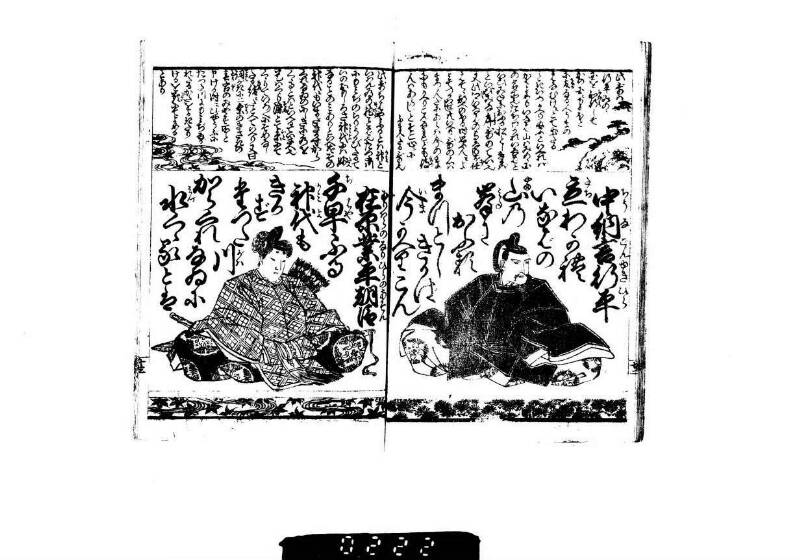
翻刻
【右頁中】
中納言行平(ちうなごんゆきひら)
立(たち)わかれ
いなばの
山(やま)の
峯(みね)に
おふる
まつとし
きかば
今(いま)かへりこん
【右頁上】
此哥は
行平みのゝ
国を知行(ちげう)して
かの国に下るほと【別刷は「ど」】
に友(とも)なる人うまの
はなむけにとて出たる
ときいつかへり給ふといへれば
かくよめりいなば山はみのゝ国
の名所也たちわかれいなばと
いひみねにおふる松としきかば
といひみな序哥(じよか)のてい也
又此 卿(けう)いなばの守なりしが任(にん)
はてゝ都へのぼる時思ふ人によ
みてつかはせし共いへり哥の心は
まつ人だにあらは【別刷は「ば」】今のま
にもかへりこんなれども待(まつ)
人はあらじとそこ心ンに
ふまへたる哥也
【左頁中】
在原業平朝臣(ありはらのなりひらのあそん)
千早(ちはや)ふる
神代(かみよ)も
きか
ず
たつた川
からくれなゐに
水(みづ)くゝるとは
【左頁上】
此哥ちはやふるとは神(かみ)と
いはん為の枕(まくら)ことば也たつた川
にもみぢのちりうかびたるて
いのおもしろさ神代(かみよ)には妙(たへ)
なることのみありといへばその
神代にもいまだきかずから
くれなゐのにしきに水を
くゝるとはといへるていさへ也
是はくゝり染(そめ)とて糸にて
くゝりていろ〳〵にそめなし
たる絹(きぬ)にたとへていへり又曰
詞(ことは)がきに二 条(でう)のきさきの
春宮(とうぐう)のみやす所と
申ける時にびやうぶに
たつた川にもみぢなが
れたるかたをかきたり
けるを題(だい)にてよめる
とあり
現代語訳
【右頁中】
中納言行平
立ち別れ
因幡の
山の
峰に
生ふる
松としきかば
今帰りこん
【右頁上】
この歌は、行平が美濃国の国司として、その国に下る時に、友である人が餞別にと出た時、「いつ帰り給うか」と言ったので、このように詠んだものである。因幡山は美濃国の名所である。「立ち別れ因幡」と言い、「峰に生ふる松とし聞かば」と言い、みな序歌の体である。また、この卿は因幡守であったが、任期が終わって都へ上る時、思う人によんで送ったとも言う。歌の心は「待つ人だにあれば今すぐにでも帰ってこよう。しかし待つ人はないだろう」と心に踏まえた歌である。
【左頁中】
在原業平朝臣
千早ふる
神代も
聞か
ず
竜田川
唐紅に
水くくるとは
【左頁上】
この歌の「千早ふる」とは「神」と言わんための枕詞である。竜田川に紅葉が散り浮かんだ様子の面白さを、神代には妙なることのみあると言うが、その神代にもまだ聞かない「唐紅の錦に水をくくるとは」と言った体裁である。これはくくり染めといって、糸でくくって色々に染め成した絹に例えて言った。また言うには、詞書きに「二条の后が春宮の御息所と申した時に、屏風に竜田川に紅葉が流れた形を描いたのを題にして詠んだ」とある。
英語訳
【Right page center】
Middle Counselor Yukihira
Standing to part
from Inaba
mountain's
peak where
pine trees
grow—if I hear you wait,
I will return now.
【Right page upper】
This poem was composed when Yukihira, as governor of Mino Province, was going down to that province, and when a friend who came to see him off asked "When will you return?" Inaba Mountain is a famous place in Mino Province. Saying "standing to part from Inaba" and "if I hear the pine trees growing on the peak," these are all in the style of preface poems. It is also said that when this lord, who had been governor of Inaba, finished his term and returned to the capital, he composed this and sent it to someone he cared for. The heart of the poem is: "If there were even someone waiting for me, I would return immediately. But there probably is no one waiting"—a poem with this understanding in mind.
【Left page center】
Ariwara no Narihira Ason
In the vigorous
age of gods
never was it
heard
that Tatsuta River
bound water
in Chinese crimson.
【Left page upper】
In this poem, "chihayafuru" (vigorous) is a pillow word used to introduce "kami" (gods). The beauty of autumn leaves scattered and floating on Tatsuta River—though it is said that in the age of gods there were only wondrous things, even in that age of gods it was never heard that "water was bound in Chinese crimson brocade." This refers to tie-dyeing, where silk is tied with thread and dyed in various colors, used here as a comparison. It is also said that according to the preface, "when the Nijō Empress was called the Crown Prince's consort, this was composed as a poem on the theme of a folding screen painted with autumn leaves flowing down Tatsuta River."