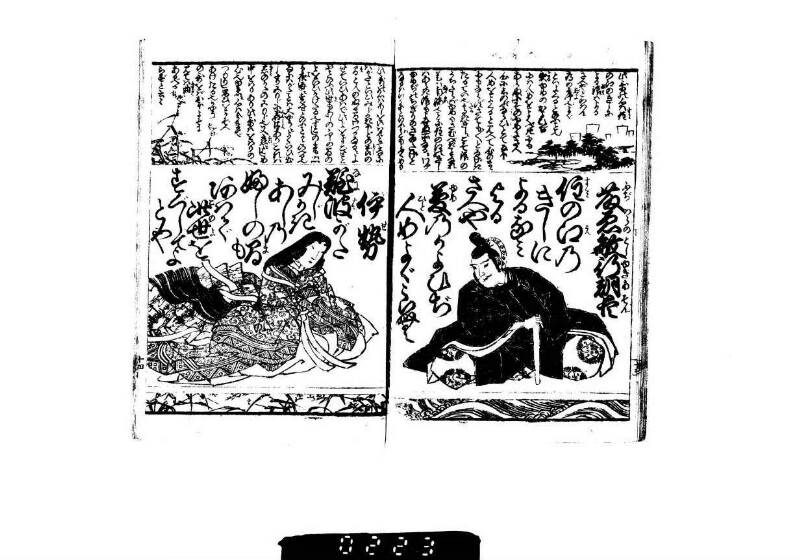
翻刻
【右頁中】
藤原敏行朝臣(ふぢはらのとしゆきあそん)
住(すみ)の江(え)の
きしに
よるなみ
よる
さへや
夢(ゆめ)のかよひぢ
人(ひと)めよぐらむ
【右頁上】
此哥の心は住(すみ)
の江のきしに
よる浪(なみ)はよる
さへやといはん
為の序(じよ)也よぐ
とはよくるといふこと也
夜(よる)ゆめのかよひぢ
には人めをよく【避く】べきにも
あらぬにそのゆめにさへ
心にしのぶならひとてなほ
人めをよくると見へて心のまゝ
にもならずさても〳〵となげき
たるてい也 高(たか)ききしにこそ浪の
うちたらばゆめもさむ【覚む】べきことなれ
是は南海(なんかい)也ことに住の江のきし
はあらき浪もよせぬ所なるにわが
ゆめぢのちぎりのさまたげと
なるはいかにといふ意(い)もふくめり
【左頁中】
伊勢(いせ)
難波(なには)がた
みじかき
あしの
ふしの間(ま)も
あわで
此世(このよ)を
すぐしてよ
とや
【左頁上】
此哥の心はあしをいはんとてなに
はがたといひみじかきほどの節(ふし)の
間(ま)と人のぬる間わつかなるによ
せていひあはで此よをすごせと
やといふ此 世(よ)もあしのふしの間の
よをいひかけるたる也すこしのまもぬ
る夜(よ)なしにすぐせといふことかといへる也
なにはか【別刷は「か」】たとは大やうによくいひ出
したり五もじに君臣(くんしん)ありこれは
君(きみ)のかたの五もじ也又 恋(こひ)にはしめ
中をはりあり此哥はをはりの
心也ゆゑに心は今まで
つもりし思ひをかぞへ
あげたる也かやう
の哥をばおほよそに
見ては曲(きよく)【=面白味】
あるべか
らずと云々
現代語訳
【右頁中】
藤原敏行朝臣
住の江の
岸に
寄る波
夜る
さえや
夢の通い路
人目よぐらむ
【右頁上】
この歌の心は、住の江の岸に寄る波は夜るさえやと言わんための序である。「よぐ」とは「避く」ということである。夜、夢の通い路には人目を避くべきでもないのに、その夢にさえ心に忍ぶ習いとて、なお人目を避くると見えて、心のままにもならず、「さても々々」と嘆いた体である。高い岸にこそ波の打ったらば夢も覚めるべきことなれ。これは南海である。ことに住の江の岸は荒い波も寄せぬ所なるに、我が夢路の契りの妨げとなるはいかにという意も含めり。
【左頁中】
伊勢
難波潟
短き
芦の
節の間も
逢わで
この世を
過ぐしてよ
とや
【左頁上】
この歌の心は、芦を言わんとて難波潟と言い、短きほどの節の間と、人の寝る間わずかなるに寄せて言い、「逢わでこの世を過ごせとや」という。この「世」も芦の節の間の「夜」を言いかけたるである。少しの間も寝る夜なしに過ごせということかと言えるである。「難波潟」とは大要によく言い出したり。五文字に君臣あり、これは君の方の五文字である。また恋には初め・中・終わりがあり、この歌は終わりの心である。ゆえに心は今まで積もりし思いを数え上げたるである。かようの歌をば大よそに見ては興趣あるべからずという。
英語訳
【Right page center】
Fujiwara no Toshiyuki Ason
At Suminoe's
shore the
waves that approach
even at night—
do they avoid
people's eyes
on the dream pathway?
【Right page upper】
The heart of this poem is that the waves approaching the shore at Suminoe serve as a preface to say "even at night." "Yogu" means "to avoid." At night on the dream pathway, there should be no need to avoid people's eyes, yet even in dreams, following the custom of keeping love secret in one's heart, one still appears to avoid people's eyes, unable to act as one's heart desires, lamenting "what can be done." If waves crashed against high cliffs, one's dreams would surely be awakened. This refers to Nankai (southern sea). Particularly, the shore of Suminoe is a place where even rough waves do not approach, yet the meaning is also implied: "How is it that this becomes an obstacle to my dream-path promises?"
【Left page center】
Ise
At Naniwa Bay
even the brief
space between
reed joints—
without meeting,
should I pass
this world/night
away?
【Left page upper】
The heart of this poem is: to speak of reeds, she says "Naniwa Bay," and comparing the brief space between reed joints to the short time people sleep, she asks "should I pass this world without meeting?" This "yo" (world) also plays on "yo" (night) in the space between reed joints. She asks whether she should pass even the brief sleeping hours without rest. "Naniwa Bay" is very well expressed in general terms. In five syllables there are lord and retainer relationships; this represents the lord's five syllables. Also, in love there are beginning, middle, and end; this poem expresses the ending sentiment. Therefore, the heart counts up all the feelings that have accumulated until now. Such poems, if viewed only superficially, would have no interest.