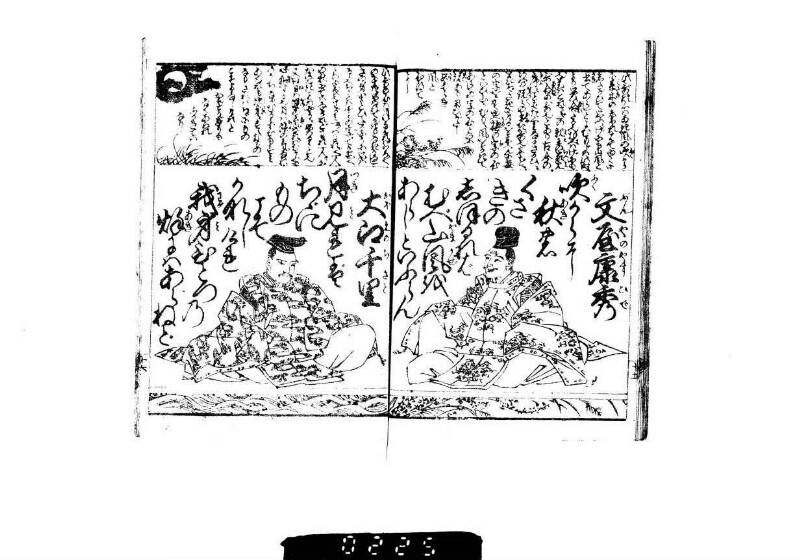
翻刻
【右頁中】
文屋康秀(ぶんやのやすひで)
吹(ふく)からに
秋(あき)の
くさ
きの
しほるれば
むべ山風(やまかぜ)を
あらしといふらん
【右頁上】
此哥の心はあき風の吹(ふく)から
に草木(くさき)のしほれはてゆくに
したがひて思ふにげにも山風と
書(かき)てあらしとよむもじは此時
より思ひ合(あひ)たる也むべはげにも
也是はこれさだの親王(みこ)の家見(いへみ)
哥 合(あはせ)【是貞親王家歌合せ】の哥也とあり古今の
序(じよ)にことばたくみなるさかひに
いへり説々(せつ〳〵)の多(おほ)き哥也木ごとに
花ぞさきにけるを木へんに毎
の字(じ)をかくゆへ梅(うめ)の字の心
といひ山かむりに風をかきて
あらしの字の心といふ
説(せつ)
あり用ひがたし
只(たゞ)あらき
風と
心得て
よし
【左頁中】
大江千里(おほえのちさと)
月見(つきみ)れば
ちゞに
もの
こそ
かなしけれ
我身(わがみ)ひとつの
秋(あき)にはあらねど
【左頁上】
此哥の心は月を見ればいろ〳〵
の事ども【「共」に濁点か】思われてかぎりなきかなし
さの身にまとひたるやうに思は
るゝ也ちゞとは千々の字(じ)にてかず〳〵
といふ義也わがみ一つはわれ〳〵一人
の秋にてはなけれどわれ一人りが
かなしきことのやうに思はるゝと也
又曰 日(ひ)は陽(やう)の気(き)
なればむかふに
心 和(くわ)する也月は陰(いん)の気なれ
はうちながむるに心もすみ
あはれも次第(しだい)にすゝむもの
なりさればちゞにもの
こそかなしけれと
かずかぎりも
なくあはれ
ふかきてい
なり
現代語訳
【右頁中】
文屋康秀
吹くからに
秋の
草木の
萎るれば
むべ山風を
嵐というらん
【右頁上】
この歌の心は、秋風が吹くからに草木が萎れ果てていくにしたがって思うに、なるほど山風と書いて「あらし」と読む文字は、この時より思い合わせたのである。「むべ」は「なるほど」ということである。これは是貞親王の家歌合の歌であるとある。古今集の序に「言葉巧みなる境」に挙げられている。諸説の多い歌である。「木ごとに花ぞ咲きにける」を木偏に「毎」の字を書くゆえ「梅」の字の心といい、山冠に「風」を書いて「嵐」の字の心というという説があるが、用いがたい。ただ「荒き風」と心得てよい。
【左頁中】
大江千里
月見れば
千々に
物こそ
悲しけれ
我が身ひとつの
秋にはあらねど
【左頁上】
この歌の心は、月を見ればいろいろの事どもが思われて、限りなき悲しさが身にまといついているように思われることである。「千々」とは「千々」の字にて「数々」という意味である。「我が身ひとつ」は、我々一人の秋ではないけれど、我一人が悲しいことのように思われるということである。また言うには、日は陽の気なれば向かうに心和らぐのである。月は陰の気なれば打ち眺むるに心も澄み、あわれも次第に進むものなり。されば「千々に物こそ悲しけれ」と、数限りもなくあわれ深き体なり。
英語訳
【Right page center】
Bunya no Yasuhide
When the wind blows,
the autumn
grasses and trees
wither—
truly, that must be why
mountain wind is called "arashi" (storm)
【Right page upper】
The heart of this poem: As the autumn wind blows and the grasses and trees wither away completely, one thinks that indeed, the character written as "mountain wind" and read as "arashi" must have been conceived from this very moment. "Mube" means "indeed" or "truly." This poem is said to be from Prince Koresada's poetry contest. It is mentioned in the preface to the Kokinshū as belonging to the realm of "skillful wordplay." It is a poem with many interpretations. There is a theory that says "on every tree flowers have bloomed" uses the tree radical with the character "every" to create "plum" (ume), and mountain crown with "wind" to create "storm" (arashi), but this is hard to accept. It should simply be understood as "rough wind."
【Left page center】
Ōe no Chisato
When I look at the moon,
in countless ways
things seem
so sad—
though this autumn
is not mine alone
【Left page upper】
The heart of this poem: When looking at the moon, various things come to mind, and it seems as if limitless sadness clings to one's being. "Chiji" is written with the characters for "thousand-thousand," meaning "countless" or "various." "My body alone" means that though this is not an autumn for me alone, it feels as if I alone am sad. It is also said that the sun, being yang energy, brings harmony to the heart when faced. The moon, being yin energy, when gazed upon, purifies the heart and gradually deepens one's sense of pathos. Therefore, "in countless ways things seem so sad" expresses an immeasurably profound pathos.