翻刻
【右頁中】
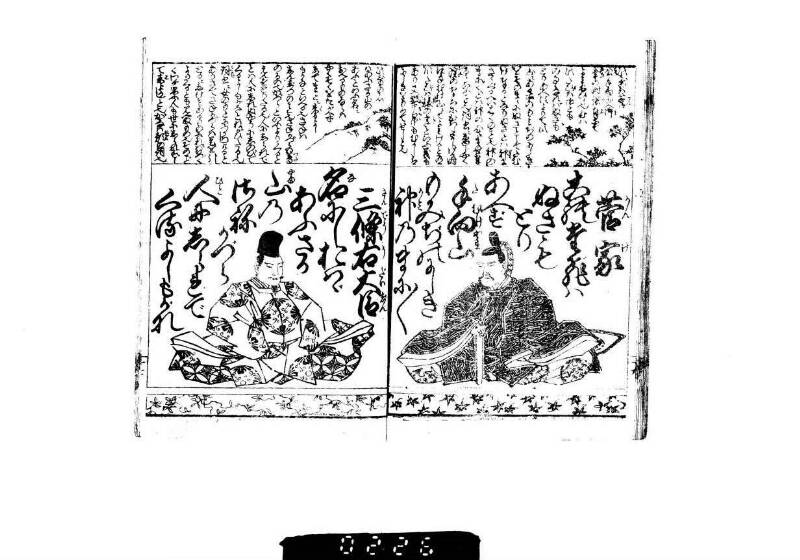
菅家(かんけ)
このたびは
ぬさも
とり
あへず
手向山(たむけやま)
もみぢのにしき
神(かみ)のまに〳〵
【右頁上】
此哥は菅(かん)
公(こう)手向山へ御(み)
幸(ゆき)の時 供奉(ぐぶ)にて
よみ給ひし也心は
此たびは御とも
の事なればぬさも
とりあへずよりて此
山にある所のもみぢのにしき
をそのまゝにぬさとしてたむ
け奉るとなりぬさとは神(かみ)に
さゝぐるへいはくのこと也神の
まに〳〵とは神の心にまかせ奉
るといふこと也詞書にしゆじやく
院(いん)【朱雀院】のならにおはしましける時
に手むけ山にてよみけると有
此たびは旅(たび)の字(じ)といふ義も
あり又 幣帛(へいはく)もむかしは
にしきをもつてせしと也
【左頁中】
三條右大臣(さんでううだいじん)
名(な)にしおはゞ
あふさか
山(やま)の
さねかづら
人(ひと)にしられで
くるよしもがな
【左頁上】
此哥の心
はあふさか山の
あふといふ名に
おへるものならは
やくそくをたかへず【別刷は「す」】
してまことに来(く)るよし
もかなといへる也さねは
しんじつ【真実】のこと也さねかづらは蔦(つだ)
のるい也かづらといふよりくると
えんをとりたる也人にしられで
とは人にしられぬやうにしのびて
くるよしもがなとねがひたる也
詞(ことば)書に女のもとにつかはしけると
ありさてさねかづらは是を引
とるにしげみあるものなればいづく
よりくるとも見へぬもの也そのごと
くわが思ふ人も世にしられずし
て来(こ)よかしと也がなは願(ねがひ)の詞也
現代語訳
【右頁中】
菅家(菅原道真)
このたびは
幣も
取り
あえず
手向山
紅葉の錦
神のまにまに
【右頁上】
この歌は菅原道真公が手向山へお出かけになった時に、供奉として詠まれたものである。歌の心は、今度は御供の事なので幣も取り合わせることができず、よってこの山にある紅葉の錦をそのままに幣として手向け申し上げるということである。「ぬさ」とは神に捧げる幣帛のことである。「神のまにまに」とは神の心にお任せ申し上げるということである。詞書に「朱雀院が奈良にいらっしゃった時に手向山で詠んだ」とある。「このたび」は「旅」の字という意味もある。また幣帛も昔は錦を用いていたということである。
【左頁中】
三條右大臣(藤原定方)
名にしおわば
逢坂山の
さねかずら
人に知られで
来る由もがな
【左頁上】
この歌の心は、逢坂山の「逢う」という名に負うものならば、約束を違えずして本当に来る方法があればよいということである。「さね」は「真実」のことである。「さねかずら」は蔦の類である。「かずら」というところから「来る」と縁を取ったのである。「人に知られで」とは人に知られないように忍んで来る方法があればよいと願ったのである。詞書に「女のもとに遣わした」とある。さて「さねかずら」はこれを引き取るのに繁みがあるものなので、どこから来るとも見えないものである。そのごとく私の思う人も世に知られずして来てほしいということである。「がな」は願いの言葉である。
英語訳
【Right page center】
Kanke (Sugawara no Michizane)
On this journey
I could not prepare
proper offerings—
at Mount Tamuke
may this brocade of autumn leaves
serve at the gods' pleasure
【Right page upper】
This poem was composed by Sugawara no Michizane when he went to Mount Tamuke, serving in attendance. The meaning is: since this is a matter of accompanying [the emperor], I could not prepare proper ritual offerings, so I offer this brocade of autumn leaves found on this mountain as it is, as an offering to the gods. "Nusa" refers to the ritual offerings presented to the gods. "Kami no manimani" means "according to the gods' will" or "at the gods' pleasure." The headnote states it was composed "when Emperor Suzaku visited Nara, at Mount Tamuke." "Kono tabi" can also mean "journey" from the character for "travel." Also, in ancient times, brocade was used for ritual offerings.
【Left page center】
Sanjō Udaijin (Fujiwara no Sadakata)
If it lives up
to its name,
Osaka Mountain's
sanekazura vine—
would there were a way to come
unknown to others
【Left page upper】
The meaning of this poem is: if it lives up to Osaka Mountain's name of "meeting," would that there were a way to truly come without breaking promises. "Sane" means "truth" or "reality." "Sanekazura" is a type of ivy. From "kazura" (vine) comes the word-play connection with "kuru" (to come). "Hito ni shirare de" means wishing for a way to come secretly without being known to others. The headnote says it was "sent to a woman." Now, sanekazura, when pulled, has thick growth, so one cannot see where it comes from. Similarly, he wishes that the person he loves would come without the world knowing. "Gana" is a word expressing a wish.