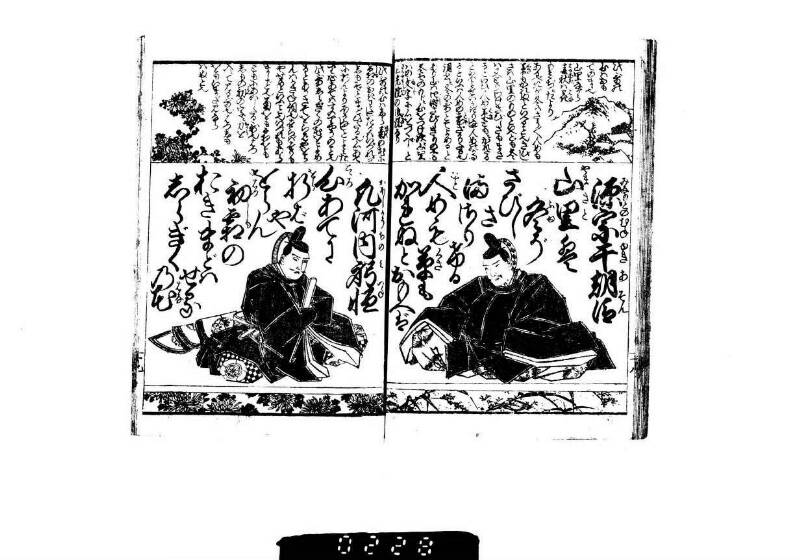
翻刻
【右頁中】
源宗于朝臣(みなもとのむねゆきあそん)
山里(やまさと)は
冬(ふゆ)が
さびし
さ
まさりける
人(ひと)めも草(くさ)も
かれぬとおもへば
【右頁上】
此哥の
心はおも
てのまゝ也
山里ながら
春秋(はるあき)は花(はな)
もみぢにたより
あるべきが冬はさう〳〵人めも
草(くさ)もかれぬといへること也さびし
さは山里のものといへども冬
は又とりわけさびしさもまさ
るといひ人め草(くさ)ともにかれたる
といふよせいかぎりなし人めのかる
るといふは人めの遠(とほ)ざかりたる也
詞書に冬の哥とてよめると
あり山は四 時(し)さびしきものなり
冬ぞのもじに心をつけ次に山里
はの文字(もじ)に心をつくべしと
三光院【三条西実枝】の御 説(せつ)なり
【左頁中】
凡河内躬恒(おほしかうちのみつね)
心(こころ)あてに
折(をら)ば
や
をらん
初霜(はつしも)の
おきまどは
せる
しらぎくの花(はな)
【左頁上】
此哥の心はしら菊(きく)の花に
霜(しも)のおきわたしたるはいづれが
しもぞとまどひたる也心あて
に折んよりほかなしとよみた
り心あてはすいりやうのこと也
此哥しらぎくの花をよめ
るとありさてをらばやをら
んはかさね詞也をらばをりも
やせめといふこと也いづれもあら
ましごと也菊をも霜をも
ともにあいしたる哥也はつ
しもの初(はつ)の字に力(ちから)を
入れて見る哥也はつしも
をもいまだ見なら
はぬと也
現代語訳
【右頁中】
源宗于朝臣(みなもとのむねゆきあそん)
山里は
冬ぞ
さびしさ
まさりける
人目も草も
かれぬと思えば
【右頁上】
この歌の心は表面のとおりである。山里ながら春秋は花や紅葉によりどころがあるだろうが、冬はそうそう人目も草も枯れぬと言うことである。寂しさは山里のものとはいえども、冬はまた格別に寂しさも勝ると言い、人目も草もともに枯れたと言う余情が限りない。人目が枯れるというのは人目が遠ざかったということである。詞書に「冬の歌として詠んだ」とある。山は四季を通じて寂しいものである。「冬ぞ」の文字に心を付け、次に「山里は」の文字に心を付くべしと三光院(三条西実枝)の御説である。
【左頁中】
凡河内躬恒(おおしこうちのみつね)
心あてに
折らば
や
折らん
初霜の
置き惑わせる
白菊の花
【左頁上】
この歌の心は白菊の花に霜が置き渡したのはいずれが霜かと迷ったということである。心あてに折ろうよりほかなしと詠んだ。心あては推量のことである。この歌は白菊の花を詠んだとある。さて「折らばや折らん」は重ね言葉である。折るなら折りもしようかということである。いずれも仮定のことである。菊をも霜をもともに愛した歌である。「初霜」の「初」の字に力を入れて見る歌である。初霜をもいまだ見慣れぬということである。
英語訳
【Right page center】
Minamoto no Muneyuki Ason
In mountain villages
winter's
loneliness
grows ever stronger—
thinking that both human presence and grasses
have withered away
【Right page upper】
The meaning of this poem is exactly as it appears on the surface. Though it is a mountain village, in spring and autumn there would be flowers and autumn leaves to provide some comfort, but in winter both human presence and grasses have withered away. Though loneliness belongs to mountain villages, in winter the loneliness is particularly pronounced, saying that both human presence and grasses have withered together—the lingering sentiment is limitless. "Human presence withering" means that human presence has grown distant. The headnote says it was "composed as a winter poem." Mountains are lonely throughout the four seasons. One should pay attention to the characters "winter zo" (winter indeed), and then to the characters "yamazato wa" (mountain villages)—this is the explanation of Sankō-in (Sanjōnishi Sanetaka).
【Left page center】
Ōshikōchi no Mitsune
Guessing at random
shall I
or shall I not
pluck them—
white chrysanthemum flowers
that the first frost
has left me wondering about
【Left page upper】
The meaning of this poem is wondering which is frost among the white chrysanthemum flowers where frost has settled all over. He composed it saying there is nothing to do but pluck them by guessing. "Kokoro-ate" (guessing at random) refers to conjecture. This poem is said to be about white chrysanthemum flowers. Now "orabaya oran" (shall I pluck or shall I pluck) is a repeated phrase. It means "if I were to pluck, should I pluck?" Both are hypothetical statements. This is a poem that loves both chrysanthemums and frost equally. It is a poem where one should put emphasis on the character "hatsu" (first) in "hatsushimo" (first frost). The first frost is also something not yet familiar to the eye.