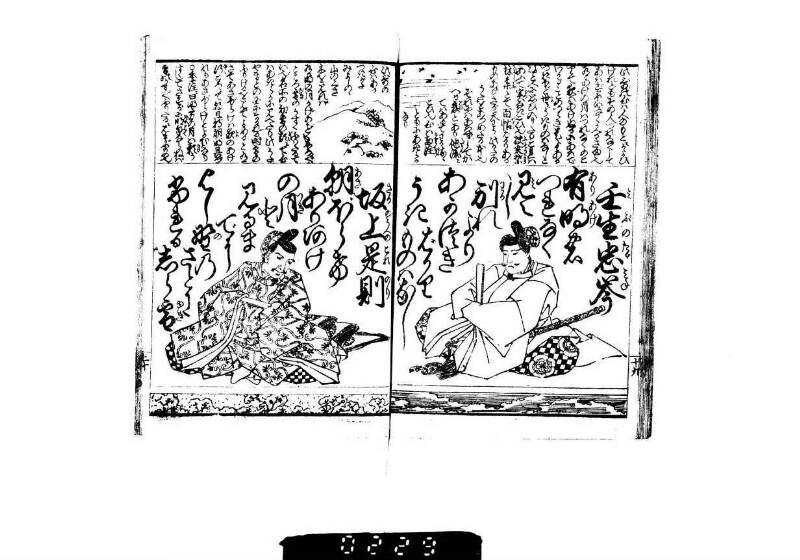
翻刻
【右頁中】
壬生忠峯(みぶのたゞみね)
有明(ありあけ)の
つれなく
見(み)え
し
別(わか)れ
より
あかつき
ばかり
うきものはなし
【右頁上】
此哥の心は人のもとにかよひ
けれどもその人つれなくして
あはずほいなく【=不満に】かへるさまなり
有あけの月はつれなくのこ
りて夜(よ)はあけぬるにあはで
わかることのつらさ是ゟあか
つきほど世にうきものはなしと
ひとへに思ひ入りたりこれは
あふて実(じつ)なきこひ也 扶桑葉(ふそうよう)
林集(りんしふ)とて百 帖(でう)ばかりある
ものありさが天わう【嵯峨天皇】此かたの
うたをあつめたる本也
それにはあはずしてか
へる恋(こひ)とあり他流(たりう)に
てはあふてわかるゝ
こひ也心は両注(りやうちう)
ともにあきらか
なり
【左頁中】
坂上是則(さかのうへのこれのり)
朝(あさ)ぼらけ
ありあけ
の月(つき)
と
見るま
でに
よし野(の)の
さとに
ふれるしら雪(ゆき)
【左頁上】
此哥の
心はあか
つきがた
みよしのゝ
山のくさ
木を見れば
有明の月かげのごとくしろ〴〵【別刷は「〳〵」】
とはつ雪(ゆき)のうすくふりたるて
い也名所の初雪の題(だい)にて心
はあきらかに見へたり此うた
やまとの国にまかれる時雪の
ふりけるを見てよめると有
さてあさぼらけは夜(よ)のあけ
行(ゆく)ころにて朝且朝朗明且いづ
れもあさぼらけとよむなり
〇季注に曰明方の月は影(かげ) う
すくしてさすがに明白(めいはく)ならねば
雪のうすくふりたるに見まが【別刷は「か」】ふもの也
現代語訳
【右頁中】
壬生忠峯(みぶのただみね)
有明の
つれなく
見えし
別れ
より
暁
ばかり
憂きものはなし
【右頁上】
この歌の心は、人のもとに通っていたけれども、その人がつれなくして会わず、不満に思って帰る様子である。有明の月はつれなく残って夜は明けてしまったのに、会わずに別れることの辛さ、これより暁ほど世に憂いものはないと、ひたすら思い入っている。これは会って実のない恋である。扶桑葉林集といって百帖ばかりあるものがある。嵯峨天皇がこの方の歌を集めた本である。それには「会わずして帰る恋」とある。他流では「会って別れる恋」である。心はどちらの注釈もともに明らかである。
【左頁中】
坂上是則(さかのうえのこれのり)
朝ぼらけ
有明
の月
と
見るま
でに
吉野の
里に
降れる白雪
【左頁上】
この歌の心は、暁方に吉野の山の草木を見れば、有明の月影のごとく白々と初雪が薄く降った様子である。名所の初雪の題で、心は明らかに見えている。この歌は大和の国に下った時、雪が降ったのを見て詠んだとある。さて「朝ぼらけ」は夜の明けていく頃で、「朝且」「朝朗」「明且」いずれも「朝ぼらけ」と読むのである。○季注に曰く、明け方の月は影が薄くて、さすがに明白ではないので、雪が薄く降ったのに見間違うものである。
英語訳
【Right page center】
Mibu no Tadamine
Since that parting
when the dawn moon
appeared
so coldly indifferent,
nothing in this world
is as painful
as daybreak
【Right page upper】
The meaning of this poem is about someone who was visiting a lover, but that person was cold and would not meet him, so he returned feeling dissatisfied. The dawn moon remains coldly indifferent and night has broken, yet the pain of parting without meeting—from this comes the sentiment that nothing in the world is as painful as daybreak, and he is completely absorbed in this thought. This is about a love that, even when they meet, bears no fruit. There is a collection called Fusō Yōrinshū of about one hundred fascicles. It is a book in which Emperor Saga collected poems by this poet. In it, this is described as "love of returning without meeting." In other schools, it is "love of meeting and then parting." The meaning is clear in both commentaries.
【Left page center】
Sakanoue no Korenori
At daybreak
so much like
the dawn
moon
they appeared—
the white snow
falling
in Yoshino village
【Left page upper】
The meaning of this poem is that at daybreak, looking at the grasses and trees of Mount Yoshino, the first snow has fallen thinly, appearing white like the light of the dawn moon. With the theme of first snow at a famous place, the meaning appears clearly. This poem was composed when he went down to Yamato Province and saw snow falling. Now "asaborake" (daybreak) is the time when night is breaking into dawn, and "asakatsu," "asarō," and "meikatsu" are all read as "asaborake." ○The seasonal commentary says: The moon at dawn has a faint light and is not particularly bright, so it can be mistaken for thinly falling snow.