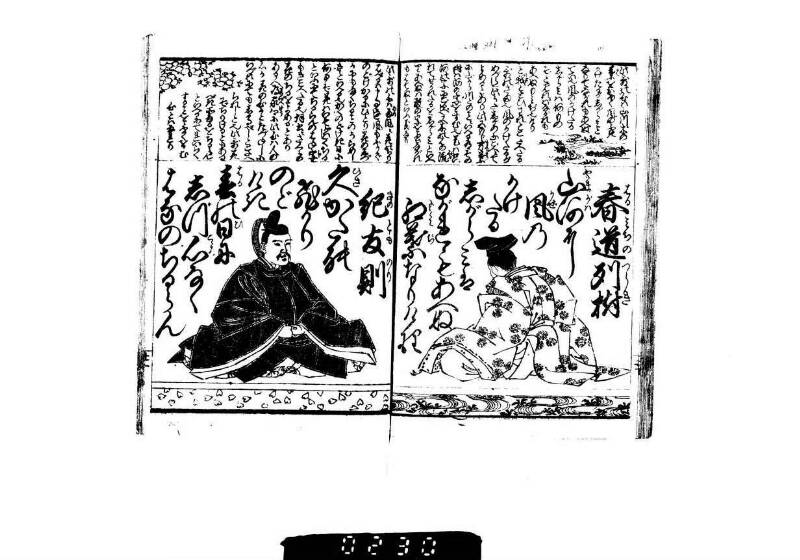
翻刻
【右頁中】
春道列樹(はるみちのつらき)
山河(やまがわ)に
風(かぜ)の
かけ
たる
しがらみは
ながれもあへぬ
紅葉(もみぢ)なりけり
【右頁上】
此哥の心は山川に木の
葉(は)をおほく風のふき
かけたるがしが【別刷は「か」】らみと
なりてながれもあへぬ
てい也風のかけたる
しが【別刷は「か」】らみは何もの
ぞと見ればながれも
あへぬもみぢ也けり
と我(われ)【別刷はルビなし】ととひわれとこたへたる
哥のさま也風のかけたるが
めづ【別刷は「つ」】らし此うたしが【別刷は「か」】の山ごへにて
よめるとあり此五もじ万葉(まんよう)
に山から川とのことにいへる有その
時は河の字(じ)【別刷はルビなし】をすむ也是は只
河の字にごるべし又木のはの流(なが)
れてせかれたるをしがらみといへ
りあへぬは敢の字を書ながれ
もはてぬといふ義なり
【左頁中】
紀友則(きのとものり)
久(ひさ)かたの
ひかり
のど
けき
春(はる)の日(ひ)に
しづ心(こゝろ)なく
はなのちるらん
【左頁上】
此哥の心は雨(あめ)風に花のちり
はべるは申事なしかぜもふかで
のどけかるにひとり花のしづ
かにもなくちることのうらめし
きといへる也かくのどけき日に
何事ぞ花はいそがはしくちる
といふにてちるらんのはね字(じ)
もきこへたる也詞書にさくらの
花のちるをよめるとあり
ある人 為家卿(ためいへけう)に此心は人の
心か花の心かとたづねしに
いづれにてもしるべしとこたへ
られしと也此哥花
ぞちりけるともある
べき所なるをちるらん
といへるにてれいらく
することをふかくをしむ
心とはなれり
現代語訳
【右頁中】
春道列樹(はるみちのつらき)
山川に
風の
かけ
たる
しがらみは
流れもあえぬ
紅葉なりけり
【右頁上】
この歌の心は、山川に木の葉を多く風が吹きかけたのがしがらみとなって流れもしない様子である。風がかけたしがらみは何ものかと見れば、流れることもできない紅葉であったなあと、自分で問い自分で答えた歌の様である。風がかけたのが美しい。この歌は滋賀の山越えで詠んだとある。この五文字「山河」を万葉集では「山から川」のことに言っている例がある。その時は「河」の字を澄んで読む。これはただ「河」の字を濁って読むべきである。また木の葉が流れて堰き止められたのをしがらみと言う。「あえぬ」は「敢」の字を書き、流れも果てないという意味である。
【左頁中】
紀友則(きのとものり)
久方の
光
のど
けき
春の日に
静心なく
花の散るらん
【左頁上】
この歌の心は、雨風に花が散るのは言うまでもないことだが、風も吹かずのどかなのに、ひとり花が静かでもなく散ることの恨めしさを言ったものである。このようにのどかな日に何事か、花は忙しく散るということで、「散るらん」の「らん」の字も聞こえているのである。詞書に桜の花の散るのを詠んだとある。
ある人が為家卿にこの心は人の心か花の心かと尋ねたところ、どちらでも知るべしと答えられたということである。この歌は「花ぞ散りける」ともあるべき所なのを「散るらん」と言ったことで、零落することを深く惜しむ心となっている。
英語訳
【Right page center】
Harumichi no Tsuraki
In the mountain stream
the wind has built
a barrier—
it is autumn leaves
that cannot even flow away
【Right page upper】
The meaning of this poem is about many leaves that the wind has blown onto a mountain stream, forming a barrier so that they cannot flow. What is this barrier that the wind has created? Looking closely, it is autumn leaves that cannot even flow away—this is a poem where the poet asks himself a question and answers it himself. The fact that the wind created it is beautiful. This poem was composed when crossing the mountains of Shiga. These five characters "yamakawa" (mountain stream) are used in the Man'yōshū to refer to "mountains and rivers." In that case, the character "kawa" (river) is read with a clear consonant. Here, the character "kawa" should be read with a voiced consonant. Also, when leaves flow and are blocked, this is called "shigarami" (barrier). "Aenu" is written with the character "kan" (dare/endure), meaning that the flow cannot be completed.
【Left page center】
Ki no Tomonori
On this spring day
of tranquil
light
from eternal
heaven,
why do the blossoms
scatter so restlessly?
【Left page upper】
The meaning of this poem is that while it goes without saying that flowers scatter in rain and wind, it is regrettable that the flowers alone scatter restlessly even when no wind blows and the day is peaceful. On such a tranquil day, for what reason do the flowers scatter so busily? The particle "ran" in "chiru ran" (probably scatter) can be heard as well. The headnote says this was composed about cherry blossoms scattering.
Someone asked Lord Tameie whether the heart in this poem refers to a person's heart or the flowers' heart, and he replied that it should be understood as either. This poem could have said "the flowers indeed scattered," but by saying "probably scatter," it expresses a heart that deeply regrets their falling.