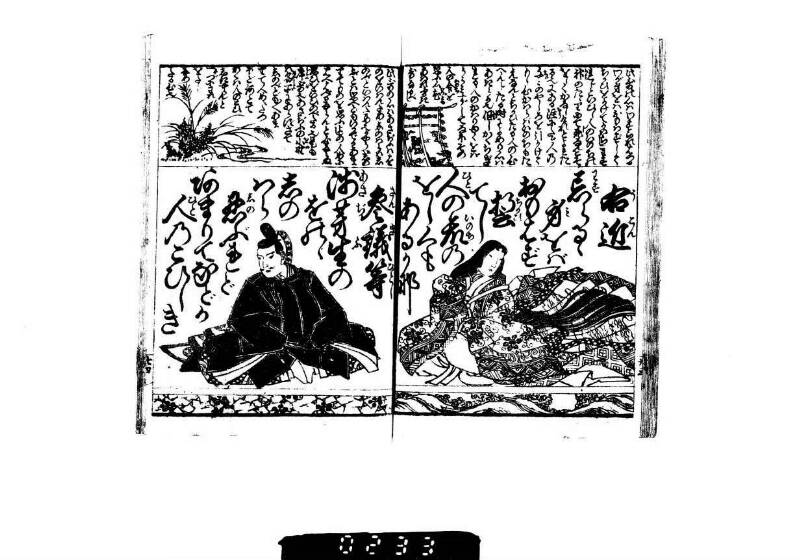
翻刻
【右頁中】
右近(うこん)
忘(わす)らるゝ
身(み)をば
おもはず
誓(ちかひ)
てし
人(ひと)の命(いのち)の
をしくも
あるかな
【右頁上】
此哥の心はわすられはつる
わが身をはおもはずして
ちかいをうけてかはらしわす
れじといひし人のいのちの
神(かみ)のたゝりにて死(し)なんこそ
おしくかなしけれとよみた
る也又ある注(ちう)にたゞ人の
千々(ちゞ)【多数】のやしろを引きかけて【証人として】
もし心かはらばいのちもた
えなんとちかひたる人の心
へんじたる時によめり心は
あきらか也但(たゞ)しかくちぎ
れる人のかはりゆくをば
うらみずしてなほその
人の命(いのち)を
思ふ心尤も(もつとも)
あはれふかき
哥なるべし
【左頁中】
参議等(さんぎひとし)
浅茅生(あさぢふ)の
をのゝ
しの
はら
忍(しの)ぶれど
あまりてなどか
人(ひと)のこひしき
【左頁上】
此哥の心はあさぢふはを
のをいはんためしのはらはし
のぶといはんため也かやうにしの
ぶとは思へどもいかでかあま
りてものを思ふよしの人めに
見へはべるならんと心ならぬ
思ひをいひのべたる也是も
序哥(じよか)也あさぢふの小野(をの)
は名所(めいしよ)にあらずさて
しのべども〳〵あま
りて人めにたつ
ほど何とて
かくは人のこひ
しきやらんと
一チづにわれ
をたし
なめ
たる心也
現代語訳
【右頁中】
右近(うこん)
忘らるる
身をば
思わず
誓いて
し
人の命の
惜しくも
あるかな
【右頁上】
この歌の心は、忘れられてしまった我が身のことは思わずに、誓いを受けて「決して忘れない」と言った人の命が、神の祟りによって死んでしまうのが惜しく悲しいと詠んだものである。また、ある注釈には「ただ人が多数の神社を証人として、もし心変わりしたら命も絶えるだろう」と誓った人の心変わりした時に詠んだとある。意味は明らかである。ただし、このように約束した人が心変わりしていくのを恨まずに、なおその人の命を思う心は、最も深いあわれを感じさせる歌であるに違いない。
【左頁中】
参議等(さんぎひとし)
浅茅生の
小野の
篠原
忍ぶれど
あまりてなどか
人の恋しき
【左頁上】
この歌の心は、「浅茅生」は「小野」を言うための序詞、「篠原」は「忍ぶ」を言うための序詞である。このように忍んでいると思うけれども、どうしてこんなにも思いが溢れて、人目に見えてしまうのだろうかと、心ならない思いを述べたものである。これも序歌である。浅茅生の小野は特定の名所ではない。さて、忍んでいるけれども、あまりにも人目につくほど、なぜこんなにもあの人が恋しいのだろうかと、ひどく自分を責めた心である。
英語訳
【Right page center】
Ukon
Not thinking
of my own
forgotten
self,
but of the one who
made that vow—
how precious
is that person's life
【Right page upper】
The meaning of this poem is: not thinking of my own self that has been forgotten, but feeling it would be precious and sad if the life of the person who received my vow and said "I will never forget you" were to end due to divine punishment for breaking that promise. Another annotation states that when someone made a vow using many shrines as witnesses, saying "if my heart should change, may my life also end," this was composed when that person's heart did change. The meaning is clear. However, not resenting the person who broke such a promise, but still caring for that person's life—this must be a poem of the deepest pathos.
【Left page center】
Sangi Hitoshi
In the shallow grass
of the small
field of
bamboo grass,
though I try to hide my feelings,
they overflow—why
do I long for that person so?
【Left page upper】
The meaning of this poem is: "shallow grass" is a makurakotoba (pillow word) to introduce "small field," and "bamboo grass field" is used to introduce "shinobu" (to hide/endure). Though I think I am hiding my feelings like this, why do my emotions overflow so much that they become visible to others? This expresses involuntary feelings. This is also a jo-ka (poem with introductory sequence). "Asajifu no ono" is not a specific famous place. So, though I try to hide my feelings, they are so excessive that they attract attention—why do I long for that person so much? This represents a heart severely reproaching itself.