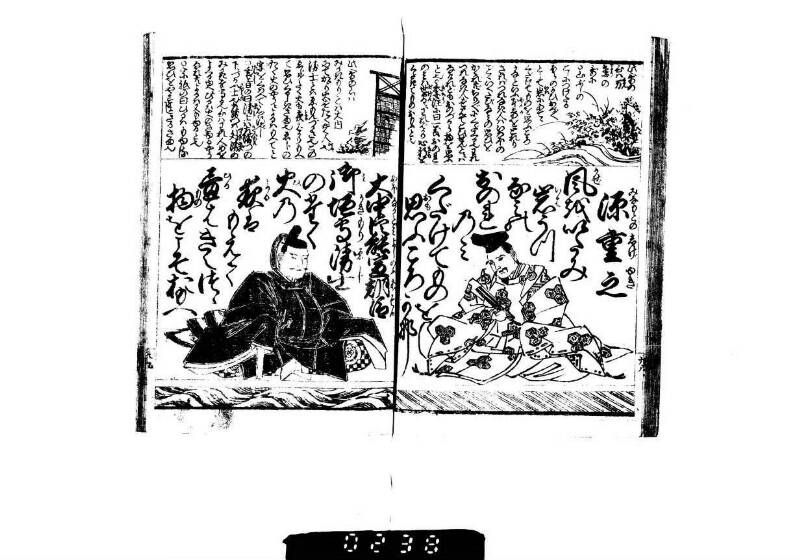
翻刻
【右頁中】
源重之(みなもとのしげゆき)
風(かぜ)をいたみ
岩(いは)うつ
なみの
おのれ
のみ
くだけてものを
思(おも)ふころかな
【右頁上】
此哥の
心は万(まん)
葉(よう)の
哥に
〇山ぶしの
こしにつけたる
ほらのかひおづ〳〵
として岩(いは)にあてゝ
くだけてものを思ふころ
かなといふ本哥(ほんか)をとれり
されば【別刷は濁点なし】つれなき人はいはほの
ごとくいくたびなみの思ひを
かくれども【「共」に濁点】ちり〴〵にくだくる也われ
つれなき人を見てこひせんとには
なけれどもおのづから物を思ふ
と也〇 季注(きちう)に曰一義おのれ
のみは世間(せけん)にわれはかり心 肝(きも)を
くだきてものおもふと也
【左頁中】
大中臣能宣朝臣(おほなかとみよしのふあそん)
御垣守衛士(みかきもりゑじ)
のたく
火(ひ)の
よるは
もえて
昼(ひる)はきえつゝ
物(もの)をこそおもへ
【左頁上】
此哥の心は
みかきもりとは大内
にてかゞ【別刷は濁点なし】り火をたくやく人也
衛士とはゑもんづかさ也この
ゑじがたく火も夜(よる)ばかりもへ
て思ひくるしきさま也ゑじの
たく火のやうによるはもへてと
字(じ)をくはへて心得べし
〇 玄旨(げんし)の曰 衛士(えじ)は左衛門(さへもん)の
下につかふ士(さむらひ)也左衛門は外衛(ぐわいゑい)の
みかきを守る也心はわれ人めを
よくるゆへにひるは火のきゆるやう
なれ共よるは又もゆると也
〇宗祇の曰ひるはもゆる
思ひをやすましたるさま也
現代語訳
【右頁中】
源重之(みなもとのしげゆき)
風を痛み
岩打つ
波の
おのれ
のみ
砕けて物を
思う頃かな
【右頁上】
この歌の心は、万葉集の歌に「山伏の腰につけたる法螺の貝、おずおずとして岩に当てて砕けて物を思う頃かな」という本歌を取っている。それゆえ、つれない人は岩のようで、何度波の思いをかけても散り散りに砕けるのである。私はつれない人を見て恋をしようというのではないけれど、自然と物思いをしてしまうということである。○季吟注に言うには、一つの解釈として「おのれのみ」は世間に私ばかりが心肝を砕いて物思いをするという意味である。
【左頁中】
大中臣能宣朝臣(おおなかとみのよしのぶあそん)
御垣守衛士
の焚く
火の
夜は
燃えて
昼は消えつつ
物をこそ思え
【左頁上】
この歌の心は、御垣守とは大内で篝火を焚く役人である。衛士とは衛門司のことである。この衛士が焚く火も夜ばかり燃えて、思い苦しい様子である。衛士の焚く火のように夜は燃えてと「夜は」の字を加えて理解すべきである。○玄旨の言うには、衛士は左衛門府の下に仕える侍である。左衛門は外衛の御垣を守る。心は私は人目を避けるゆえに昼は火の消えるようであるが、夜はまた燃えるということである。○宗祇の言うには、昼は燃える思いを休ませた様子である。
英語訳
【Right Page Center】
Minamoto no Shigeyuki
The wind so strong,
waves crash
against the rocks—
I alone
am broken,
lost in thoughts of love.
【Right Page Top】
The meaning of this poem draws from a poem in the Man'yōshū: "The conch shell worn at a mountain priest's waist, trembling as it strikes the rock and breaks while lost in thought." Therefore, the heartless beloved is like a rock, and no matter how many times waves of emotion strike, they scatter and break apart. Though I do not intend to fall in love by gazing at this heartless person, I naturally fall into melancholy thoughts. ○ Kigin's annotation says: One interpretation is that "I alone" means that in this world, only I torment my heart and soul with such deep contemplation.
【Left Page Center】
Ōnakatomi no Yoshinobu Ason
The fires lit
by the palace guards
who watch the sacred fence—
burning at night,
extinguished by day,
how they make me think of love.
【Left Page Top】
The meaning of this poem: mikakimori refers to officials who light watch-fires in the imperial palace. Eji refers to the Palace Guards Bureau. The fires that these guards light burn only at night, representing painful yearning. Like the fires lit by the guards that burn at night, one should understand this by adding the character "night." ○ Genji says: Eji are samurai who serve under the Left Palace Guards. The Left Palace Guards protect the outer sacred fence. The meaning is that because I avoid being seen by others, during the day I am like extinguished fire, but at night I burn again. ○ Sōgi says: During the day represents a state where burning thoughts are calmed.