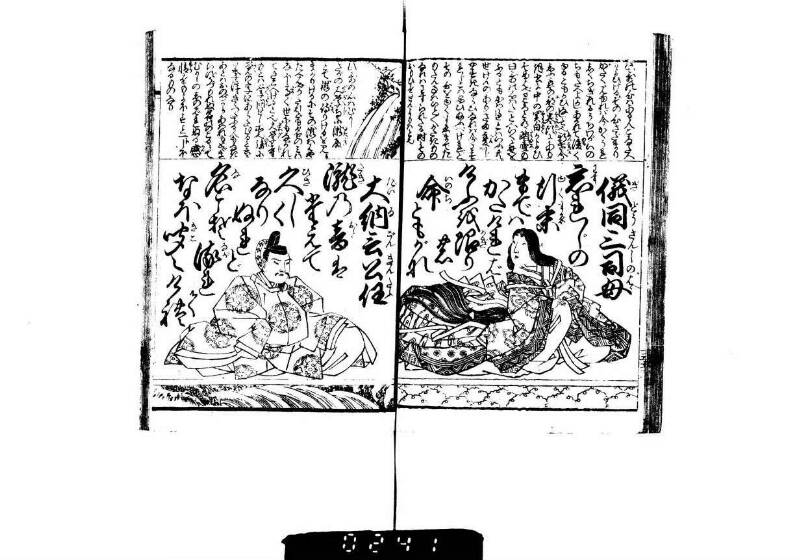
翻刻
【右頁中】
儀同三司母(ぎどうさんしのはゝ)
忘(わす)れじの
行末(ゆくすゑ)
までは
かたければ
けふを限(かぎ)り
の
命(いのち)
ともがな
【右頁上】
此哥の心はある人こなたへ
かよひけるにその心さだまり
がたく見ゆれば今かくうれ
しくちぎれるうちわがいの
ちもたへよかしあ【飽】かれて後(のち)く
ゆるともかひなしと也 新古今(しんこきん)【別刷はルビなし】
しふ恋の部【別刷はルビなし】の巻頭(くわんとう)にあり
詞書に中の関白(くわんばく)【藤原道隆】【別刷はルビなし】かよひ
そめはべるころと有 踏雪(たうせつ)【加藤磐斎】の
曰哥の心はたとへいくとせを
ふるともかはらじとはいふ共
世けんのありさま変(へん)じ
やすきならひなれば今わす
れじとは思ひ給ふべけれと
その心をゆくすゑまでた
もたん事はいと〳〵かたきもの
なれはわすられたる時々その
おもひをせんよりはと也
【左頁中】
大納言公任(だいなごんきんたふ)
瀧(たき)の音(おと)は
たえて
久(ひさ)しく
なり
ぬれど
名(な)こそ流(なが)れて
なほ聞(きこ)えけれ
【左頁上】
此哥の心はむかし
さがの大学寺(だいがくじ)に瀧殿(たきどの)
とて瀧の侍(はべ)りけるを見に
まかりけるにその瀧ははや
たへはべりたれども名のみは
なほ高(たか)く世にもながれ
てきこへけると也 大学寺(だいがくじ)【別刷はルビなし】
もとは学問(がくもん)せし所也 後(のち)に
覚(かく)の字にあらたむると云々
〇季注にきゝつたふる人もなき
あとはおのづからあはれもとゞま
らずうづもれぬ名ののこるにて
むかしのしのばれぬる感(かん)
情(せう)をもよほすこと一トしほ
なるものなり
現代語訳
【右頁中】
儀同三司母(ぎどうさんしのはは)
忘れじの
行く末
までは
難ければ
今日を限りの
命
ともがな
【右頁上】
この歌の心は、ある人がこちらへ通ってきたが、その心が定まりがたく見えるので、今このようにうれしく約束をしているうちに私の命も絶えてほしい、飽きられた後に苦しむのは甲斐がないということである。新古今集恋の部の巻頭にあり、詞書に「中の関白(藤原道隆)が通い始めた頃」とある。踏雪(加藤磐斎)が言うには、歌の心は「たとえ幾年を経ても変わらないとは言うけれど、世間のありさまは変じやすい習いなので、今は忘れないと思ってくださるでしょうが、その心を行く末まで保つことはとても難しいものなので、忘れられた時にその思いを嘆くよりは」ということである。
【左頁中】
大納言公任(だいなごんきんとう)
滝の音は
絶えて
久しく
なり
ぬれど
名こそ流れて
なお聞こえけれ
【左頁上】
この歌の心は、昔嵯峨の大覚寺に滝殿といって滝があったのを見に参ったが、その滝はもう絶えてしまったけれども、名前だけはなお高く世に流れて聞こえているということである。大覚寺はもとは学問をした所である。後に覚の字に改めるという。○季吟の注に「聞き伝える人もない跡は自然と趣も留まらず埋もれてしまうが、名の残ることで昔が偲ばれる感情を催すことはひときわ深いものである」
英語訳
【Right Page Center】
Gidō Sanshi no Haha (Mother of the Minister of the Same Rank as the Three Dukes)
Since it would be
difficult to maintain
"I will not forget you"
until the distant future,
would that my life
might end
today.
【Right Page Top】
The meaning of this poem is: a certain person came to visit her, but his heart seemed unreliable, so while he is now making happy promises, she wishes her life would end—there would be no point in suffering after being abandoned. This appears at the beginning of the Love section in the Shin-kokin-shū, with the headnote "around the time when the Middle Chancellor (Fujiwara no Michitaka) began visiting." Tōsetsu (Katō Bansai) explains that the poem's meaning is: "Even though you say you will not change no matter how many years pass, worldly circumstances have a tendency to change easily, so while you may think now that you will not forget me, it is extremely difficult to maintain that feeling until the distant future, so rather than lamenting when I am forgotten..."
【Left Page Center】
Dainagon Kintō (Major Counselor Fujiwara no Kintō)
Though the sound
of the waterfall
has long since
ceased,
its name still flows
and can be heard.
【Left Page Top】
The meaning of this poem is: long ago he went to see what was called Taki-dono (Waterfall Palace) at Daigaku-ji in Saga, but though that waterfall had already dried up, only its name still flows high in the world and can be heard. Daigaku-ji was originally a place of learning. Later it was changed to the character "gaku" (enlightenment). ○ In Kigin's commentary: "When there is no one left to tell of a place, naturally its charm cannot remain and it becomes buried in obscurity, but when a name remains, the emotions it evokes in remembering the past are particularly profound."