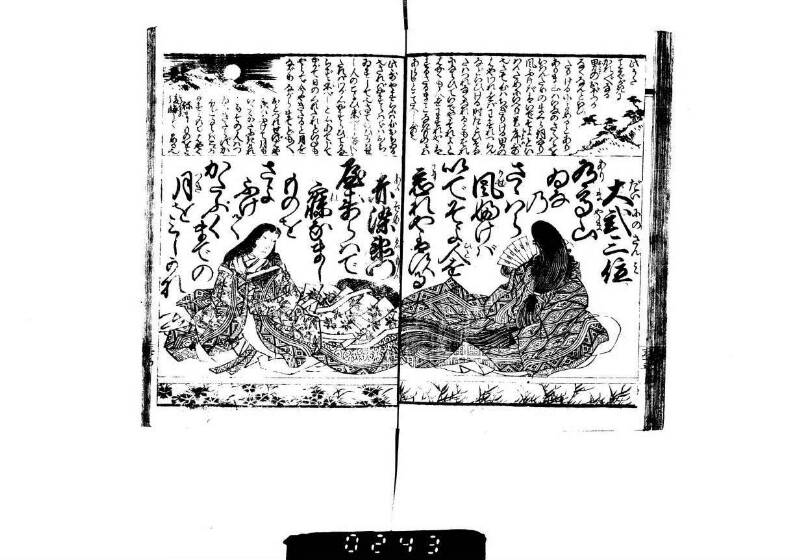
翻刻
【右頁中】
大弐三位(だいにのさんみ)
有馬山(ありまやま)
ゐなの
さゝはら
風(かぜ)ふけば
いでそよ人(ひと)を
忘(わす)れやはする
【右頁上】
此うた
ことばがきに
かれ〴〵なる
男(おとこ)【別刷はルビなし】のおぼつか
なくなんといひ
たりけるによめるとあり
ありま山はいなのさゝはらを
いはんためのまくら詞なり
風ふけばはいでそよとい
はんためにいへり是 序哥(じよか)
也さて心はちぎりける男の
はやわれをばわすれつらん
などいひける時たとひそな
たはつれなくなれるともそれ
にならひていでやそれよと
はやくも人をわすれやは
するさるまことなきものには
あらじとこたへし哥也
【左頁中】
赤染衛門(あかぞめゑもん)
やすらはで
寝(ね)なまし
ものを
さよ
ふけて
かたぶくまでの
月(つき)をみしかな
【左頁上】
此哥やすらふは心おちゐる
也さればやすらはではおち
ゐすして也さていひかはせ
し人のこよひ来(く)べしとやくし
たればわが心やすらひてかな
らず来(く)べしと心あてにして
やがて日のくれたれどいね
もやらで【別刷は「て」】今やきたると月を
ながめながらまてども〳〵
おとづれせずはや
夜はふけて月も
いたくかたふきけれ
どもその人はつ
ゐにきたらずか
ほどならばこゝろ
やすらはではやく
ねましものをと
後悔(こうくわい)してよめる也
現代語訳
【右頁中】
大弐三位(だいにのさんみ)
有馬山
猪名の
笹原
風が吹くと
いえいえ、あなたを
忘れたりするでしょうか
【右頁上】
この歌は詞書に「冷淡になった男が『あなたのことが心配でならない』などと言ったので詠んだ」とある。有馬山は「猪名の笹原」を言うための枕詞である。「風吹けば」は「いでそよ」と言うために使った。これは序歌である。さて心は「約束を交わした男が、もう私のことを忘れてしまったのでしょう」などと言った時に、「たとえあなたが冷淡になったとしても、それに倣って、さあそれでは私も早々と人を忘れたりするでしょうか。そのような誠実でないものではありません」と答えた歌である。
【左頁中】
赤染衛門(あかぞめえもん)
ためらわずに
寝てしまえば
よかったものを
夜が
更けて
傾くまでの
月を見てしまった
【左頁上】
この歌で「やすらふ」は心が落ち着くことである。つまり「やすらはで」は落ち着かずにということである。さて言葉を交わした人が「今夜来るでしょう」と約束したので、私の心は安らいで必ず来るだろうと当てにして、やがて日が暮れたが眠ることもできずに「今来たか」と月を眺めながら待てども待てども訪れることなく、早くも夜は更けて月もひどく傾いてしまったけれども、その人はついに来なかった。これほどならば心を落ち着けずに早く寝てしまえばよかったものを、と後悔して詠んだ歌である。
英語訳
【Right Page Center】
Daini no Sanmi
Mount Arima—
when the wind blows
through Ina's
bamboo grass plains,
oh no! How could I
forget you?
【Right Page Top】
This poem has a headnote that says "composed in response to a man who had grown cold saying 'I am so worried about you.'" "Mount Arima" is a makurakotoba (pillow word) used to introduce "Ina's bamboo grass plains." "When the wind blows" is used to lead into "ide soyo" (oh no!). This is a jo-ka (preface poem technique). The meaning is: when a man with whom she had exchanged vows said things like "you must have already forgotten me," she replied with this poem meaning "even if you have become indifferent, following your example, would I so quickly forget someone? I am not such a faithless person."
【Left Page Center】
Akazome Emon
Without hesitation
I should have
gone to sleep,
but instead I watched
the moon
until late into the night
as it tilted in the sky.
【Left Page Top】
In this poem, "yasurau" means for the heart to settle down. Thus "yasuraade" means without settling down. A person with whom she had exchanged words promised "I will come tonight," so my heart was at ease, expecting he would surely come. When evening came, I could not sleep, gazing at the moon thinking "has he come now?" But though I waited and waited, he did not visit. Soon the night grew late and the moon tilted greatly, but that person never came after all. If it was going to be like this, I should have gone to sleep early without letting my heart be unsettled—this poem was composed in regret.