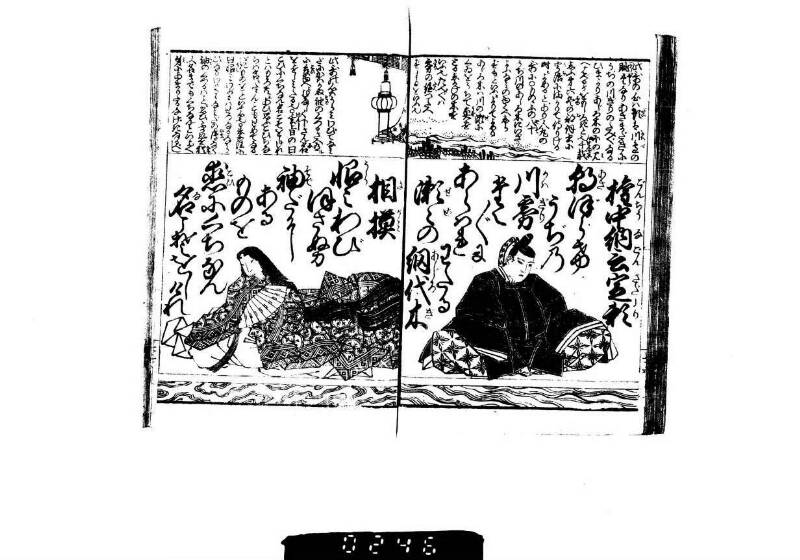
翻刻
【右頁中】
権中納言定頼(ごんちうなごんさだより)
朝(あさ)ぼらけ
うぢの
川霧(かはぎり)
たえ〴〵に
あらはれわたる
瀬々(せぜ)の網代木(あじろぎ)
【右頁上】
此哥の心は題(だい)は川辺(かはべ)の
眺望(てうぼう)なりあさまだきに
うぢの川ぎりのたへ〴〵なる
ひまよりあじろ木のほの見(み)
へはべるがおもしろきと也 千載(せんざい)
しふ第六 冬(ふゆ)の部(ぶ)詞書に
宇治(うぢ)にまかりて侍りける
時によめるとあり人丸の
哥に〇ものゝふの八十(やそ)
うぢ川のあじろ木にいざ
よふなみのゆくへしら
ずもといふによりてよめり
あじろ木は川の瀬(せ)に
くゐをうちて魚(うを)を
とるしかけの木を
いふ也たへ〴〵は
霧(きり)の絶(たへ)つたへ
ずするをいふ也
【左頁中】
相模(さがみ)
恨(うら)みわび
ほさぬ
袖(そで)だに
ある
ものを
恋(こひ)にくちなん
名(な)こそおしけれ
【左頁上】
此哥の心はうらみわびてなみ
だにかはかぬ袖(そで)のくつるさへ有る
に恋(こひ)ゆへにむなしく下さん名(な)
ををしみたる也〇 玄旨(げんし)の曰
こひにくちなん名こそをしけれ
とはもろ共にあひ思ふこひぢな
らば名にたゝんこともせめてなる
べきものをといふ心也〇季注に
曰 恨(うら)みわぶるはせつなるなら
ひなりわかるゝなみだの隙(ひま)【別刷はルビなし】なく
袖(そで)のくつるはことに思ひふかきを猶(なほ)【別刷はルビなし】
又名までもくちなんこといよ〳〵
身(み)にあまりたるなげきなるべし
現代語訳
【右頁中】
権中納言定頼(ごんちゅうなごんさだより)
朝ぼらけ
宇治の
川霧
絶え絶えに
現れ渡る
瀬々の網代木
【右頁上】
この歌の心は、題は「川辺の眺望」である。早朝に宇治の川霧の絶え絶えになった隙間から、網代木がほのかに見えているのが趣深いということである。『千載集』第六巻冬の部の詞書に「宇治に参った時に詠んだ」とある。人麿の歌に「もののふの八十宇治川の網代木に いざよう波の行方知らずも」というのにちなんで詠んだものである。網代木は川の瀬に杭を打って魚を捕る仕掛けの木のことを言う。「絶え絶え」は霧が絶えたり続いたりすることを言う。
【左頁中】
相模
恨みわび
干さぬ
袖だに
ある
ものを
恋に朽ちなん
名こそ惜しけれ
【左頁上】
この歌の心は、恨みわびて涙に乾かない袖が朽ちるほどであるのに、恋のゆえに虚しく朽ちてしまう名声を惜しんでいるということである。玄旨が言うには「恋に朽ちなん名こそ惜しけれ」とは、お互いに愛し合う恋仲ならば名を立てることもせめてもあるだろうにという心である。季注に言うには、恨みわびるのは切ないことである。別れる涙の隙間もなく袖が朽ちるのは、特に思いが深いことを表し、なおまた名までも朽ちてしまうことは、いよいよ身に余る嘆きであろう。
英語訳
【Right Page Center】
Gon-chūnagon Sadayori
At daybreak,
through the river mist
of Uji,
appearing intermittently
across the shallows,
the fish-weir stakes
【Right Page Top】
The heart of this poem has the theme "Riverside View." At early dawn, through the intermittent gaps in the river mist of Uji, the fish-weir stakes can be faintly seen, which is deeply moving. In the Senzaishū, Volume Six, Winter Section, the preface states "Composed when visiting Uji." This was composed in reference to Hitomaro's poem: "The warriors' eighty Uji River fish-weir stakes - the waves that hesitate there, their destination unknown." Fish-weir stakes refer to the wooden stakes driven into river shallows to create structures for catching fish. "Intermittently" refers to the mist breaking and continuing alternately.
【Left Page Center】
Sagami
Lamenting in resentment,
even these sleeves
that will not dry
remain,
yet the reputation
that will decay from love—
how precious it is
【Left Page Top】
The heart of this poem is lamenting in resentment, with sleeves that do not dry from tears and even decay, yet grieving for the reputation that will decay meaninglessly due to love. Genshi comments that "how precious the reputation that will decay from love" means "if this were a mutual love affair, at least there might be some honor in it." The seasonal commentary states: "Lamenting in resentment is a painful condition. With no respite from parting tears, the sleeves decaying shows particularly deep feelings, and that even one's reputation should decay represents grief that truly overwhelms the person."