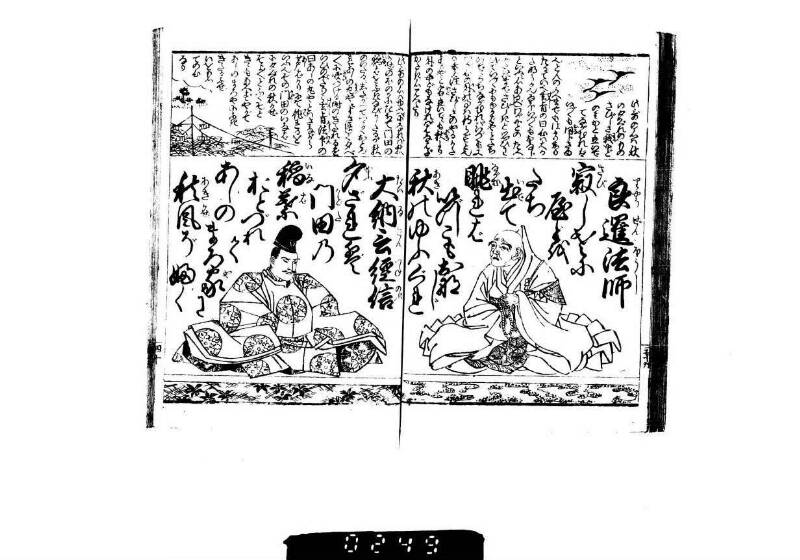
翻刻
【右頁中】
良暹法師(りやうぜんほうし)
寂(さび)しさに
やどを
たち
出(いで)て
眺(ながむ)れば
いづこもおなじ
秋(あき)のゆふぐれ
【右頁上】
此哥の心は秋
の夕ぐれのもの
さびしさ我(わが)やど
のみかと立いで
てながむれば
いづくも同(おな)【別刷はルビなし】じさま
也と人のうへまでもはかりしり
たるてい也 玄旨(げんし)の曰心は大か
た明らか也なほいづくもおなじ
といふに心あるべしわがやどのたへ
がたきまでさびしきと思ひわ
びていづくにもゆかばやとたち
いでゝうちながむればいづくも又
わが心の外(ほか)の事は侍らずと也
〇季注さびしさのやるかた
ありやと宿(やど)立いで【別刷は「て」】ゝも秋(あき)より
外のやどもなければはなはだ
かたき心見へたり
【左頁中】
大納言経信(だいなごんつねのぶ)
夕(ゆふ)ざれば
門田(かどた)の
稲葉(いなば)
おとづれて
あしのまろ家(や)に
秋風(あきかぜ)ぞふく
【左頁上】
此哥の心はゆふべになれば秋
かぜのほのかにたちて門田の
稲(いな)【別刷はルビなし】ばをふきなびかしたるが秋
のいたるにしたがつてつよくおとづ
れあしの丸(まる)【別刷はルビなし】やにすさまじく夕べ
〳〵に吹(ふき)つける時のきたれるを
いひのべたり〇 玄旨(けんし)法印(ほういん)の
曰あしの丸やとはさながら
芦(あし)ばかりにて作(つく)れるを
いふ也その門(かど)田のいなば
に夕ぐれの秋かぜ
そよ〳〵とふくぞと
きゝもあへずやがて
あしのまろやにふき
きたるふぜ
いをもつ
ての心
なり
現代語訳
【右頁中】
良暹法師(りょうぜんほうし)
寂しさに
宿を
立ち
出でて
眺むれば
いずこも同じ
秋の夕暮れ
【右頁上】
この歌の心は、秋の夕暮れの物寂しさは我が宿のみかと立ち出て眺めれば、どこも同じ様子であるということで、人の上までも推し量って知ったていである。玄旨の言うには、「心は大体明らかである。なお『いずこも同じ』というところに心があるべきである。わが宿の堪え難いまでに寂しいと思い悩んで、どこにでも行こうと立ち出て眺めれば、どこも又わが心の外のことはない」ということである。○季注によれば、「寂しさの晴らしようがあろうかと宿を立ち出ても、秋より外の宿もなければ、はなはだ難しい心が見えた」とある。
【左頁中】
大納言経信(だいなごんつねのぶ)
夕されば
門田の
稲葉
音づれて
葦のまろ屋に
秋風ぞ吹く
【左頁上】
この歌の心は、夕べになれば秋風がほのかに立って門田の稲葉を吹きなびかしたのが、秋の深まるにしたがって強く音づれて、葦のまろ屋に荒々しく夕べごとに吹きつける時の来たることを言い述べたものである。○玄旨法印の言うには、「葦のまろ屋とはそのまま葦ばかりで作ったものを言う。その門田の稲葉に夕暮れの秋風がそよそよと吹くぞと聞くまもなく、やがて葦のまろ屋に吹き来る風情をもっての心である」とある。
英語訳
【Right Page Center】
Ryōzen Hōshi
In loneliness
I leave
my dwelling
and gaze out,
only to find
everywhere the same
autumn evening
【Right Page Top】
The heart of this poem is that wondering if the melancholy of autumn evening belongs only to his own dwelling, the poet steps outside to look, only to find that everywhere appears the same—thus he comes to understand even others' situations through inference. According to Genshi's commentary, "The meaning is generally clear. There should be particular significance in the phrase 'everywhere the same.' Thinking his own dwelling unbearably lonely and wishing to go anywhere else, when he steps out and gazes around, he finds that everywhere else is no different from his own heart." The seasonal commentary states: "Wondering if there might be some way to dispel this loneliness, he steps out from his dwelling, but since there is no dwelling other than autumn, an extremely difficult sentiment is revealed."
【Left Page Center】
Dainagon Tsunenobu
When evening comes,
the rice leaves
in the gate fields
rustle,
and autumn wind
blows through my reed hut
【Left Page Top】
The heart of this poem describes how when evening comes, the autumn wind rises faintly and sways the rice leaves in the gate fields, then as autumn deepens, it sounds more strongly and the time comes when it blows roughly against the reed hut every evening. According to Hōin Genshi's commentary, "The 'reed hut' refers to something made entirely of reeds. The meaning is that one barely hears the autumn evening wind blowing gently through the rice leaves of the gate fields before it comes blowing to the reed hut—this captures that atmosphere."